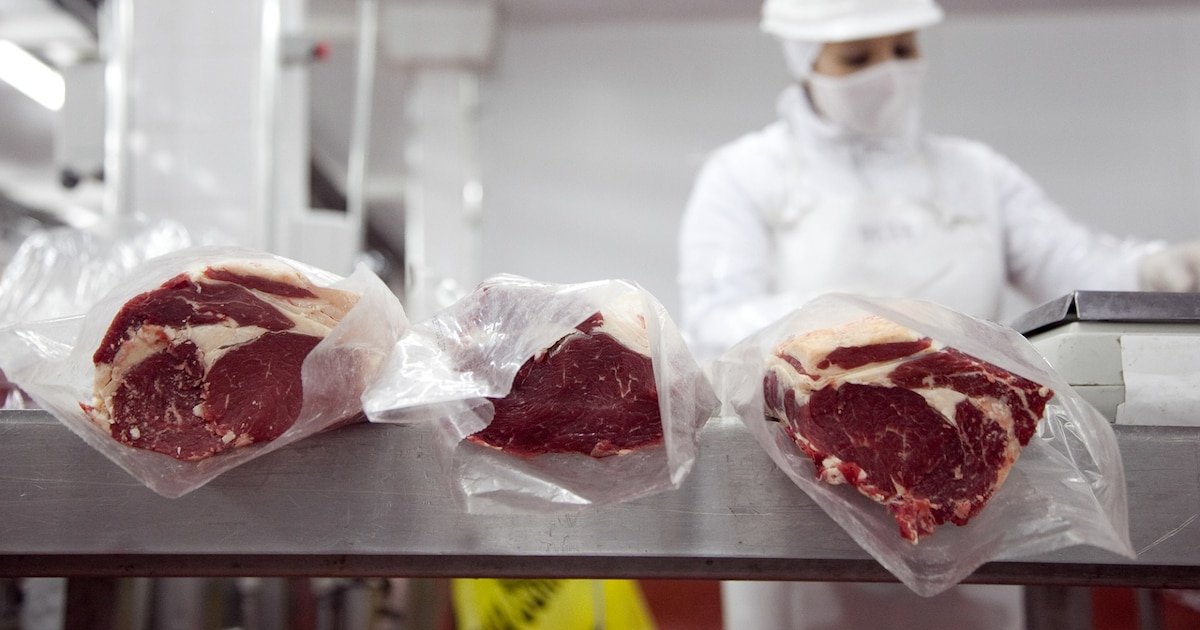
Amidst the ongoing trade war and following the US imposing a 76.4% tariff on Brazil to enter the American market, the neighboring country has significantly increased its meat exports to China. This move has raised concerns in Argentina, as Brazil’s average value per ton of exported meat has surged by 35% compared to the previous year.
Argentina, traditionally a major player in the global meat market, now faces pressure to reassess its approach due to Brazil’s strengthened position. The tariffs imposed by the Trump administration have led to Brazil expanding its presence in China, potentially edging out Argentina in this crucial market.
As Brazil solidifies its foothold in Asia, Argentina finds itself at a crossroads, grappling with the need to adapt its trade strategies to remain competitive. The shift in dynamics within the BRICS nations intensifies as Brazil gains traction in China, posing a challenge to Argentina’s historical dominance in the meat industry.
The spike in Brazil’s meat exports to China serves as a signal of the changing global trade landscape, influenced by US tariff policies. Argentina must now reconsider its market approach and explore new avenues to maintain its position amidst evolving trade dynamics.
With Brazil’s increasing meat sales to China prompted by the US tariffs, Argentina faces a pivotal moment in its trade relations, prompting a reassessment to ensure its competitiveness in the international market. The realignment of trade flows among BRICS nations underscores the need for Argentina to adopt agile strategies to navigate the shifting trade landscape.
The burgeoning competition between Brazil and Argentina in the global meat market underscores the impact of external trade policies on the strategies of neighboring countries. As Brazil leverages its enhanced position in China, Argentina must devise innovative approaches to protect its market share and relevance in the face of changing trade dynamics.





Deixe um comentário