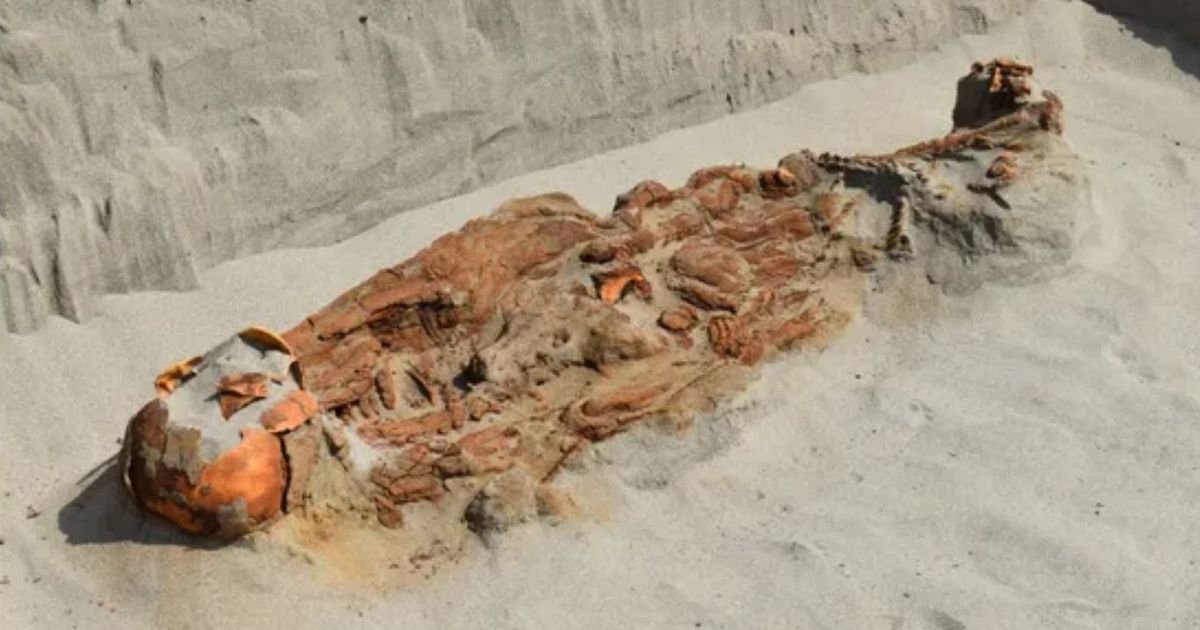
The discovery of ‘unusual’ burial rituals in a 2,300-year-old tomb has left archaeologists scratching their heads. While the temple itself is estimated to be around 3,000 years old, predating the Pyramids of Egypt, the burials found within the tomb date back to a later period, between 400 and 200 B.C. This places the burials roughly 600 to 800 years after the temple’s initial construction.
The burial rituals found in the ancient tomb have sparked curiosity among researchers due to their uniqueness and the mystery surrounding their meaning. The site’s age and the enigmatic nature of the rituals have added to the intrigue and complexity of the archaeological find. The tomb’s historical significance and the cultural practices it represents offer valuable insights into the past, shedding light on ancient burial traditions and beliefs held by the civilization that inhabited the region thousands of years ago.
Archaeologists are working tirelessly to unravel the mysteries hidden within the tomb and decipher the significance of the ‘unusual’ burial practices observed. The artifacts and remains unearthed from the burial site provide valuable clues that may help piece together the puzzle of the ancient civilization’s funerary customs and beliefs. The meticulous excavation and analysis of the tomb’s contents are essential in piecing together the historical narrative of the people who once lived in the area.
The discovery of the unique burial rituals in the 2,300-year-old tomb underscores the rich history and cultural heritage of the region, offering a window into the past that challenges conventional archaeological knowledge. The elaborate nature of the burial practices hints at the importance placed on honoring the deceased and reflects the spiritual and religious beliefs of the ancient civilization. This archaeological find not only sheds light on the past but also raises new questions and avenues for research, driving further exploration and understanding of our shared human history.





Deixe um comentário