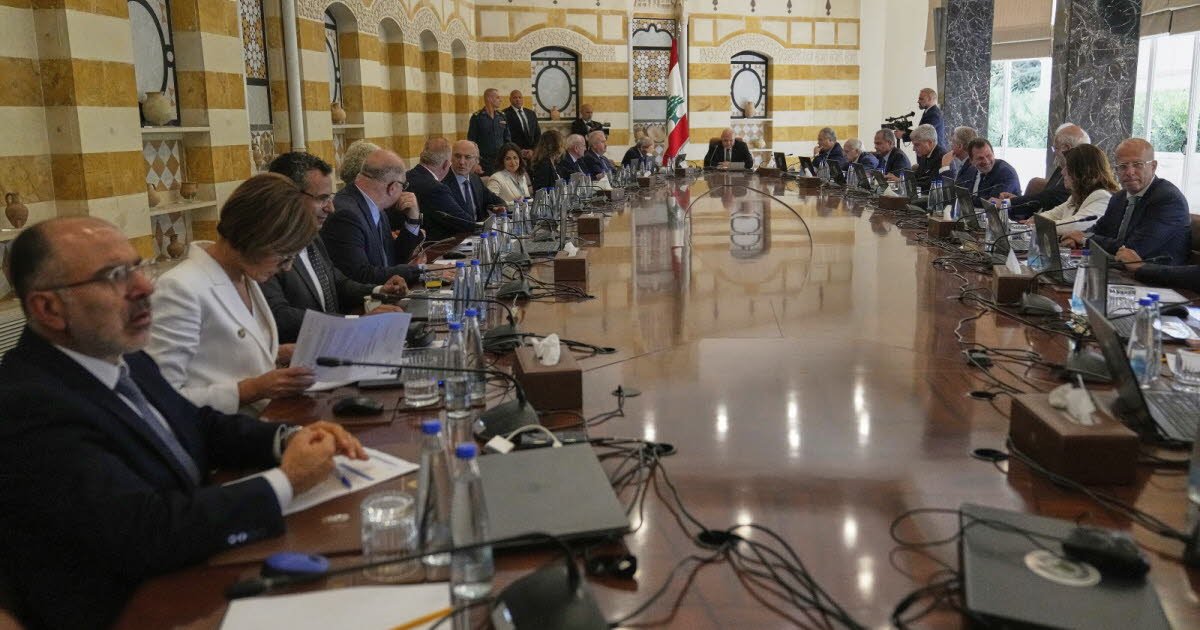
The Lebanese army is set to begin implementing its plan to disarm Hezbollah, as announced by Minister of Information Paul Morcos following a government meeting dedicated to the delicate issue of disarming the powerful Iranian-backed militant group. Hezbollah, which has been a thorn in the side of Israel, is seen as a destabilizing force in the region.
With the Lebanese government’s directive to put an end to Hezbollah’s armament, the army is poised to take official steps towards dismantling the group’s military infrastructure. This move comes amidst growing concerns over Hezbollah’s influence and involvement in regional conflicts, as well as its close ties to Iran, a key player in Middle Eastern geopolitics.
Iran’s support for Hezbollah has long fueled tensions in the region, particularly with Israel, which considers the militant group a significant security threat. By targeting Hezbollah’s disarmament, Lebanon aims to address international concerns while asserting its sovereignty and stability in the face of external pressures.
The decision to disarm Hezbollah reflects Lebanon’s efforts to assert control over its security landscape and reduce the influence of external actors in its internal affairs. With the army leading the disarmament efforts, the government signals its commitment to upholding national security and stability, despite facing challenges from powerful regional players.
As the Lebanese army prepares to execute the disarmament plan, it faces a complex task of navigating internal divisions and external pressures. The success of this initiative will depend on the government’s ability to enforce its authority and manage potential resistance from Hezbollah supporters, who may view the disarmament as a threat to their interests.
The disarmament of Hezbollah is a pivotal step in Lebanon’s journey towards asserting its independence and stability in a volatile region. By dismantling the militant group’s military capabilities, the Lebanese government aims to enhance its credibility on the international stage and mitigate security risks posed by regional conflicts. The army’s role in this process will be crucial in shaping the future security landscape of Lebanon and the broader Middle East.





Deixe um comentário