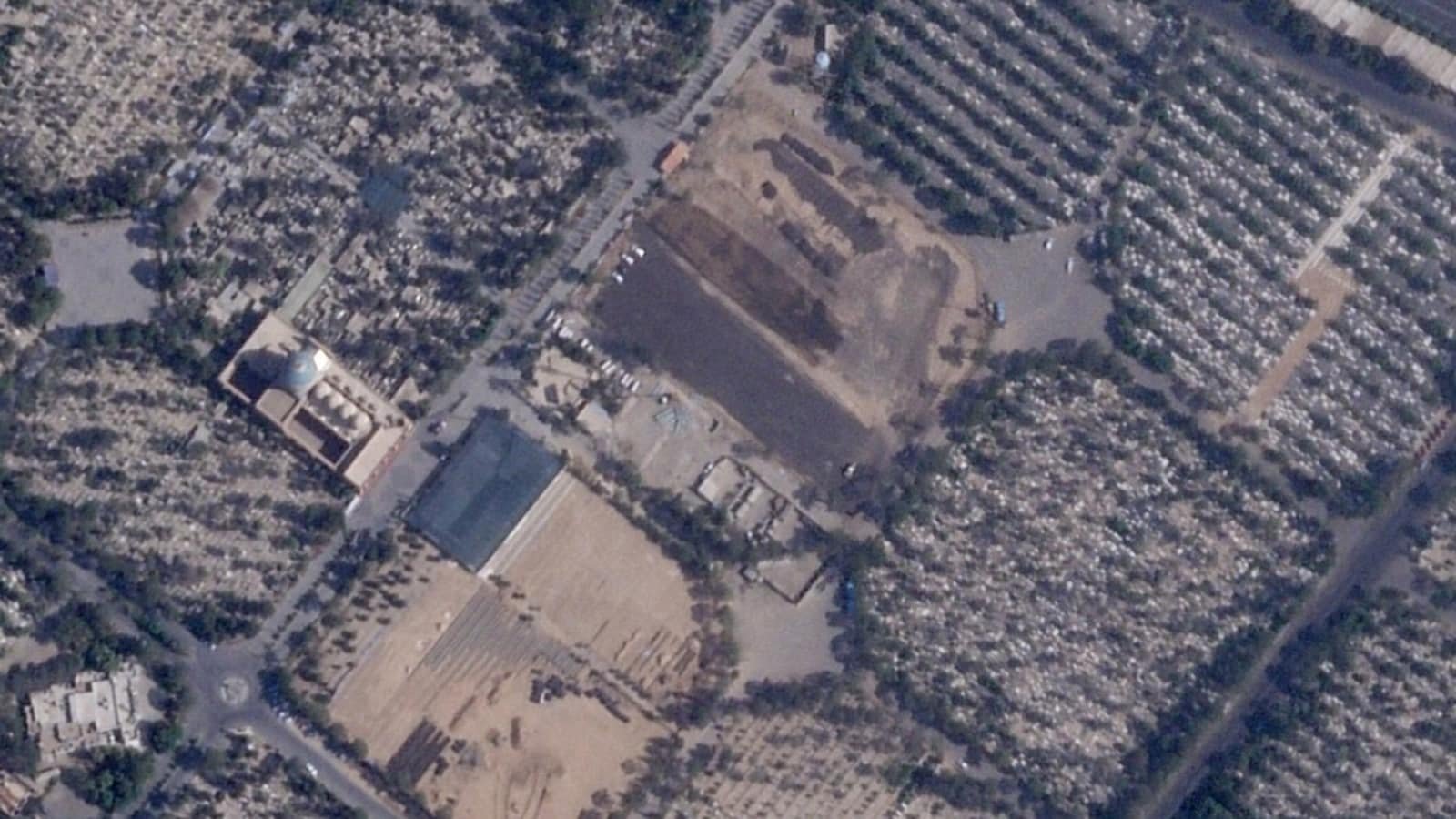
In Iran’s capital, a vast cemetery has long been the resting place for thousands who lost their lives in the mass executions that followed the 1979 Islamic Revolution. Lot 41, previously a barren area with sand and sparse trees, is now set to undergo a drastic transformation. The plans to repurpose this site into a parking lot have drawn attention and criticism from various quarters. Both a Tehran deputy mayor and the cemetery’s manager have openly acknowledged the intention to proceed with the redevelopment.
The decision to convert this significant historical site has sparked controversy, with concerns raised about respecting the memories and honoring the victims of the revolution. Many view the move as a troubling erasure of the past, potentially undermining the significance of the tragic events that unfolded in Iran’s recent history. As debates continue around the ethical implications of this proposed redevelopment, activists and advocates are mobilizing to preserve the site’s historical value.
Critics argue that the transformation of this mass grave into a parking lot represents a troubling trend of prioritizing commercial interests over historical preservation and commemoration. The desecration of such a solemn ground with superficial developments raises questions about the ethical responsibilities of authorities in safeguarding the legacy of past atrocities. The contentious nature of this project underscores broader tensions between progress and preservation in contemporary Iran.
As discussions intensify surrounding the fate of Lot 41, voices advocating for the preservation of memory and history grow louder. The dilemma encapsulates larger debates about cultural heritage and remembrance, highlighting the delicate balance between development and reverence for the past. The clash between commercial motives and the imperative to uphold the memory of the revolution’s victims underscores the complexity of navigating historical legacies in a rapidly changing urban landscape.
Ultimately, the fate of the mass grave in Iran’s largest cemetery serves as a poignant symbol of the nuanced challenges faced in reconciling the past with the imperatives of present-day development. The decision to transform this historically significant site into a parking lot embodies broader tensions around memory, preservation, and progress in a society grappling with complex legacies. As Iran grapples with the implications of this redevelopment, the legacy of the revolution’s victims continues to demand acknowledgment and respect amidst evolving urban landscapes.




Deixe um comentário