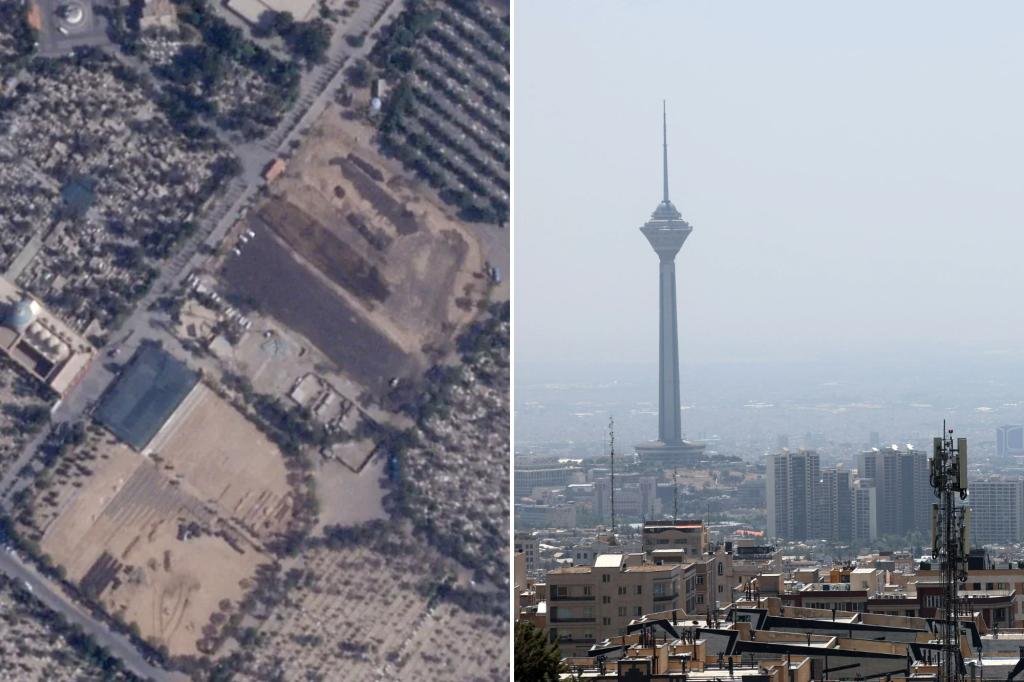
A barren stretch of sand and sparse trees at Behesht-e Zahra cemetery in Tehran is being repurposed as a parking lot, casting shadows over the tragic history of the site. Lot 41, once a burial ground for victims of the mass executions following Iran’s 1979 Islamic Revolution, is now undergoing a transformation. The area, serving as a final resting place for thousands killed during the chaotic aftermath of the revolution, is now being covered with asphalt to accommodate vehicles, erasing the memory of those who met a tragic end in that tumultuous period.
The decision to pave over Lot 41 has sparked outrage and condemnation from human rights groups and families of the victims. The move is seen as a callous disregard for the history and suffering of those who lost their lives in the 1979 revolution and its aftermath. The burial grounds hold a deep significance for many families, and the transformation of the site into a parking lot is viewed as a disrespectful act that dishonors the memory of the victims. The lack of acknowledgment and respect for the sacrifices made by those buried in the mass grave has further fueled resentment and sorrow among the survivors and relatives of the deceased.
The conversion of the burial ground into a parking lot highlights a troubling trend of erasing historical memory and silencing voices of dissent in Iran. By repurposing the site of a mass grave as a mundane space for vehicles, the government is effectively diminishing the significance of the tragic events that unfolded in the aftermath of the 1979 revolution. The act of paving over the mass grave serves as a stark reminder of the regime’s attempts to suppress and erase the memory of dissidents and victims of political oppression, further perpetuating a culture of impunity and denial of human rights abuses.
The desecration of Lot 41 underscores the ongoing challenges facing human rights advocates and activists in Iran, where dissent and demands for accountability are met with repression and silencing. The transformation of a sacred burial ground into a parking lot symbolizes the authorities’ efforts to bury the past and silence the voices of dissent in the country. Despite the backlash and outcry from families and rights groups, the Iranian government’s decision to pave over the mass grave serves as a stark reminder of the obstacles faced by those seeking justice and recognition for the victims of past atrocities.
As the asphalt covers the once solemn grounds of Lot 41, the memory of the victims and the atrocities committed in the aftermath of the 1979 revolution risk being forgotten and erased. The transformation of the burial site into a parking lot stands as a silent but potent symbol of the regime’s efforts to suppress dissent and erase the memory of past injustices. The legacy of the victims buried in the mass grave serves as a haunting reminder of the ongoing struggle for truth, justice, and recognition in Iran.





Deixe um comentário