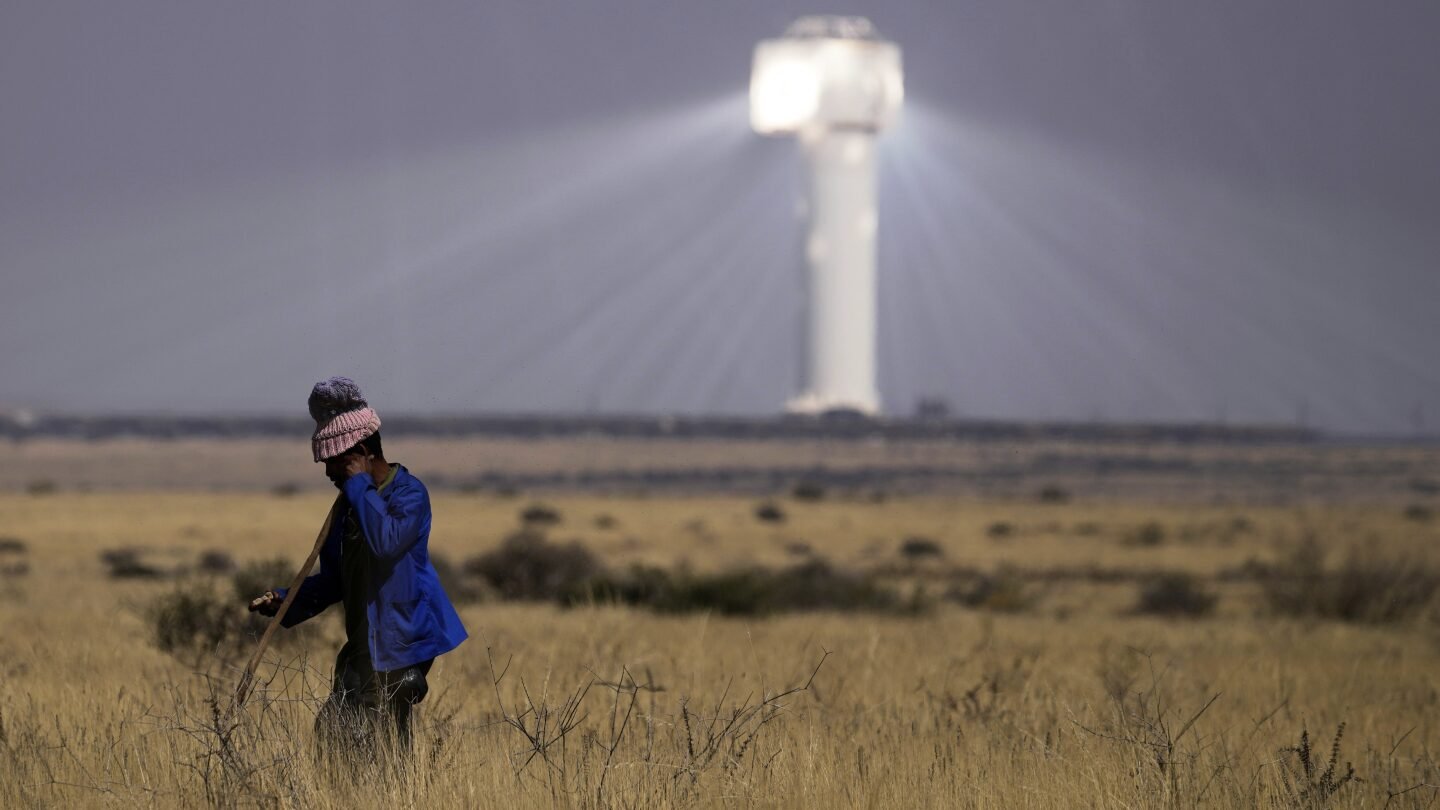
UPINGTON, South Africa — In the Northern Cape province of South Africa, the KHI Solar One project is harnessing the power of the sun to generate 50 megawatts of electricity through the use of solar mirrors. Situated south of the Kalahari Desert, the project is a beacon of hope for renewable energy in Africa.
The solar mirrors at the KHI Solar One project tilt at different angles to track the sunrays throughout the day, maximizing the efficiency of energy generation. The impressive sight of the mirrors in action showcases the potential of solar energy in the region. The project’s location in the Northern Cape province, known for its abundant sunshine, further emphasizes the viability of solar power as a sustainable energy source.
With the sun as its abundant resource, South Africa’s KHI Solar One project serves as a symbolic representation of the country’s commitment to renewable energy. By utilizing solar mirrors to capture and convert sunlight into electricity, the project not only contributes to the local energy grid but also sets an example for other African nations seeking to tap into their renewable energy potential.
The KHI Solar One project stands as a testament to the innovative solutions and advancements in renewable energy technology. As one of the leading solar power projects in South Africa, it showcases the country’s capability to harness clean energy sources for sustainable development. The project’s success paves the way for future investments in renewable energy infrastructure across Africa, promoting a greener and more environmentally friendly energy landscape.
By embracing solar energy and promoting projects like KHI Solar One, South Africa is taking significant strides towards reducing its carbon footprint and transitioning to a cleaner energy future. The project’s impact extends beyond electricity generation, offering economic opportunities and job creation in the renewable energy sector. With its efficient and sustainable energy production, the KHI Solar One project illuminates the path towards a brighter and more sustainable future for Africa.




Deixe um comentário