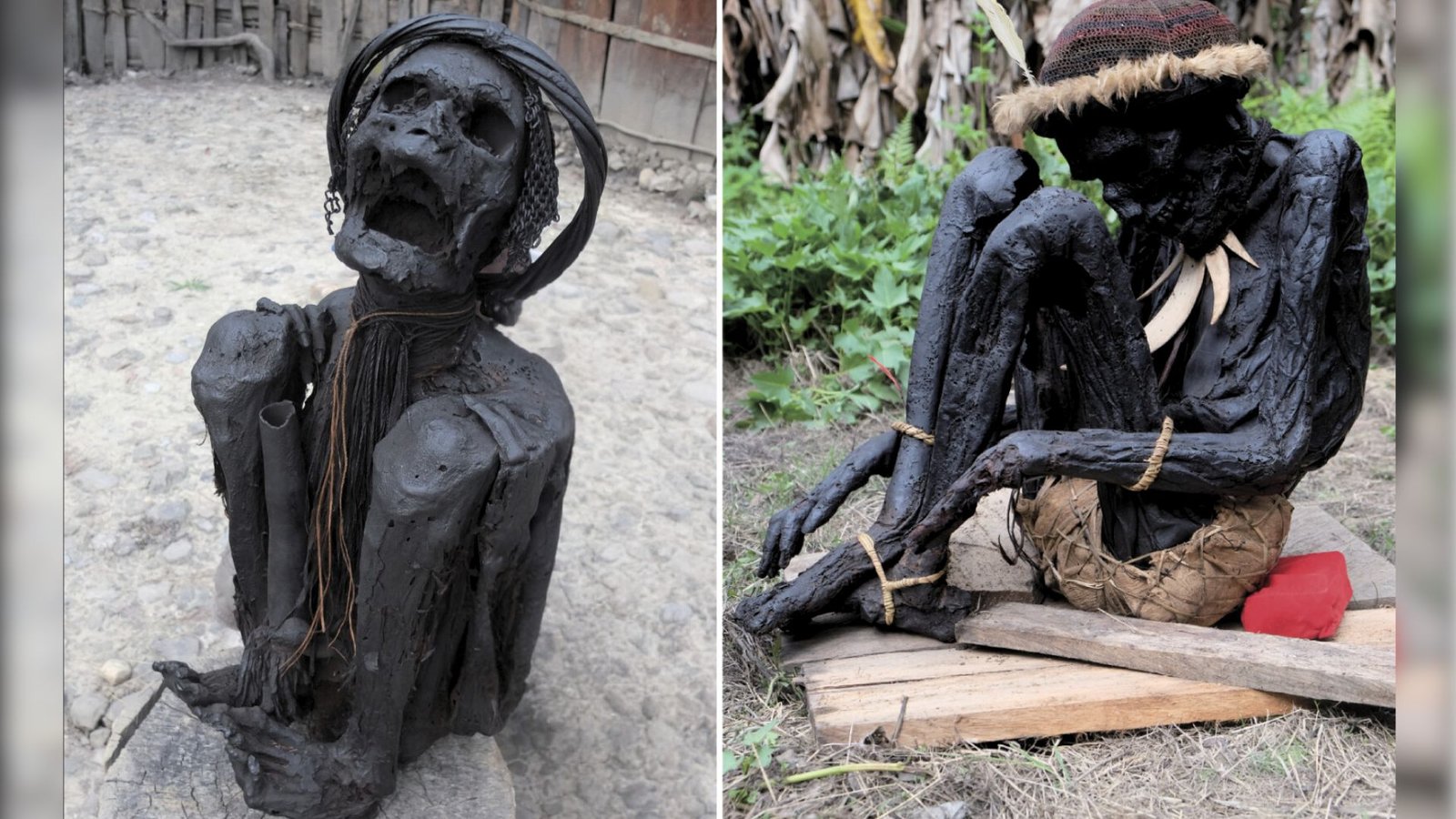
A team of researchers has uncovered what they believe to be the oldest evidence of intentional human mummification. Their study, published in the Proceedings of the National Academy of Sciences, shows that hunter-gatherer communities in southern China practiced smoke-drying of bodies between 14,000 and 4,000 years ago. This discovery sheds light on early mummification practices.
The practice of mummification in ancient societies is often associated with Egypt, but this new research challenges that belief. The findings indicate that the hunter-gatherer groups in Southeast Asia were engaging in mummification practices long before the Egyptians. The study reveals a cultural tradition that predates the well-known Egyptian mummies by thousands of years.
Researchers analyzed burial sites in the Philippines, Thailand, and Indonesia, uncovering evidence of smoke-dried bodies dating back to prehistoric times. The mummified remains found in these locations provide valuable insights into the burial customs of ancient societies. The discovery of these early mummies highlights the diversity of cultural practices in different regions around the world.
The use of smoke-drying as a preservation technique for bodies is a significant development in understanding early human rituals and practices. By examining the mummified remains, researchers were able to piece together the cultural significance of mummification in ancient societies. The findings challenge the conventional timeline of mummification history, showing that the practice was not exclusive to a single region.
Understanding the early origins of mummification offers a new perspective on the funerary practices of ancient civilizations. The discovery of these prehistoric mummies in Southeast Asia broadens our understanding of how different cultures approached death and burial. The research opens up new avenues for studying the diversity of cultural traditions in the ancient world.





Deixe um comentário