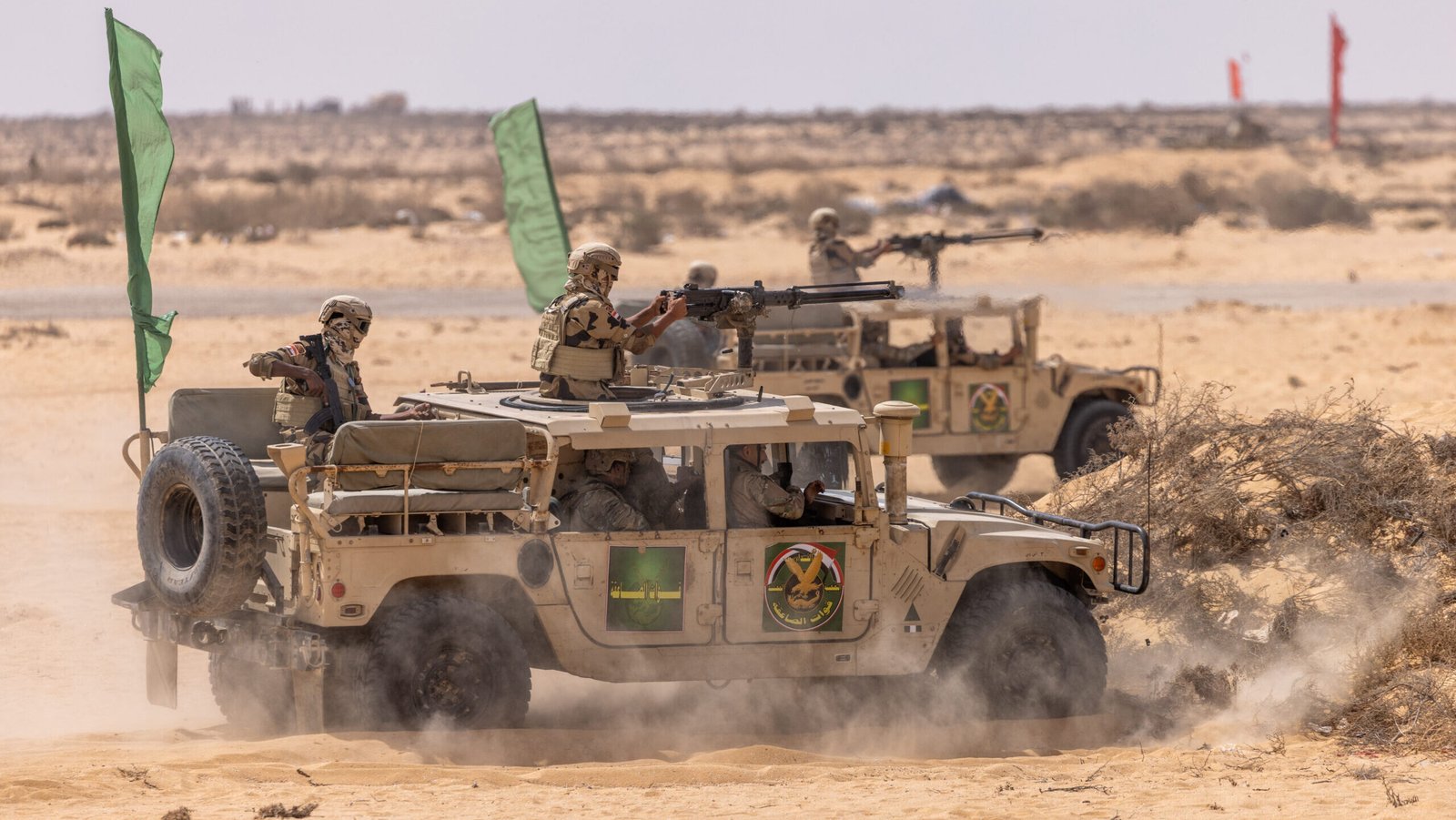
While Chinese fighter jets dominated the skies of Egypt in May, it was American military strength that made its presence felt on the sands in a recent military exercise. Bright Star 25, a significant multinational drill co-hosted by Egypt and the United States, took place in August. Mariam Wahba and Ryan Brobst from the Foundation for Defense of Democracies argue that this drill, despite its success, points to a troubling shift in the dynamics between Washington and Cairo. The involvement of China in Egypt’s military affairs raises questions about the US’s commitment to its traditional allies in the region.
One of the key concerns highlighted by Wahba and Brobst is the potential implications of the US neglecting its relationship with Egypt as China ramps up its engagement. The authors point out that the successful military exercise between Egypt and the US should not mask the broader strategic implications of the growing partnership between Cairo and Beijing. With China expanding its influence in the Middle East, Washington risks sleepwalking into a situation where Egypt pivots towards Beijing, potentially undermining US interests in the region.
The authors stress the importance of Washington reassessing its strategy towards Egypt in the face of China’s increasing presence. They argue that the US needs to prioritize its relationships with key allies like Egypt to prevent further erosion of its influence in the region. Wahba and Brobst warn that a failure to recognize the changing dynamics could result in Washington losing a critical partner in the Middle East, with consequences for regional stability and US national security.
As Beijing strengthens its ties with Cairo, the authors urge Washington to wake up to the shifting geopolitical landscape in the Middle East. They caution that a complacent approach towards Egypt could lead to a strategic setback for the US, as China deepens its footprint in the region. Wahba and Brobst call for a proactive and recalibrated US foreign policy that takes into account the changing alliances and power dynamics to safeguard American interests and partnerships in the Middle East.
In conclusion, Wahba and Brobst’s op-ed serves as a wake-up call for Washington to pay closer attention to its relationship with Egypt amidst China’s growing influence. They emphasize the need for the US to engage more actively with Egypt and other regional allies to counterbalance China’s expanding presence. By recognizing the strategic significance of Egypt as a traditional partner, Washington can avoid the pitfalls of sleepwalking and instead assert its leadership in the increasingly competitive geopolitical arena.





Deixe um comentário