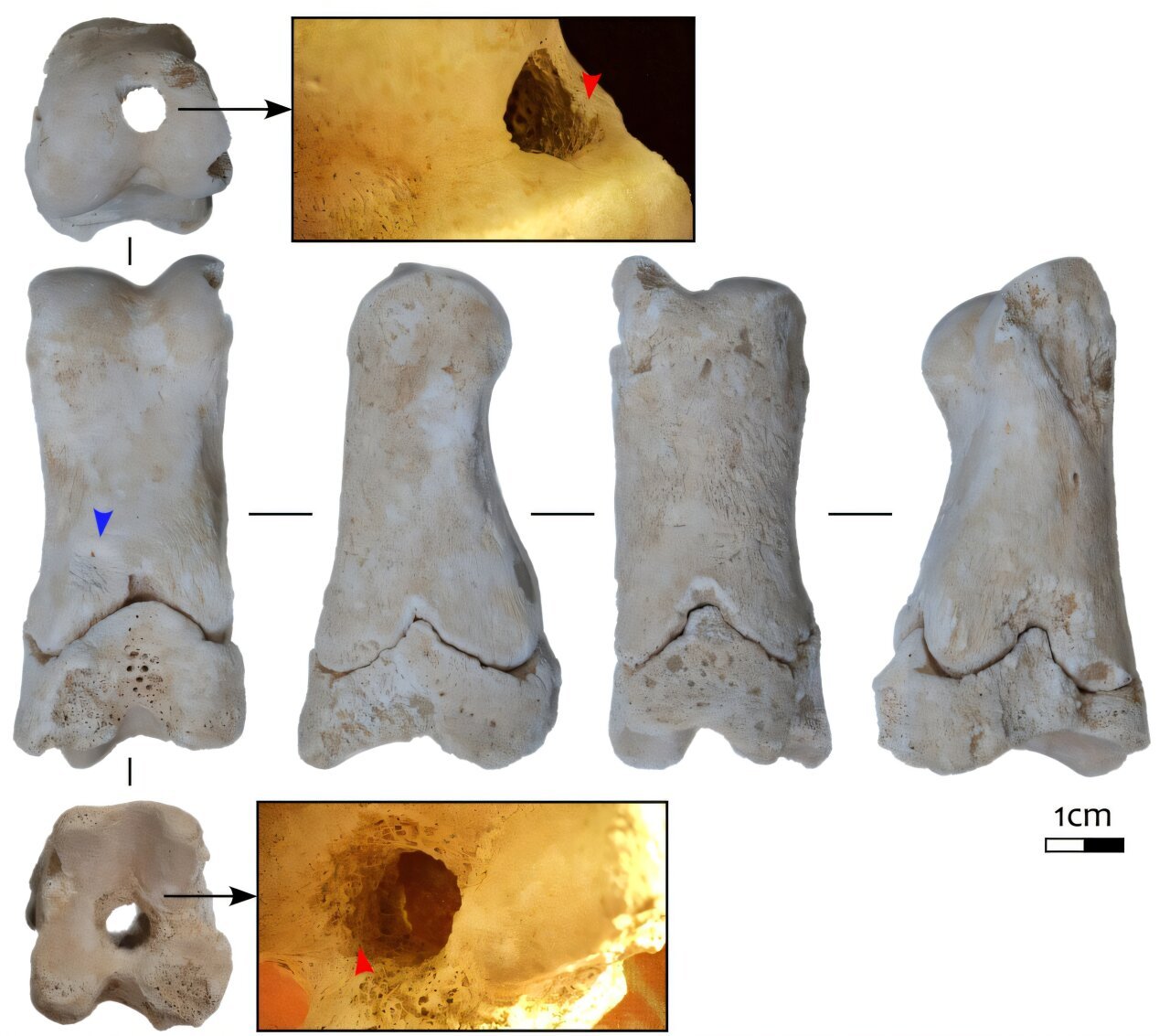
Archaeologists in Egypt have unearthed a 3,300-year-old whistle, crafted from a cow’s toe bone. This unique artifact is believed to have been utilized by ancient Egyptian ‘police’ to protect the workers of royal tombs. The discovery was made in the remnants of Akhetaten, modern-day Amarna, back in 2008 but was recently identified. It stands as the first bone whistle ever found in ancient Egypt, shedding light on daily life and security measures at the time.
The whistle’s historical significance lies in its potential use by a specialized group of enforcers responsible for safeguarding the workers involved in the construction of royal tombs. This finding offers valuable insights into the ancient Egyptian society’s security infrastructure. The piece was unearthed in the ancient city of Akhetaten, a location that has been a focal point for various archaeological discoveries. Its identification as a potential policing tool adds another layer of understanding to the city’s history and the role of authorities in maintaining order during that era.
The ancient bone whistle provides a tangible link to the past, showcasing the creative ways in which early civilizations utilized everyday objects for specific purposes. The whistle’s discovery challenges preconceived notions about law enforcement and security measures in ancient Egypt. By examining this relic, researchers can glean information about the methods employed to ensure the safety and protection of workers engaged in monumental tasks like the construction of royal tombs.
The finding of the cow bone whistle not only expands our knowledge of ancient Egyptian practices but also prompts a reevaluation of our understanding of the era’s social structure and organization. As researchers continue to study this artifact, they uncover more about the intricate network of roles within ancient Egyptian society and the significance of security measures in maintaining societal order. The whistle serves as a testament to the importance placed on security and protection in the ancient world, highlighting the advanced strategies employed to ensure the well-being of key individuals working on important projects.
In conclusion, the discovery of the cow bone whistle in Akhetaten provides a unique glimpse into the methods used by ancient Egyptian authorities to maintain order and security. By analyzing this artifact, archaeologists unveil new perspectives on the ancient society’s policing practices and the protection of royal tomb workers. This finding underscores the innovative approaches taken by ancient civilizations to address security challenges and adds another layer of complexity to our understanding of law enforcement in antiquity.





Deixe um comentário