The rapid advancement of next-generation sequencing (NGS) technologies has yielded vast amounts of sequence data and enabled phylogenetic analyses, particularly for groups that have been particularly recalcitrant to phylogenetic resolution. Malus, a widespread genus in the Rosaceae family, holds economic and ornamental importance with plants like apples and crabapples. Leveraging genome and transcriptome data from 45 sources, we reconstructed a robust phylogeny involving 32 Malus taxa and related species, uncovering key biogeographical patterns and character evolution. Through coalescent-based analyses of gene families and orthologs, our study reveals Malus’ inclusion of Eriolobus and Docynia, identifying six distinct clades within the genus. Originating in Northern and Southern East Asia around 20 million years ago (Ma), Malus later spread to other regions, maintaining ancestral traits like a persistent calyx, lobed leaves, and stone cells. Phylogenetic signals were strong in calyx structure, leaf morphology, and stone cell presence, with fruit size showing correlation to calyx features. This research offers fresh perspectives on Malus’ phylogeny, biogeography, and morphological evolution.
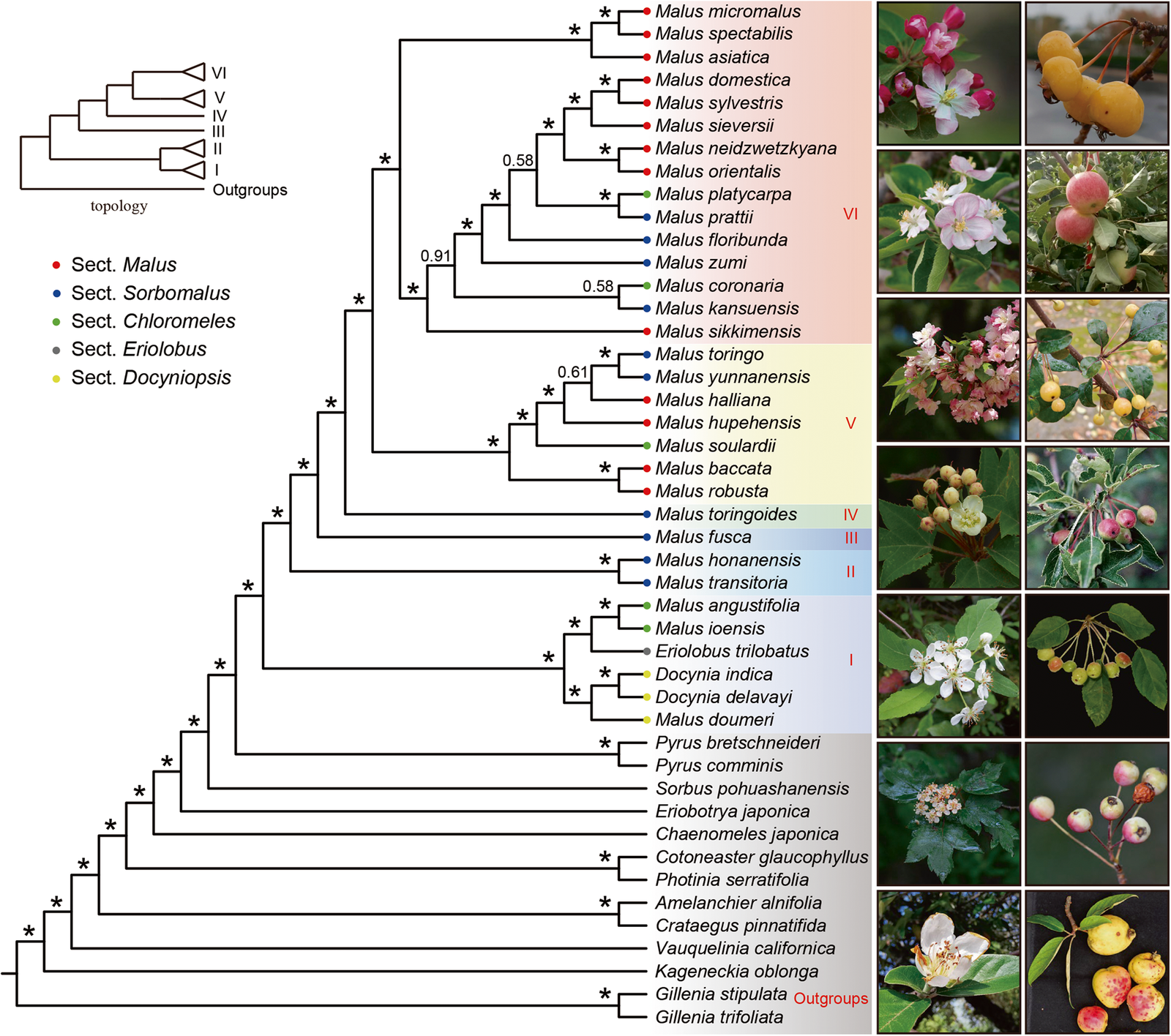
Nuclear Phylogeny of Malus: New Insights into Biogeography and Character Evolution

-

Flamengo and PSG have faced each other three times; check out their record
-

Indonesia Open Footgolf Tournament: Comedian Oki Rengga Admits Addiction, Wants to Become a Professional Athlete
-

Shameful Incident in Punjab! Landlord Rolls Tenant’s Daughter
-

Virgil van Dijk Expresses Desire for Mohamed Salah to Stay at Liverpool
Deixe um comentário