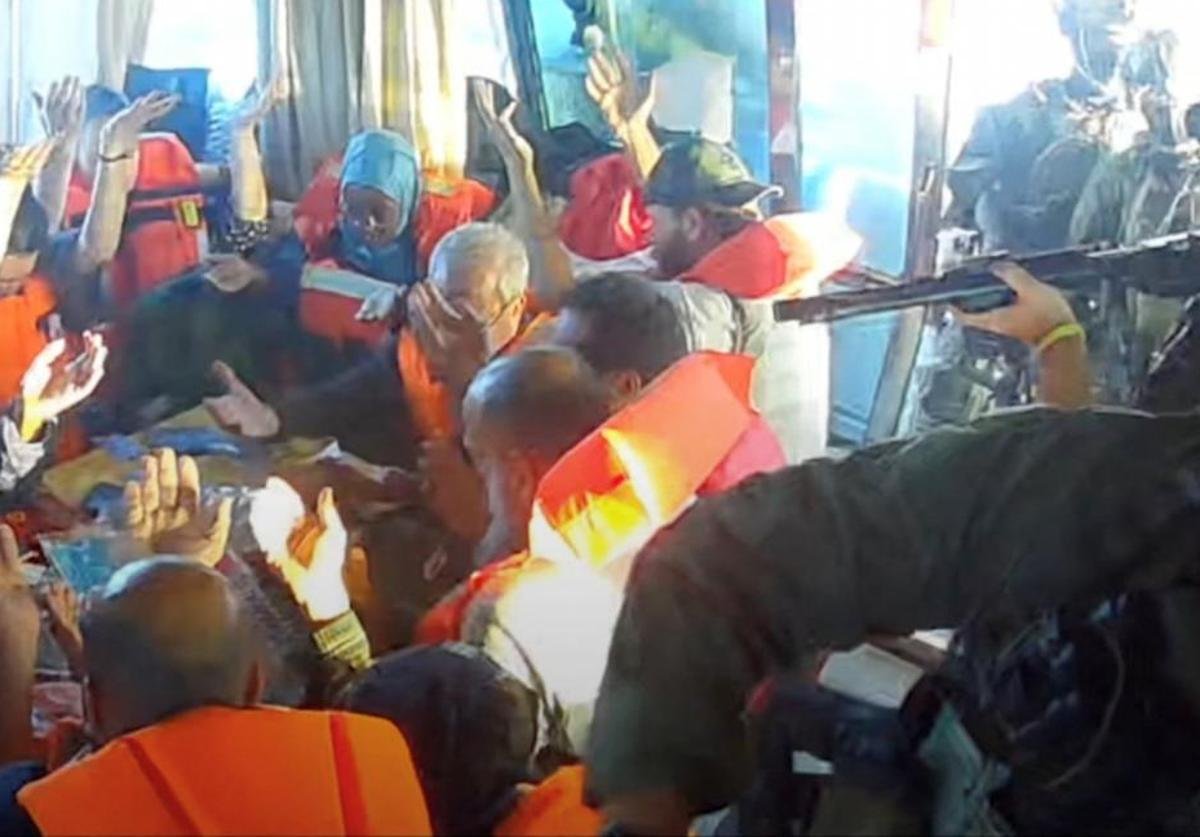
Throughout Wednesday night and into Thursday morning, Israeli military personnel intercepted each of the boats in international waters, detained the activists, and took them to the Ashdod port, located south of Tel Aviv. There, they were met with officials who were prepared to process them for deportation or legal proceedings. Those who agree to deportation will be flown back to their home countries, while those who resist will be held in custody until their trial.
Israeli authorities have stated that the interception of the vessels was necessary to maintain national security and prevent any unauthorized entry into their territory. The activists, who were part of the Flotilla, aimed to deliver humanitarian aid to Gaza, but their mission was met with resistance from Israeli forces. The situation has escalated, leading to the activists’ detainment and impending deportation or legal action.
The Flotilla activists have faced challenges and obstacles since embarking on their journey, with Israeli military vessels tracking them closely and eventually taking control of the boats. The detained individuals will now have to decide whether to voluntarily accept deportation or contest their expulsion in court. The consequences of their decisions could determine their future actions and involvement in further humanitarian missions.
As tensions rise and international attention focuses on the fate of the Flotilla activists, discussions around human rights, freedom of movement, and the Israeli-Palestinian conflict have reached new heights. The activists’ determination to deliver aid to Gaza underscores the complex political dynamics and humanitarian concerns that persist in the region. Their treatment by Israeli authorities and the global response to their situation will shape the ongoing narrative of activism and aid delivery in conflict zones.





Deixe um comentário