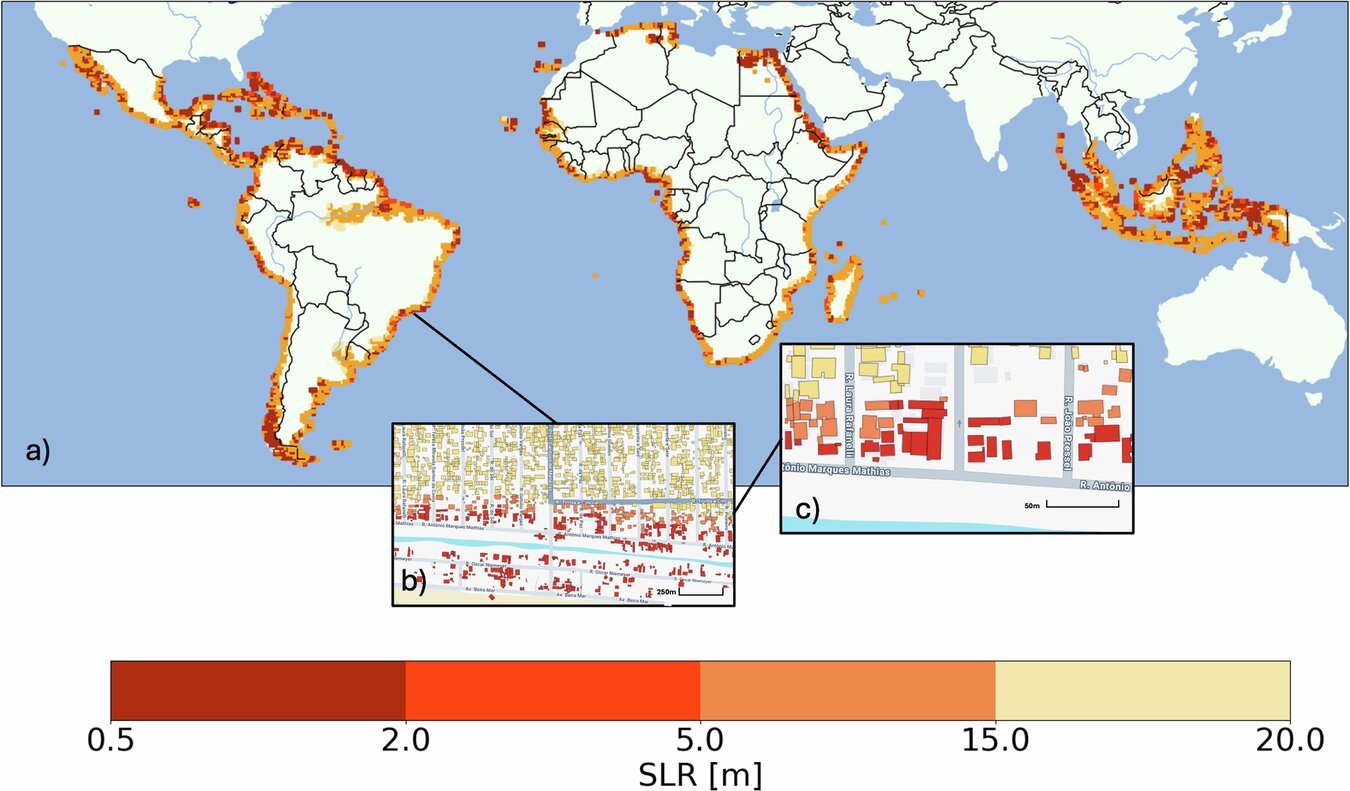
Sea level rise could put more than 100 million buildings across the Global South at risk of regular flooding if emissions are not curbed quickly, a study led by McGill University warns. Published in npj Urban Sustainability, the research highlights the urgent need for action to address the impact of rising sea levels on vulnerable regions.
The study indicates that unless significant measures are taken to reduce fossil fuel emissions, millions of buildings in the Global South could face frequent flooding. This poses a serious threat to infrastructure, communities, and economies in those regions. The findings underscore the importance of global efforts to combat climate change and protect vulnerable coastal areas from the impacts of sea level rise.
According to the research, areas in the Global South are particularly at risk, with over 100 million buildings potentially facing flooding due to rising sea levels. The study emphasizes the need for immediate action to mitigate the effects of climate change and reduce the risk to these vulnerable structures.
By identifying the potential risks posed by sea level rise, the study sheds light on the urgent need for sustainable and resilient urban planning in regions that are most susceptible to flooding. The findings serve as a wake-up call for policymakers, urban planners, and communities to take proactive steps to address the challenges posed by climate change and rising sea levels.
The research suggests that limiting fossil fuel emissions is crucial in safeguarding buildings in the Global South from the threat of regular flooding. Urgent action is needed to reduce carbon emissions and mitigate the risks posed by rising sea levels, particularly in vulnerable coastal areas. The study’s recommendations highlight the importance of adopting sustainable practices and policies to protect millions of buildings at risk from sea level rise.
In conclusion, the study emphasizes the urgent need for immediate action to address the risks posed by sea level rise to buildings in the Global South. By curbing emissions and implementing sustainable urban planning strategies, it is possible to mitigate the impact of rising sea levels and protect vulnerable communities from the devastating effects of climate change. The findings underscore the critical importance of prioritizing climate action to safeguard millions of buildings at risk from the threats of sea level rise.





Deixe um comentário