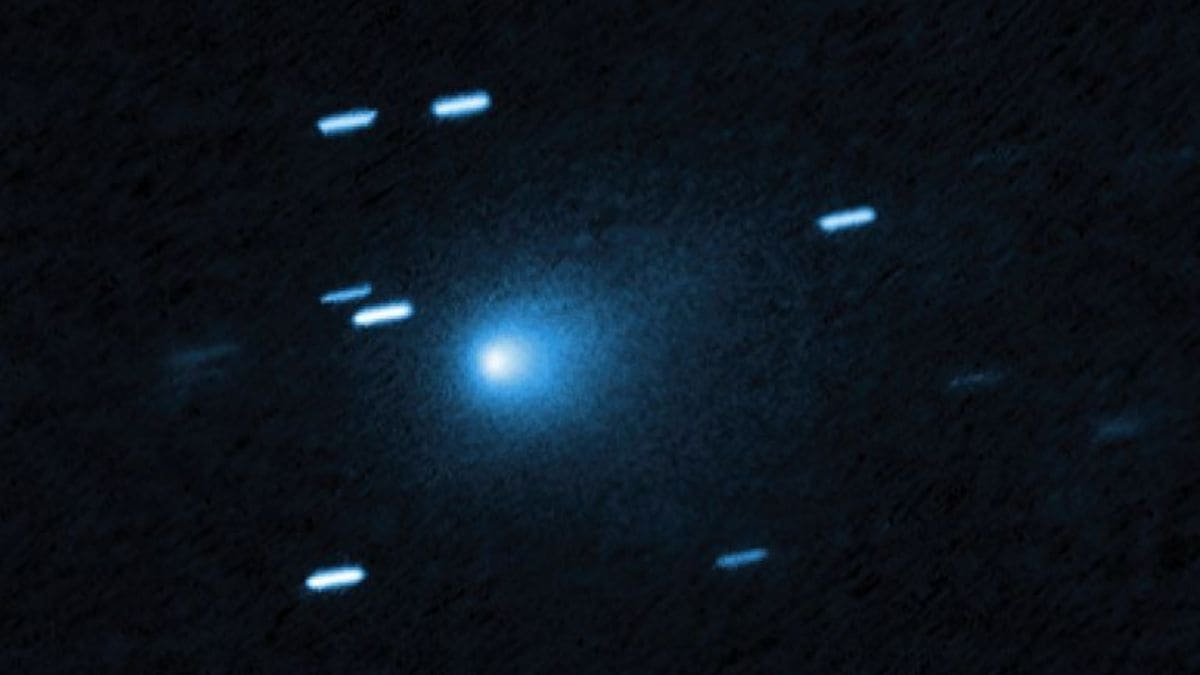
NASA’s spacecraft, Europa Clipper, might have a close encounter with the ion tail of the 3I/ATLAS comet, according to a computer model named Tailcatcher. While the spacecraft won’t pass through the dust tail, the potential interaction with the comet’s ion tail is being closely monitored. Grant, a Space.com contributor, highlighted the significance of this event, noting the lack of data on interstellar comets and their star systems. By sampling the comet’s tail, scientists hope to gain valuable insights into these elusive objects.
Prior to this encounter, scientists had limited information about interstellar comets and their origins. The opportunity to study the ion tail of 3I/ATLAS through Europa Clipper presents a unique chance to gather data on a celestial body rarely observed up close. Grant emphasized the importance of this indirect sampling method as a means to understand the nature of interstellar objects. It is considered a valuable step towards unraveling the mysteries surrounding these comets and the systems from which they emerge.
The Tailcatcher model has been instrumental in predicting the potential intersection between Europa Clipper and the tail of 3I/ATLAS. This sophisticated computer simulation has allowed scientists to anticipate the spacecraft’s trajectory relative to the comet’s ion tail. By leveraging such advanced technology, researchers can prepare to capture valuable data during this significant cosmic event. Grant underscored the role of Tailcatcher in enabling this observational opportunity, shedding light on the unexplored terrain of interstellar comets.
As the Europa Clipper spacecraft progresses on its journey, the scientific community eagerly awaits the possibility of capturing unprecedented data on interstellar comets. This encounter with the tail of 3I/ATLAS comet represents a remarkable scientific venture, offering insights into celestial bodies beyond our solar system. Grant expressed optimism about the potential discoveries that could emerge from this mission, highlighting the collaborative efforts driving innovative research in space exploration.
In the realm of space exploration, the Europa Clipper’s potential encounter with the tail of a comet signifies a significant milestone in the study of interstellar bodies. This celestial rendezvous holds promise for expanding our understanding of comets from outside our solar system, sparking excitement within the scientific community. Grant’s insights underscore the significance of this upcoming event, reflecting the scientific community’s eagerness to unravel the mysteries of interstellar comets and their enigmatic origins.





Deixe um comentário