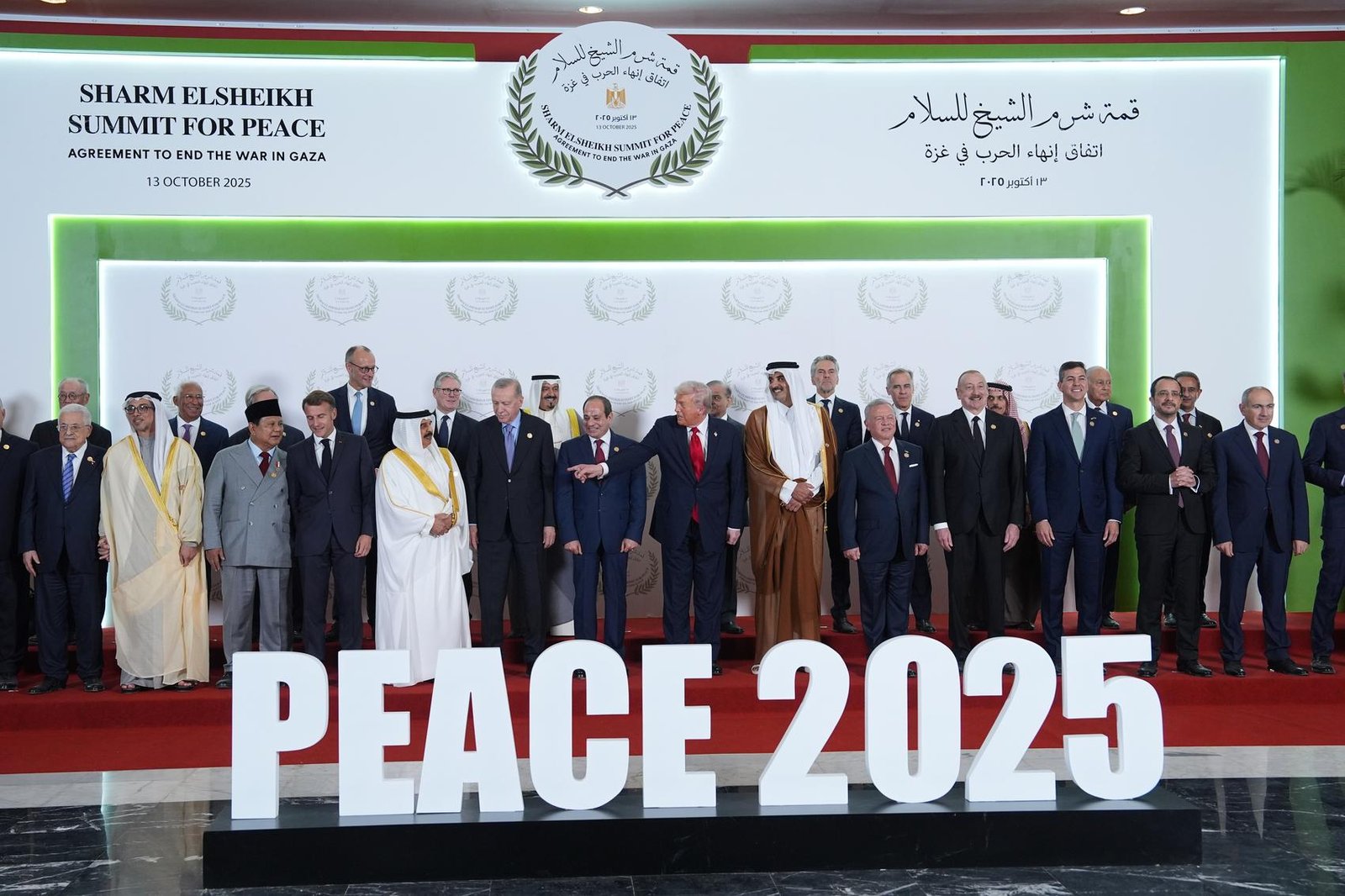
When President Donald Trump took the stage in Egypt to celebrate the U.S.-brokered ceasefire deal between Israel and Hamas, a line of world leaders stood behind him as supporting characters in a political play. This visual representation highlighted the lack of European influence in international diplomacy under Trump’s administration. Despite being traditional allies, European governments have found it challenging to maintain a significant role in shaping global policies with Trump at the helm. The scene in Egypt underscored the need for European leaders to find new strategies to stay relevant in a rapidly changing world order.
European countries have long been accustomed to playing key roles in international affairs, but Trump’s unorthodox approach to diplomacy has sidelined them in critical negotiations. As the United States takes center stage in brokering peace deals and shaping economic policies, European leaders have been left mostly as bystanders. This shift has forced European nations to reconsider their strategies and alliances to have a seat at the decision-making table. The current geopolitical landscape requires Europe to adapt quickly to keep up with Trump’s world-shaping plans and maintain their relevance on the global stage.
The image of world leaders standing behind Trump in Egypt served as a wake-up call for European governments to step up their engagement and assertiveness in international affairs. With Trump’s bold and unpredictable leadership style, European leaders recognize the importance of finding a unified voice and a common approach to address global challenges. By strengthening their diplomatic ties and leveraging their collective influence, European nations can position themselves as key players in shaping the future of international relations amidst Trump’s disruptive policies.
As Trump continues to dominate the global agenda with his America-first policies, European governments face the daunting task of balancing their own interests with the need to collaborate with the U.S. on critical issues. The push and pull between European values and Trump’s vision for the world order require European leaders to navigate complex geopolitical waters with finesse and strategic maneuvering. By actively engaging with the U.S. administration while also safeguarding their own interests, European countries can strive to carve out a meaningful role in shaping global initiatives and policies.
The pressure for European governments to assert themselves in the face of Trump’s assertive leadership has never been more pronounced. With the U.S. wielding significant influence in global affairs, European leaders must find innovative ways to make their voices heard and influence key decisions. By fostering deeper collaboration within the European Union and strengthening partnerships with like-minded nations, European governments can enhance their collective impact on shaping international norms and regulations. The evolving dynamics of world politics demand a concerted effort from European leaders to overcome the challenges posed by Trump’s world-shaping plans.



Deixe um comentário