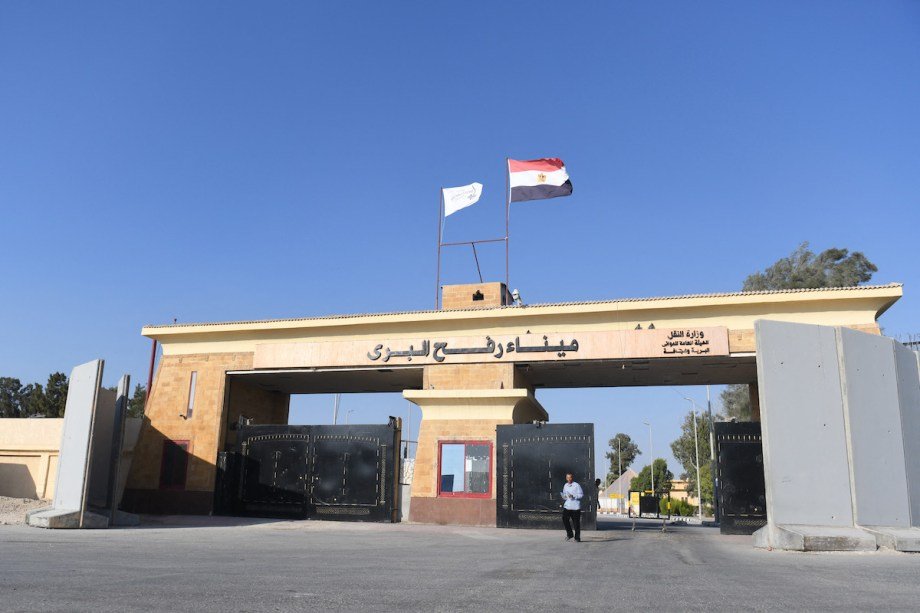
Rafah stands today as the battered yet unbroken frontier of Palestinian resistance — a landscape scarred by bombardment, starvation, and betrayal. Israel calls for disarmament, Egypt proposes to mediate, and the world, as always, expects the occupied to trust their occupier. Yet Rafah’s fighters refuse to surrender their arms — not out of fanaticism, but out of reasoned distrust. They have learned, through decades of deceit, that to hand over weapons is to sign one’s own death warrant.
The refusal to disarm cannot be understood without recalling history’s bitter lessons. Every ceasefire in Gaza has been a mirage — a pause between massacres. Every “peace process” has been a trap of words crafted to preserve Israeli impunity. Israel’s record speaks with unflinching clarity: it has violated truces, assassinated negotiators, bombed civilians under the banner of “self-defence,” and choked Gaza through a blockade that starves children and withholds medicine.
Egypt’s proposal to collect weapons from Rafah’s fighters is dressed in diplomatic language — “confidence building,” “phased truce,” “security coordination.” Yet to the people of Gaza, Egypt is no neutral broker. Cairo has helped enforce the blockade, sealed the Rafah crossing when Gazans most needed escape, demolished tunnels that were lifelines, and often echoed Israel’s talking points.
Disarmament could have meaning only in a context of equality — where both sides are bound by law, and trust can be verified. But in Palestine, equality is fiction. Israel negotiates with overwhelming military superiority, international impunity, and a colonial arrogance that mocks reciprocity. The Al-Qassam Brigades, Hamas’s armed wing, have stated unequivocally that “in the dictionary of the Al-Qassam Brigades there is no principle of surrender and self-delivery to the enemy.”
Palestinians are not naïve. They know that the same Western powers calling for calm are the ones replenishing Israel’s arsenals and blocking accountability at the UN. They watch as humanitarian aid is politicised, as journalists and doctors are targeted, and as the so-called international community recycles its hollow language of “both sides.”
UN reports confirm the catastrophic reality. The United Nations Relief and Works Agency (UNRWA) estimate that about 400,000 Palestinians were displaced again following the collapse of the latest ceasefire. In such a world, surrender is suicide. To demand that Rafah’s fighters surrender before the siege is lifted, before prisoners are freed, before the displaced can return, is to demand capitulation masquerading as peace.
If there is to be a real ceasefire, it must begin with truth — not the convenient lies that equate occupier and occupied. It must recognise that the weapons in Rafah are not the cause of violence, but the symptom of a deeper injustice: the occupation itself. Only a framework grounded in justice can make disarmament conceivable. The international community must stop treating Palestinian resistance as the obstacle to peace and instead confront the impunity that fuels Israel’s aggression.
Marwan Barghouthi’s words echo through every tunnel and shattered home: “Peace will not be achieved by silencing the resistance, but by ending the occupation.” To expect Rafah’s fighters to surrender while their people are still under siege is to misunderstand what resistance means.


Deixe um comentário