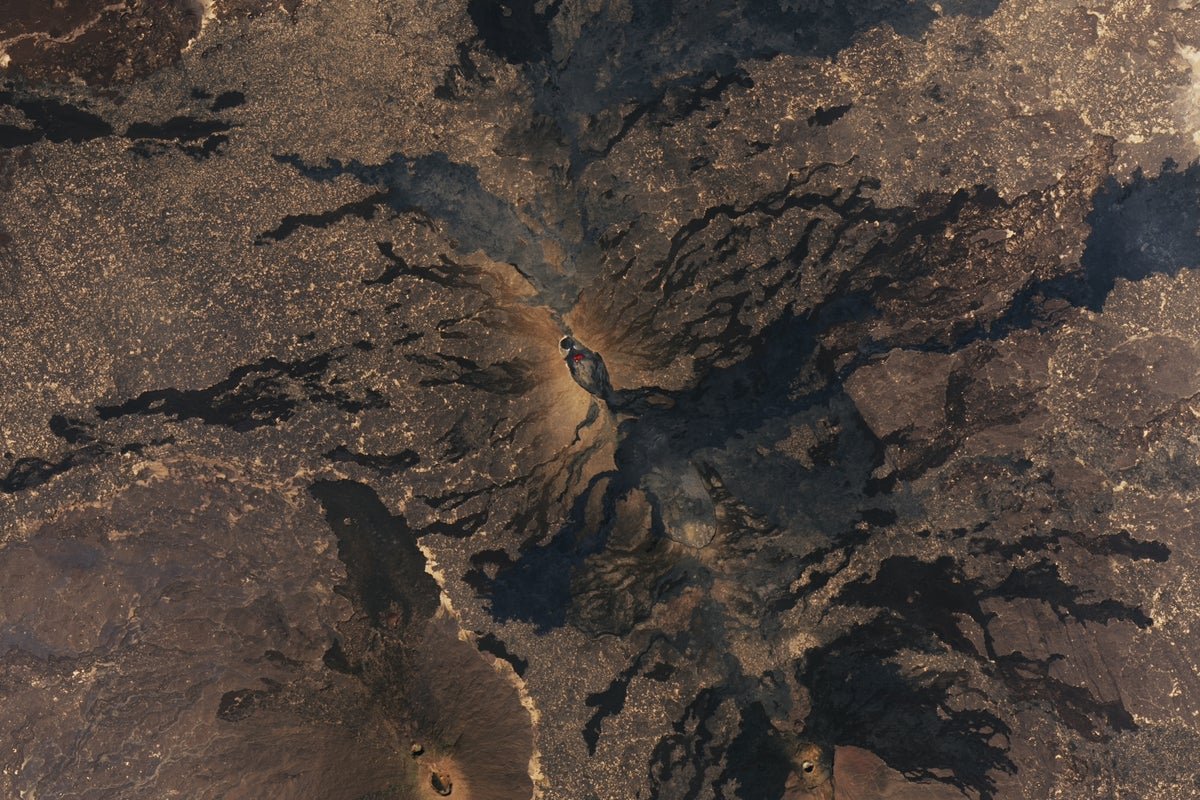
A long-dormant volcano in Ethiopia recently erupted, spewing ash nine miles into the sky in a major event that hadn’t been seen in over 12,000 years. Located in the arid and rural northeast of Ethiopia, the Hayli Gubbi volcano’s eruption has caught the attention of scientists. Earth scientist Juliet Biggs from the University of Bristol believes that this eruption may hint at other previously undetected volcanic activities in the region.
Juliet Biggs mentioned, ‘I would be really surprised if more than 12,000 years ago really is the last eruption date.’ Although there were no confirmed eruptions in that lengthy span of time, satellite imagery suggests recent lava emissions. This unusual eruption is a significant event as Hayli Gubbi is a shield volcano, typically known for gentle lava flows, not massive ash columns.
This eruption, characterized by a large umbrella cloud, is highly uncommon in this area, according to Biggs. Situated in the East African Rift Zone, the Hayli Gubbi volcano is in a region where the African and Arabian plates are slowly moving apart, potentially leading to the formation of a new ocean. Volcanologist Arianna Soldati of North Carolina State University explains that the Earth’s crust stretching and thinning allows magma to rise, ultimately resulting in volcanic eruptions.
Despite the long period of dormancy, the conditions for magma formation persisted, allowing for an eruption like the one at Hayli Gubbi, as Soldati describes. Further investigations had hinted at the possibility of an eruption, especially after a nearby volcano, Erta Ale, erupted in July. Scientists were able to collect ash samples post-eruption, providing insights into the magma involved. These recent volcanic activities shed light on the lack of understanding about the region’s geological phenomena.





Deixe um comentário