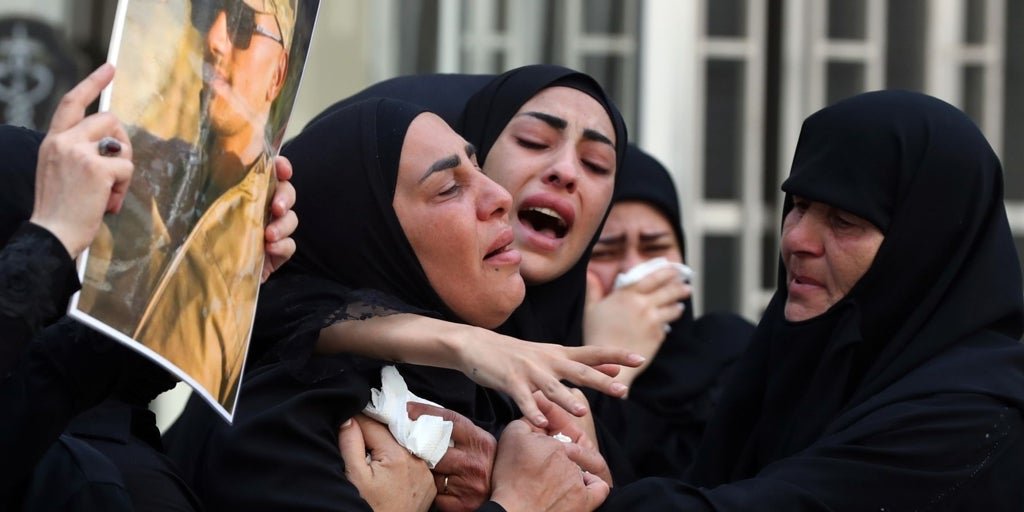
This Sunday, Lebanon buried the six soldiers killed in an explosion while dismantling weapons from a depot in the southern part of the country. The Army, whose troops are tasked with dismantling all of Hezbollah’s infrastructure in the south, announced a disarmament plan that has intensified tensions with the militia and Iran, who have both accused Israel of instigating it.
Hezbollah, a powerful Shiite group backed by Iran, has long been a key player in Lebanese politics and has a powerful military wing. The government’s call for disarmament directly challenges Hezbollah’s dominance, leading to heightened political tensions in the country.
The incident of the soldiers’ deaths underscores the risks involved in dismantling weapons depots, highlighting the volatile situation in Lebanon. Hezbollah’s refusal to comply with the disarmament plan further complicates the country’s stability, as the group’s weapons cache poses a threat to Lebanon’s security.
Iran’s support for Hezbollah adds a layer of complexity to the situation, with geopolitical tensions in the region exacerbating the already fragile state of affairs in Lebanon. The accusations against Israel only serve to fuel existing animosities and raise concerns about the potential for further conflict in the already turbulent Middle East.
As Lebanon navigates this challenging period, the international community closely watches developments in the country, mindful of the potential for escalation and the broader implications for regional stability. The government’s commitment to dismantling Hezbollah’s arsenal is met with resistance, highlighting the intricate web of political, military, and regional dynamics at play in Lebanon.
The delicate balance of power between Hezbollah, the government, and external actors like Iran and Israel underscores Lebanon’s role as a powder keg in the Middle East, where any misstep could have far-reaching consequences. Despite the risks and challenges, Lebanon continues to strive for stability and peace in a region plagued by conflict and uncertainty.



Deixe um comentário