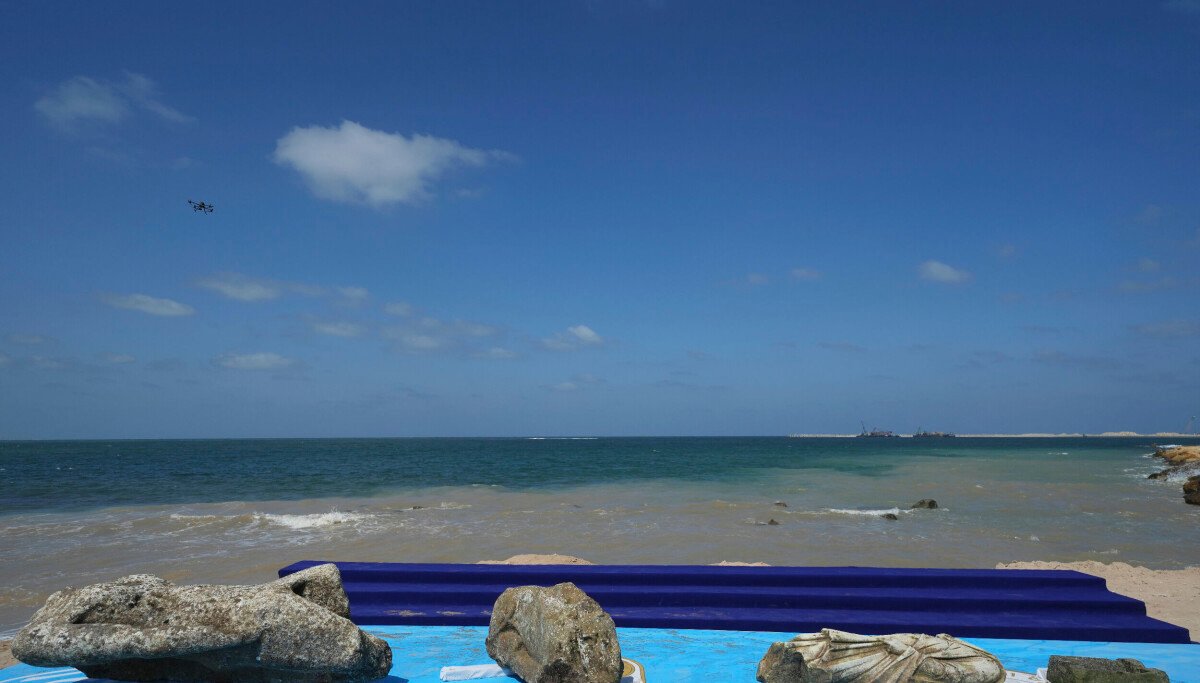
An excavation project that began in 2023 is starting to yield ancient treasures. Archaeologists discovered underwater structures around 2.5 kilometers from the ancient sunken city of Thonis-Heracleion in the Abu Qir Bay. They have now begun to retrieve objects from there. The findings shed new light on the history of this region and offer valuable insights into the daily lives of ancient Egyptians.
The artifacts found include coins, pottery, and jewellery, providing a glimpse into the maritime trade and cultural exchanges that took place in the area during antiquity. The discovery of a large stone block inscribed with hieroglyphs is particularly significant, as it may hold clues to the city’s past. Researchers are excited about the possibility of unlocking more secrets buried beneath the seabed.
Experts believe that the artifacts were well-preserved due to the unique conditions of the seabed, which helped protect them from decay. The discovery has sparked renewed interest in underwater archaeology in Egypt and has prompted calls for further exploration of the region. The findings have not only enriched our understanding of ancient civilizations but also highlighted the importance of underwater research in uncovering hidden histories.
The project represents a milestone in the field of marine archaeology and opens up new possibilities for future discoveries in the region. The team plans to continue their excavations and hope to unearth more artifacts that could rewrite the history books. The significance of these findings cannot be overstated, as they offer a rare glimpse into a world long forgotten by time.




Deixe um comentário