On November 23, 2025, the long-dormant Hayli Gubbi volcano in Ethiopia erupted, releasing a significant amount of sulphur dioxide into the atmosphere for the first time in 12,000 years. Located 800 kilometers northeast of Addis Ababa, the volcano’s eruption led to an ash cloud rising to 45,000 feet, affecting commercial airspace. Satellite imagery, including from Copernicus Sentinel-5P, showed the vast SO2 plume extending over 3,700 kilometers, drifting towards the Arabian Peninsula, the Arabian Sea, and eventually reaching western India. The presence of sulphur-rich particles, volcanic ash, and glass shards in the plume raised concerns about aviation safety, air quality, and climate impacts in India.
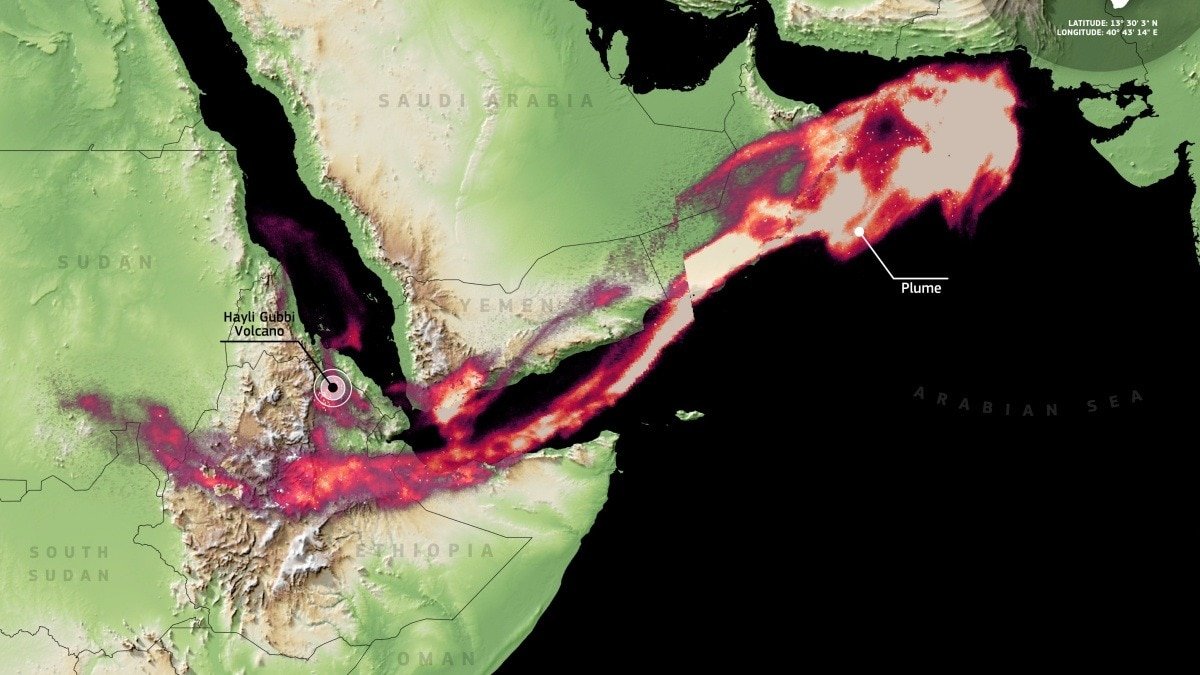
Ethiopian Volcano Eruption Sends SO2 to India, Satellite Images Show

-

Flamengo and PSG have faced each other three times; check out their record
-

Indonesia Open Footgolf Tournament: Comedian Oki Rengga Admits Addiction, Wants to Become a Professional Athlete
-

Shameful Incident in Punjab! Landlord Rolls Tenant’s Daughter
-

Virgil van Dijk Expresses Desire for Mohamed Salah to Stay at Liverpool
Deixe um comentário