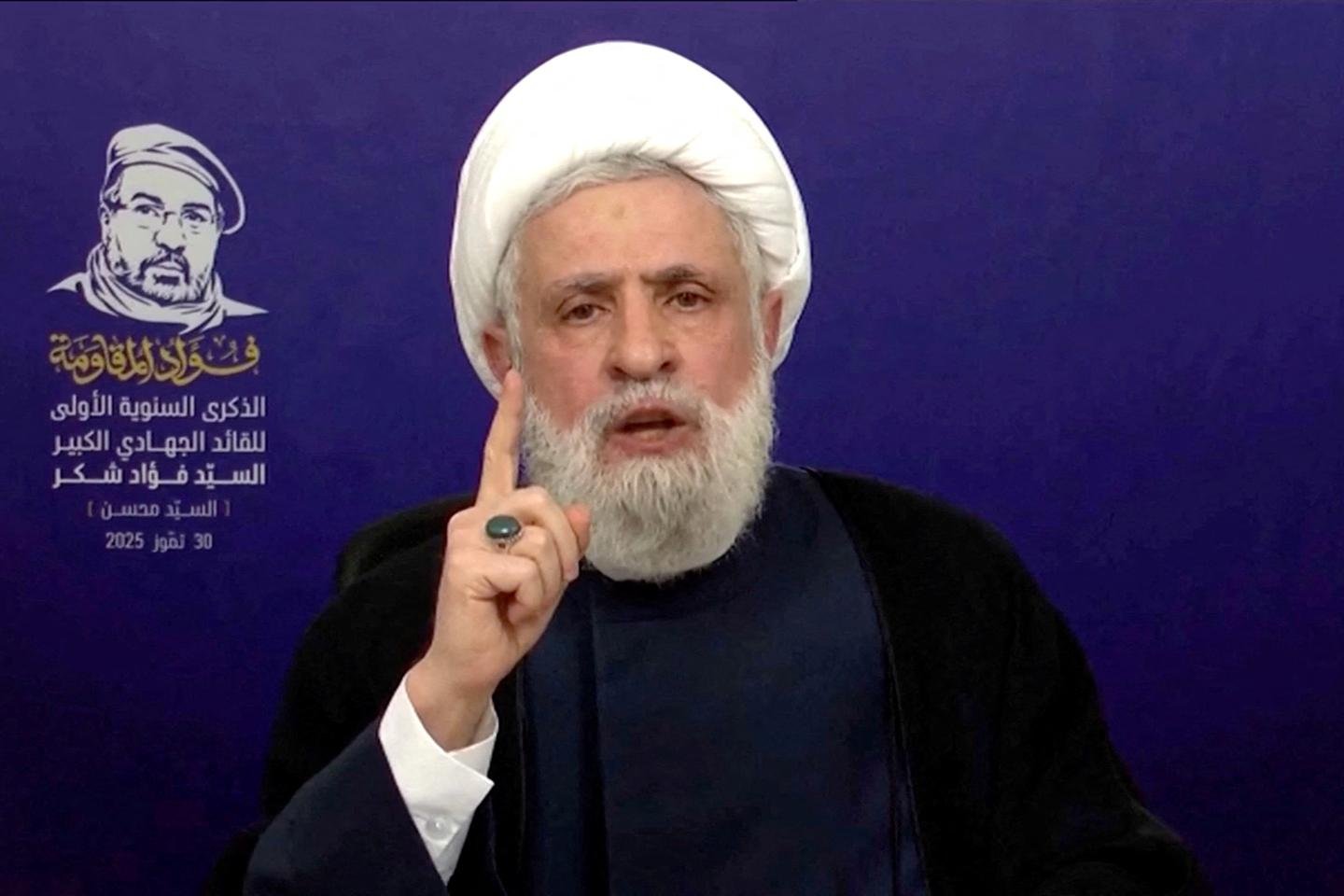
Hezbollah’s Secretary-General, Naïm Qassem, accused the Lebanese government of “handing over the country to an insatiable Israeli tyrant or a greedy American tyrant” in a televised speech on Friday, August 15. This comes after the government, amidst concerns of escalating Israeli attacks in Lebanon, instructed the army in early August to prepare a plan to disarm Hezbollah by the end of 2025. The movement, founded and funded by Iran, is considered an enemy of Israel. Qassem’s remarks reflect the tension between the government’s actions and Hezbollah’s resistance to disarmament.
Additionally, Hezbollah’s leader, Hassan Nasrallah, criticized the government for taking steps to weaken the group, stating that he would not allow the state to impose its decisions on Hezbollah’s arms. Nasrallah’s defiance highlights the challenges the government faces in disarming a powerful and influential armed group such as Hezbollah, which has a strong base of support in Lebanon. The group’s resistance to disarmament has raised concerns about the potential for internal conflict and instability in the country.
The Hezbollah leadership has long maintained that its weapons are necessary for defending Lebanon against Israeli aggression. By accusing the government of collaborating with Israel, Hezbollah positions itself as a defender of Lebanese sovereignty and resistance against external threats. This narrative resonates with many of its supporters in Lebanon, who view Hezbollah as a bulwark against Israeli incursions and a symbol of defiance against foreign intervention in the country’s affairs.
The US, a staunch ally of Israel, has been pushing for Hezbollah’s disarmament as part of its efforts to curb Iran’s influence in the region. The Lebanese government’s decision to move towards disarming Hezbollah reflects a balancing act between its commitment to international demands and the need to maintain stability and security in the country. However, the process of disarmament is likely to be complex and fraught with challenges, given Hezbollah’s entrenched position in Lebanese politics and society.
As tensions escalate between Hezbollah and the Lebanese government over disarmament, the risk of internal conflict looms large. The prospect of a power struggle between the government and the armed group poses a significant threat to Lebanon’s fragile stability. The outcome of this standoff will have far-reaching implications for the country’s future and its ability to navigate a complex geopolitical landscape in the Middle East.


Deixe um comentário