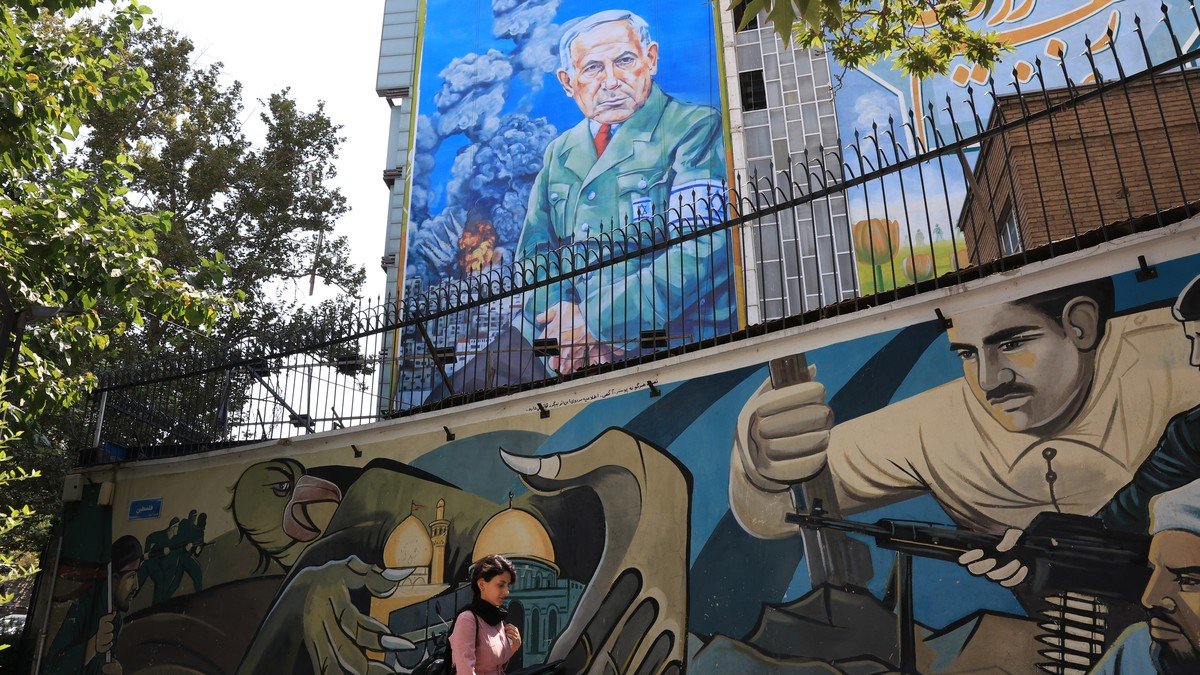
A new anti-Israeli mural with a caricature of Israeli Prime Minister Benjamin Netanyahu at Palestine Square in Tehran, Iran, is one of the signs of escalating tensions between Israel and Iran. The two countries have been engaged in a long-standing conflict that shows no signs of easing. The mural is just one example of the ongoing preparation for a potential next war between the two nations.
Iran has been actively involved in supporting groups like Hezbollah in Lebanon that pose a threat to Israel’s security. Israel, on the other hand, has been carrying out airstrikes in Syria to prevent Iran from gaining a foothold in the region. These actions have only fueled the tensions between the two countries, with both sides seemingly preparing for a possible escalation in the conflict.
The recent assassination of a top Iranian nuclear scientist, believed to be orchestrated by Israel, has further heightened the tensions between the two nations. Iran has vowed revenge for the killing, raising concerns about a potential retaliation that could lead to a full-blown war. Israel, on its part, has been on high alert, anticipating possible attacks from Iran or its proxies in the region.
Military build-ups on both sides indicate a growing sense of preparedness for a potential conflict. Israel has been conducting military drills to simulate various scenarios of an attack from Iran, while Iran has been strengthening its missile capabilities as a deterrent against any aggression from Israel. The constant back-and-forth in terms of military actions and rhetoric between the two countries has created a volatile situation in the region, with the risk of a new war breaking out at any moment.
The involvement of other regional players, such as the United States and Saudi Arabia, adds another layer of complexity to the situation. The US has been a key ally of Israel and has shown support for its actions against Iran, while Saudi Arabia has its own interests in containing Iran’s influence in the region. This complex web of alliances and rivalries only adds to the unpredictability of the situation and raises concerns about the potential for a wider conflict with devastating consequences.
Diplomatic efforts to ease tensions between Israel and Iran have so far been unsuccessful, with both sides remaining firm in their positions. The lack of communication channels and the deep-seated animosity between the two countries make it difficult to find a peaceful resolution to the conflict. As a result, the prospect of a new war between Israel and Iran looms large, with both countries seemingly gearing up for a confrontation that could have far-reaching consequences for the entire region.




Deixe um comentário