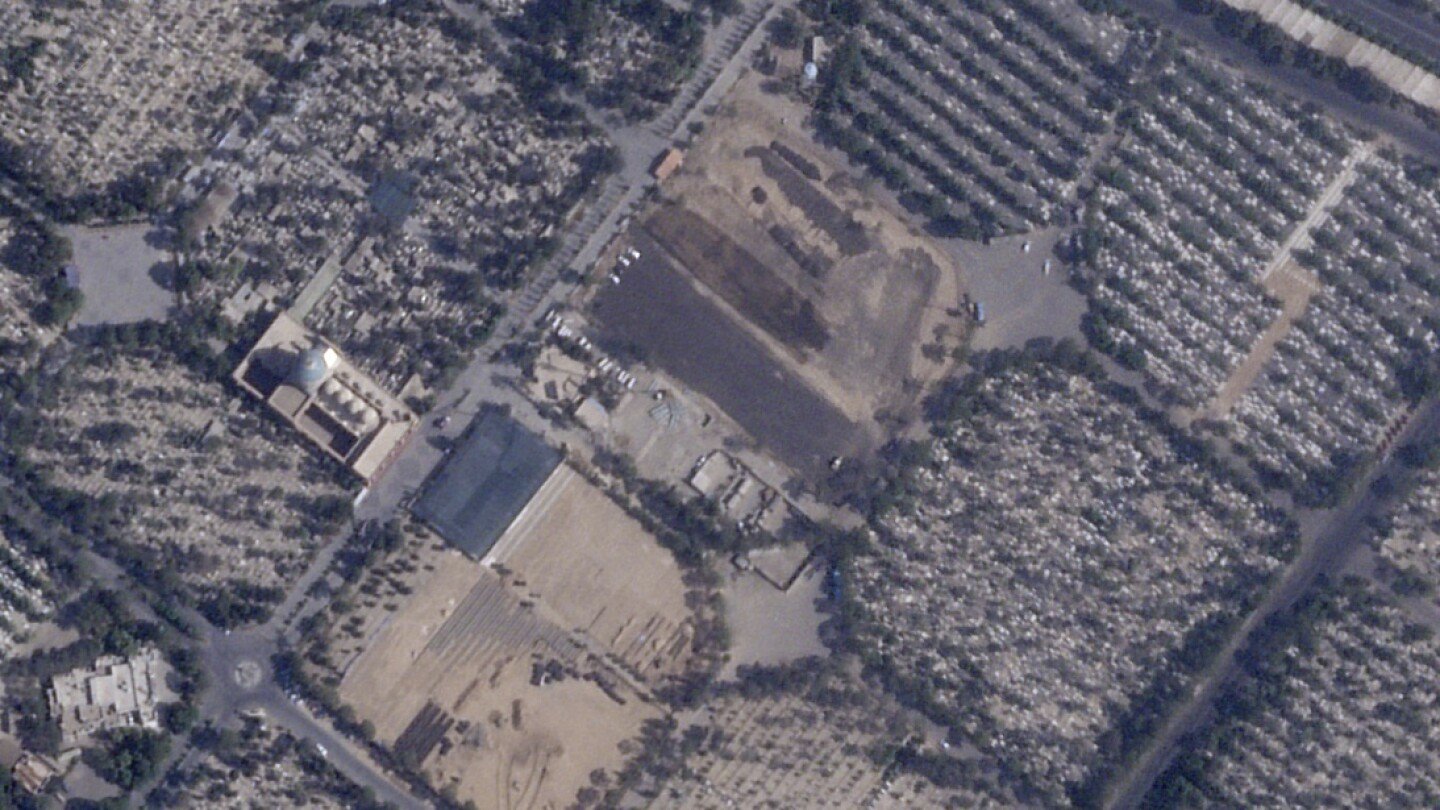
Iran’s largest cemetery, located in Tehran, is undergoing significant changes as it is being paved over. This cemetery has long been believed to be the burial ground for many individuals who were victims of mass executions that occurred after the Islamic Revolution of 1979. The once desert-like area with sand and sparse trees is now being transformed, sparking concerns among families of the deceased and human rights activists.
The mass executions that took place post the 1979 Islamic Revolution led to a large number of casualties, with many of the victims being laid to rest in this cemetery. The decision to pave over the graveyard has raised questions about the erasure of this dark chapter in Iran’s history. The move to cover up the graves has been met with criticism, as it is seen as an attempt to diminish the memory of those who lost their lives during that tumultuous period.
Families of the deceased are concerned about the lack of proper remembrance for their loved ones, whose final resting places are now being paved over. Human rights activists have also raised alarms about the disrespect shown to the victims of the mass executions. The changes in Tehran’s largest cemetery reflect a broader issue of historical preservation and memory in Iran, as the authorities appear to be attempting to erase this somber aspect of the country’s past.
The development in the cemetery has sparked debates about the importance of preserving historical sites, even those associated with painful periods in a nation’s history. The decision to pave over the graveyard highlights the complexities of dealing with the legacy of past atrocities. As the physical landscape of the cemetery changes, it serves as a reminder of the ongoing struggle to honor the memory of those who suffered during a dark chapter in Iran’s history.





Deixe um comentário