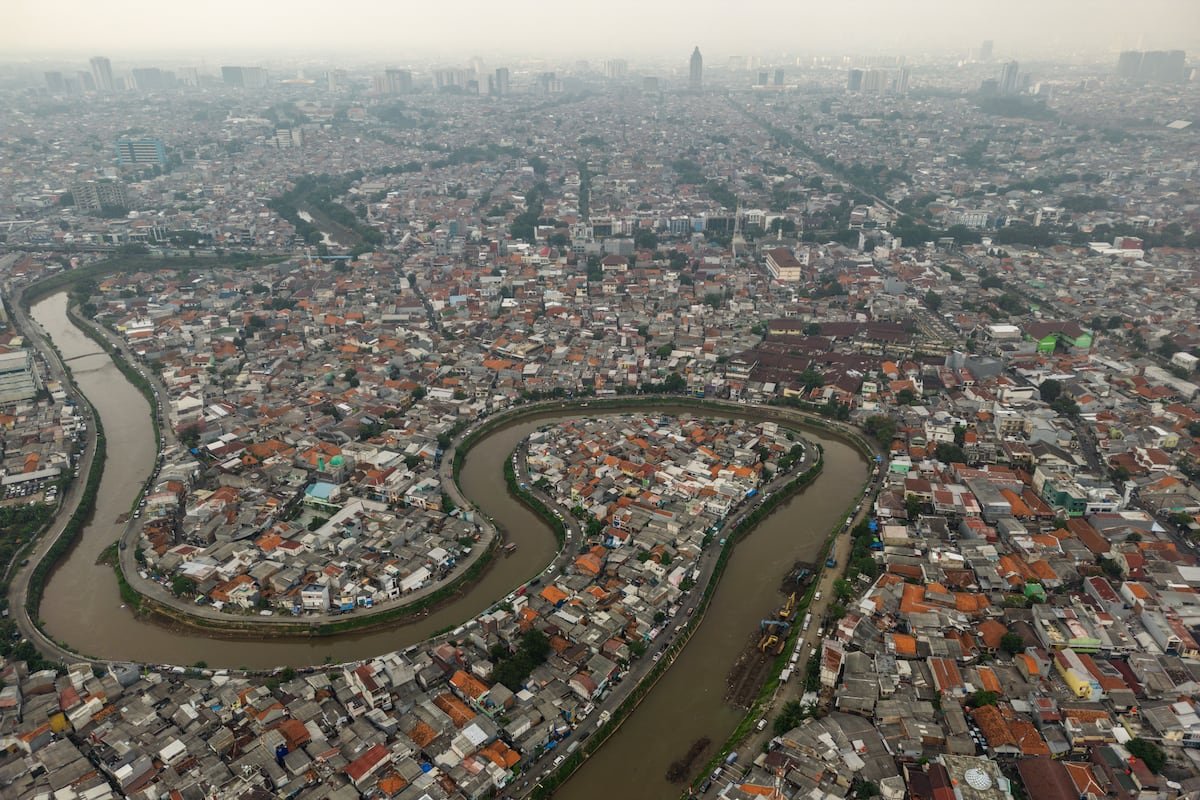
Tokyo is no longer the most populous city in the world. The United Nations Department of Economic and Social Affairs (DESA) World Urbanization Prospects 2025 report, which provides estimates and official projections on urbanization in 237 countries and areas worldwide, reveals that Jakarta, the capital of Indonesia, with 42 million inhabitants, has surpassed Tokyo, Japan’s capital.
Tokyo falls to third place on the list, with Dhaka, Bangladesh’s capital, taking the second spot with 37 million inhabitants, while the Japanese city has 33 million. This change in rankings is due to a new methodology employed by the UN, which categorizes the main areas studied into cities, towns, and rural areas.
This innovation, key in the 2025 revision, combines data on urbanization and specific definitions for each country. It allows for better international comparability between areas with similar demographic and geospatial criteria.
The report predicts a growing urbanization trend worldwide, with an increasing number of people residing in cities. These are defined as population centers with at least 50,000 inhabitants and a minimum density of 1,500 people per square kilometer. By 2025, 45% of the world’s population will live in cities, compared to just 20% in 1950.
In villages — defined as population groupings of at least 5,000 inhabitants and a density of at least 300 people per square kilometer — this percentage has decreased slightly from 40% in 1950 to 36% today. Rural areas, less densely populated than the previous two categories, now house just 19% of the world’s population, half that of 1950.





Deixe um comentário