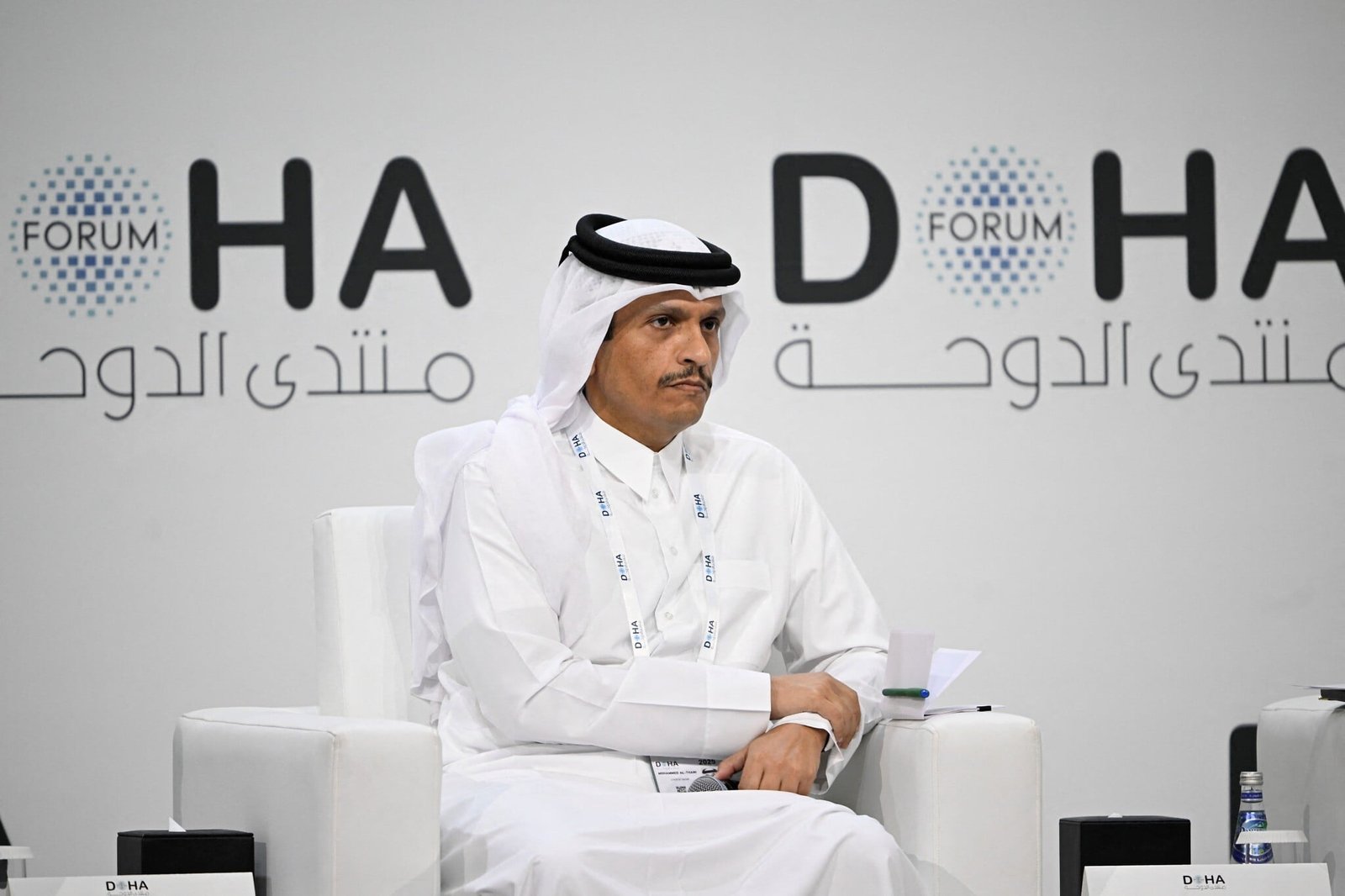
Qatari Prime Minister Mohammed bin Abdulrahman Al Thani stated that the situation in Gaza cannot be considered a ceasefire until Israeli forces withdraw from the entire area. Al Thani made these remarks during a panel discussion at the Doha Forum, with Turkish Foreign Minister Hakan Fidan supporting the need for an international force in Gaza after the deployment of such a force. The discussions at the forum highlighted the critical moment in the Gaza peace process and outlined the requirements for a genuine ceasefire.
At the start of the truce on October 10, Israel withdrew its forces to a designated line in Gaza but delayed reopening the Rafah Border Crossing. Despite Israel’s announcement to open the crossing for Palestinians leaving Gaza, Egypt rejected the one-way operation, insisting on two-way traffic. Al Thani mentioned the ongoing efforts of Qatar, Turkey, Egypt, and the US to push forward the next phase of the peace plan.
The US is planning to transition to phase two of the peace plan, focusing on a technocratic Palestinian government and an International Stabilization Force overseen by President Trump. Al Thani clarified that Qatar sees phase two as temporary and aims to resolve the conflict’s root causes. He praised the US administration for its role in the ceasefire talks, emphasizing direct engagement with Hamas for breakthroughs.
Turkey’s Foreign Minister Hakan Fidan emphasized the importance of realistic expectations for the International Stabilization Force (ISF) planned for Gaza. Fidan stressed the need for nuanced mission definitions considering the realities on the ground. While Turkey offered to contribute troops to the ISF, Israel opposed Turkish involvement due to political tensions. Fidan confirmed Turkey’s readiness to support peace efforts but highlighted the need for clear mission statements and rules of engagement.
Fidan expressed the goal of ISF deployment to separate Palestinians and Israelis along the border, working in coordination with a vetted Palestinian police force and governance body. He underlined the challenges of disarmament by Hamas and the prerequisites for progress in the peace plan. Failure to advance the ceasefire plan would be a significant setback, according to Fidan, who mentioned Trump’s personal leadership in the peace process.
Egyptian Foreign Minister Badr Abdelatty urged the swift deployment of the ISF and the implementation of the ceasefire’s second phase. He highlighted the need for monitors due to ongoing ceasefire violations by Israel. Abdelatty emphasized the humanitarian purpose of the Rafah crossing, rejecting forced displacement and calling for unrestricted two-way access. Egypt and other countries expressed concern over Israel’s unilateral decision on Rafah operations, advocating for the protection of Palestinian rights and open border access.





Deixe um comentário