Annalena Baerbock, president of the 80th session of the UN General Assembly, spoke to journalists at the UN headquarters in September 2025 – Reuters/Jeenah Moon.
The summit takes place amid international conflicts and trade disputes, providing the 193 member states the opportunity to voice their opinions. Lula opens the General Debate with a speech expected to counter that of the US.
The United Nations General Assembly, the main deliberative organ of the UN, holds its 80th edition amidst a turbulent period in global diplomacy. This year’s session, which began on September 9th, includes delegations from all 193 UN member states, who have equal representation on a ‘one State, one vote’ basis.
Starting on the 23rd of this month, the debate escalates as high-level representatives from countries start participating. It is on this date that the traditional General Debate, featuring government leaders’ speeches, takes place at the organization’s headquarters in New York. Traditionally, the summit is opened by a Brazilian representative, in this case, President Luiz Inácio Lula da Silva.
Unlike other UN bodies like the Security Council, all members have equal voting power for resolutions in the General Assembly, the only forum where all countries are represented. Many resolutions, however, are non-binding and remain as formal stances of the countries. The agenda discussed at the General Assembly is extensive, covering political, economic, social, environmental, and security issues.
The Assembly also hosts independent events such as summits on climate, global economy, and updates on the Sustainable Development Goals adopted by the UN in 2015 as a call to action to end poverty and protect the planet. Lula’s agenda includes summits on Palestinian territories and preparatory meetings for the 30th United Nations Climate Change Conference (COP30) in Belém in November.
This year will also see the launch of a new dialogue on international governance for artificial intelligence. The General Assembly faces pressure from ongoing international disputes. Although its aim is to gather all member states to establish consensus, the event is always impacted by current global affairs. This year’s summit occurs amidst escalating conflicts like the war in Ukraine and Israel’s offensive in Gaza, along with a surge of protectionism and trade war instigated by the US.
Recent editions also took place during setbacks in democracy in some regions of the world. ‘There is a general rollback of democracy in several states,’ said Diana Panke, a professor of International Relations at the Free University of Berlin to DW. ‘This aspect makes the dynamics more difficult and challenging.’ Shifting priorities and power dynamics, such as China’s rise and its growing list of allies through the expansive Belt and Road Initiative, can influence the procedures and final wording of resolutions.
The increasing reclusiveness of the US towards international bodies is also an influential factor. At this year’s meeting, tensions arose in August when the US vetoed visas for representatives from the Palestinian Authority to attend the gathering. Each year, a new president of the UN General Assembly is elected from one of the five geographical groups represented. The president is responsible for opening and closing debates, facilitating discussions, and regulating speaking time. This year’s president is the former German Foreign Minister, Annalena Baerbock.
Among the key moments of the General Assembly is the General Debate, giving an opportunity for all 193 members to speak. The theme for the 80th edition is ‘Better Together: 80 years and more for peace, development, and human rights.’ The debate among country heads begins on Tuesday, September 23, and discussions are expected to continue until Monday, September 29.
Brazil traditionally kicks off the UN speeches through a diplomatic custom that has been a tradition since the early General Assemblies that started in 1947, with the country volunteering to speak first. For Brazil, the moment is more delicate than in previous years, as Lula’s speech is followed by then-US President Joe Biden. Relations between Washington and Brasília, once more stable, deteriorated with Donald Trump’s presidency, who has engaged in direct attacks with Lula through the media. The platform guarantees high international visibility to the Brazilian representative, who is expected to adopt a pro-sovereignty tone in response to the White House’s sanctions and pressures regarding the process that convicted former President Jair Bolsonaro.
The speech is also to contrast with the American representative’s, who speaks right after representing the host country. The resolutions are non-binding, so what is the purpose of the General Assembly? One characteristic of the UN General Assembly is that its resolutions do not compel states to act as none of these agreements are binding. This means a country can support all resolutions approved at the Assembly but never follow or implement the agreed principles. An example is the widely accepted resolution for the establishment of a Palestinian state, approved earlier this month, but having no practical effects. The non-binding nature of decision-making at the General Assembly led to criticisms of its effectiveness in recent years. Trump administration restricts visas for the UN, Brazil protests. Summary of the day From Monday to Saturday, the news you can’t miss delivered straight to your email.

What is the United Nations General Assembly and why is it important?

-

Flamengo and PSG have faced each other three times; check out their record
-

Indonesia Open Footgolf Tournament: Comedian Oki Rengga Admits Addiction, Wants to Become a Professional Athlete
-
Shameful Incident in Punjab! Landlord Rolls Tenant’s Daughter
-
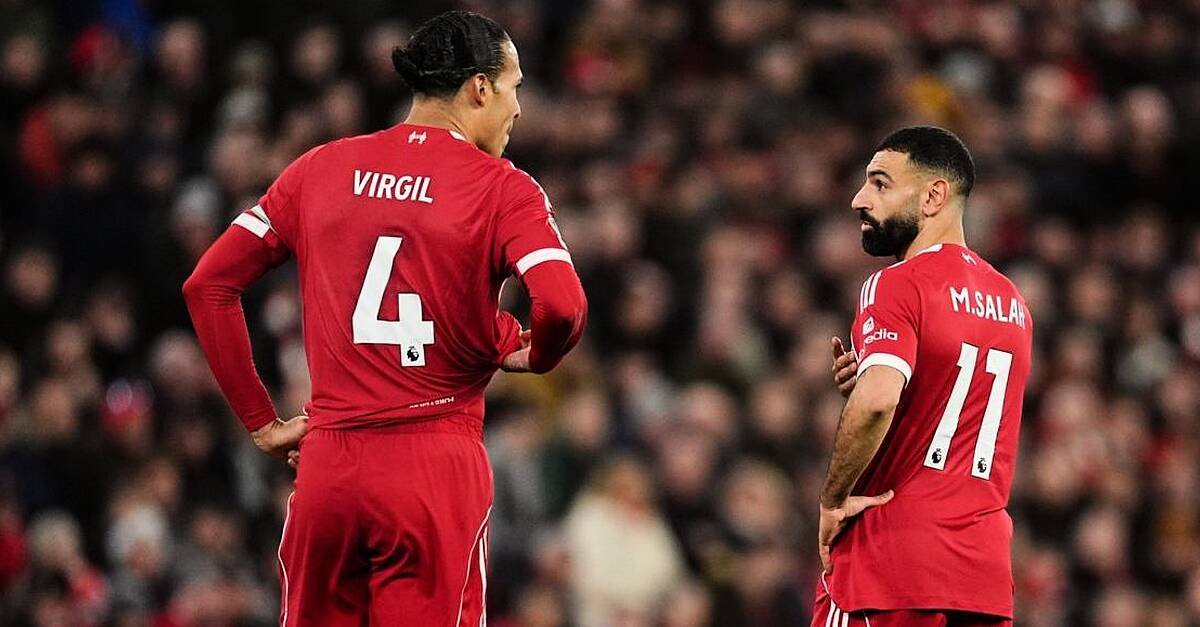
Virgil van Dijk Expresses Desire for Mohamed Salah to Stay at Liverpool
Deixe um comentário