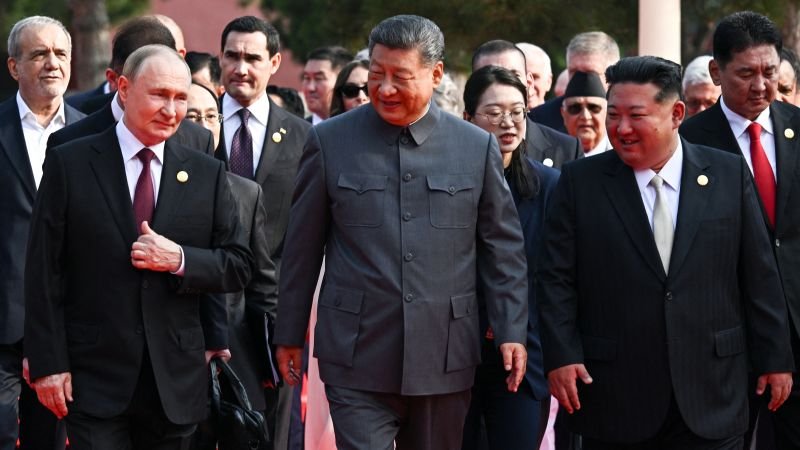
The scene was striking as Chinese leader Xi Jinping made his entrance at a grand military parade in Beijing, flanked by Russian President Vladimir Putin and North Korean leader Kim Jong Un. Alongside them, about two dozen other leaders from countries such as Iran, Pakistan, Belarus, and Myanmar followed closely behind. The display of solidarity among these leaders raised questions about China’s direction and intentions on the global stage.
Xi Jinping’s presence alongside leaders known for their contentious relationships with the West sent a clear message. The gathering seemed to symbolize a shift in power dynamics, with China aligning itself strategically with countries that challenge the traditional Western order. As Xi Jinping called on the world to choose between ‘war or peace,’ his actions spoke volumes about China’s future ambitions and alliances.
The military parade in Beijing showcased China’s growing military strength and technological advancements, sending a strong signal to the international community. Xi Jinping’s positioning among world leaders known for their defiance of Western powers hinted at a new era of geopolitical alliances. The display of unity among nations often viewed as antagonistic towards the West left many wondering about the implications for global stability.
Observers noted that Xi Jinping’s call for ‘war or peace’ resonated beyond the parade grounds, prompting reflections on the direction in which China is headed. The presence of leaders from countries with strained relations with the US and its allies underscored a shifting geopolitical landscape. As China strengthens its ties with nations outside the traditional Western bloc, the world watches closely to see how these alliances will shape the future of international relations.
The sight of Xi Jinping standing alongside leaders like Putin and Kim Jong Un sparked debates about China’s role in global politics. The show of solidarity among nations often at odds with Western powers raised concerns about the emergence of new power dynamics. As China solidifies its position as a key player on the world stage, the implications for peace and security become increasingly complex.
Xi Jinping’s call for a choice between ‘war or peace’ reverberated in diplomatic circles worldwide. The display of unity among leaders from diverse geopolitical backgrounds hinted at a shifting world order, with China at the center of strategic alliances challenging the status quo. The implications of this gathering extend far beyond the parade grounds, prompting discussions about the future direction of global politics and the role China will play in shaping it.
As Xi Jinping’s military parade captured global attention, questions arose about China’s intentions and the impact of its growing influence. The sight of world leaders standing together in solidarity raised speculation about the future trajectory of international relations. China’s strategic alignment with nations outside the Western sphere signals a potential realignment of power dynamics, with far-reaching consequences for global security and stability.

Deixe um comentário