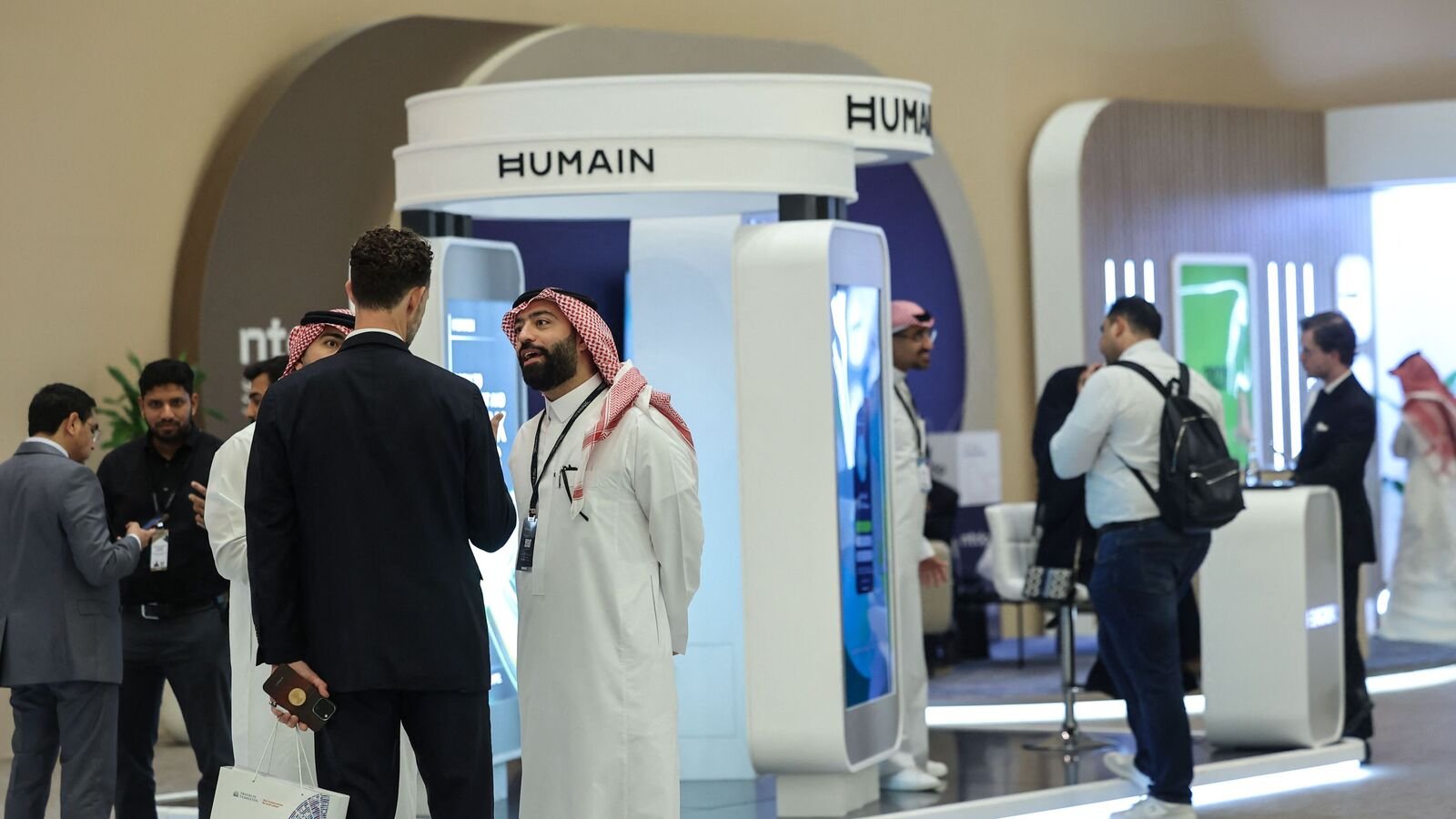
The recent visit by U.S. President Donald Trump has highlighted the potential of oil-rich countries like the United Arab Emirates and Saudi Arabia in the global artificial intelligence race. The UAE has set ambitious goals for its AI industry, including a $500 billion investment in the Stargate AI complex and a promise of $1.4 trillion in U.S. investments. The U.S. Commerce Department recently approved the export of cutting-edge Nvidia microchips to the UAE, signaling a significant step in their AI initiatives.
Silicon Valley and Wall Street leaders have shown support for the UAE and Saudi Arabia’s AI ambitions. OpenAI praised the UAE’s commitment to democratic values and open markets, while Blackstone signed a $3 billion deal to build data centers in Saudi Arabia. These oil monarchies possess competitive advantages such as low-cost energy and stable governments, making them attractive destinations for data center investments.
The UAE, with its early adoption of AI technologies and the world’s first AI minister appointed in 2017, is positioning itself as a key player in the industry. Researchers from the AI University in the UAE recently introduced K2 Think, a budget-friendly alternative to ChatGPT, showcasing their technological capabilities. Geopolitically, the partnership between the U.S. and Arab Gulf states is gaining momentum, especially with concerns about advanced chip technology falling into the wrong hands reduced by recent events in the region.
The strategic location of the Middle East, within reach of half the world’s population, presents a unique opportunity for data centers in the UAE and Saudi Arabia to cater to the growing demand for AI services, particularly from energy-strapped countries like India. However, progress on the bilateral agreements made during Trump’s visit has been slower than expected, with restrictions on the distribution of Nvidia chips outside U.S. companies. The profitability of stand-alone data centers remains a concern, as the cost of construction may outweigh the revenue generated from services.
Security threats in the Gulf region also pose a risk to data center investments, as the potential for attacks on these facilities cannot be overlooked. The uncertainties surrounding the sustainability and security of data centers in the Gulf raise questions about the viability of these ventures in the long run. Despite the challenges, the collaboration between Big Tech companies and oil monarchies in the AI sector presents opportunities for innovation and economic growth in the region.





Deixe um comentário