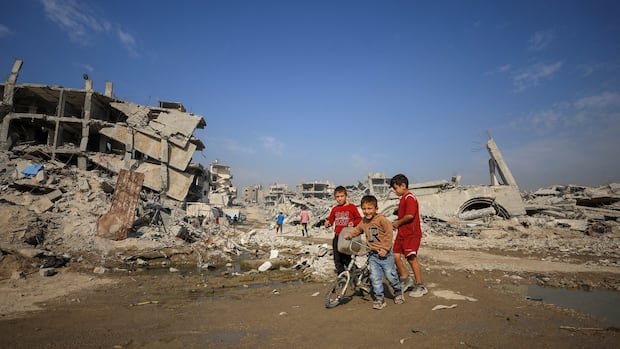
Thousands of boxes filled with shelter items and food are sitting idle in Jordan, Egypt, and Israel, humanitarian agencies say, warning that very little aid is making its way into Gaza nearly four weeks after a ceasefire deal between Hamas and Israel began. As colder weather approaches, hundreds of thousands remain in makeshift worn-out tents, with no appropriate means to shelter from the elements after Israel’s deadly two-year offensive devastated the tiny, crowded enclave.
“We have a very short chance to protect families from the winter rains and cold,” said Angelita Caredda, the Middle East and North Africa Regional Director for the Norwegian Refugee Council (NRC). “Gaza should be receiving a surge of shelter materials, but only a fraction of what is needed has entered,” Caredda said in a statement Wednesday, calling for ‘swift and unimpeded access’ into the war-torn territory.
The NRC, which leads a group of agencies working on a lack of shelter in Gaza, said since the ceasefire took effect on Oct. 10, Israeli authorities have rejected 23 requests from nine aid agencies to bring in urgently needed shelter supplies, such as tents, sealing and framing kits, bedding, kitchen sets, and blankets. “No family should face winter out in the open,” Caredda said. “Every day of delay puts lives at risk.’
The NRC added that millions of shelter and non-food items are stuck in bordering countries awaiting approvals, leaving some 1.5 million people exposed to worsening conditions. The ceasefire deal, which was intended to allow scores of aid trucks into the enclave and get food to families, came two months after famine was confirmed in Gaza, where almost all the 2.3 million inhabitants have lost their homes to Israeli bombardment.
‘It is dire. No proper tents, or proper water, or proper food, or proper money,’ Manal Salem, 52, told Reuters. Salem, who lives in a tent in Khan Younis in southern Gaza, said it is ‘completely worn out’ and she fears the tent will not last the winter. Gaza’s local administration, long controlled by Hamas, says most trucks are still not reaching their destinations due to Israeli restrictions, and only about 145 per day are delivering supplies.
The World Food Program (WFP) says only half the needed amount of food is coming in. But an umbrella group of Palestinian agencies that liaise with the UN says only 25 to 30 per cent of the expected amount of aid had entered so far. Israel, meanwhile, says it is fulfilling its obligations under the ceasefire agreement, which calls for an average of 600 trucks of supplies into Gaza per day. It blames Hamas fighters for any food shortages, accusing it of stealing food aid before it can be distributed, which the group denies.
The ceasefire and greater flow of aid since mid-October have brought some improvements, said the United Nations humanitarian agency OCHA. Last week OCHA said a tenth of children screened in Gaza were still acutely malnourished, down from 14 percent in September, with over 1,000 showing the most severe form of malnutrition.
Half of families in Gaza have reported increased access to food, especially in the south, as more aid and commercial supplies entered after the truce, and households were eating on average two meals a day, up from one in July, OCHA said. There’s still a sharp divide between the south and the north where conditions remain far worse, it said.





Deixe um comentário