Global food demand is increasing with the projected population growth to 9.7 billion by 2050. To meet this demand, enhancing plant food production is essential. While synthetic inputs have been traditionally used, plant biostimulants show promise in promoting plant growth and stress tolerance. A study examined the effects of an Ascophyllum nodosum-derived biostimulant (ANE) on corn rhizosphere bacterial communities. Root exudates from ANE-treated plants stimulated the motility of Pseudomonas protegens CHA0, a beneficial rhizobacterium. Gene expression analysis revealed upregulation of genes related to chemotaxis, pyoverdine, pyrrolnitrin, and hydrogen cyanide biosynthesis in P. protegens CHA0 due to ANE root treatment. The study also found significant changes in rhizosphere microbiome composition, including increased abundance of specific genera like Chryseolinea and Pseudoxanthomonas. Liquid chromatography-high resolution mass spectrometry identified distinct chemical profiles in the root extracts of ANE-treated plants, showing elevated levels of benzoxazinoids such as DIMBOA and MBOA. Overall, these results indicate that ANE alters the rhizosphere microbiome by impacting both root tissue and exudate chemistry.
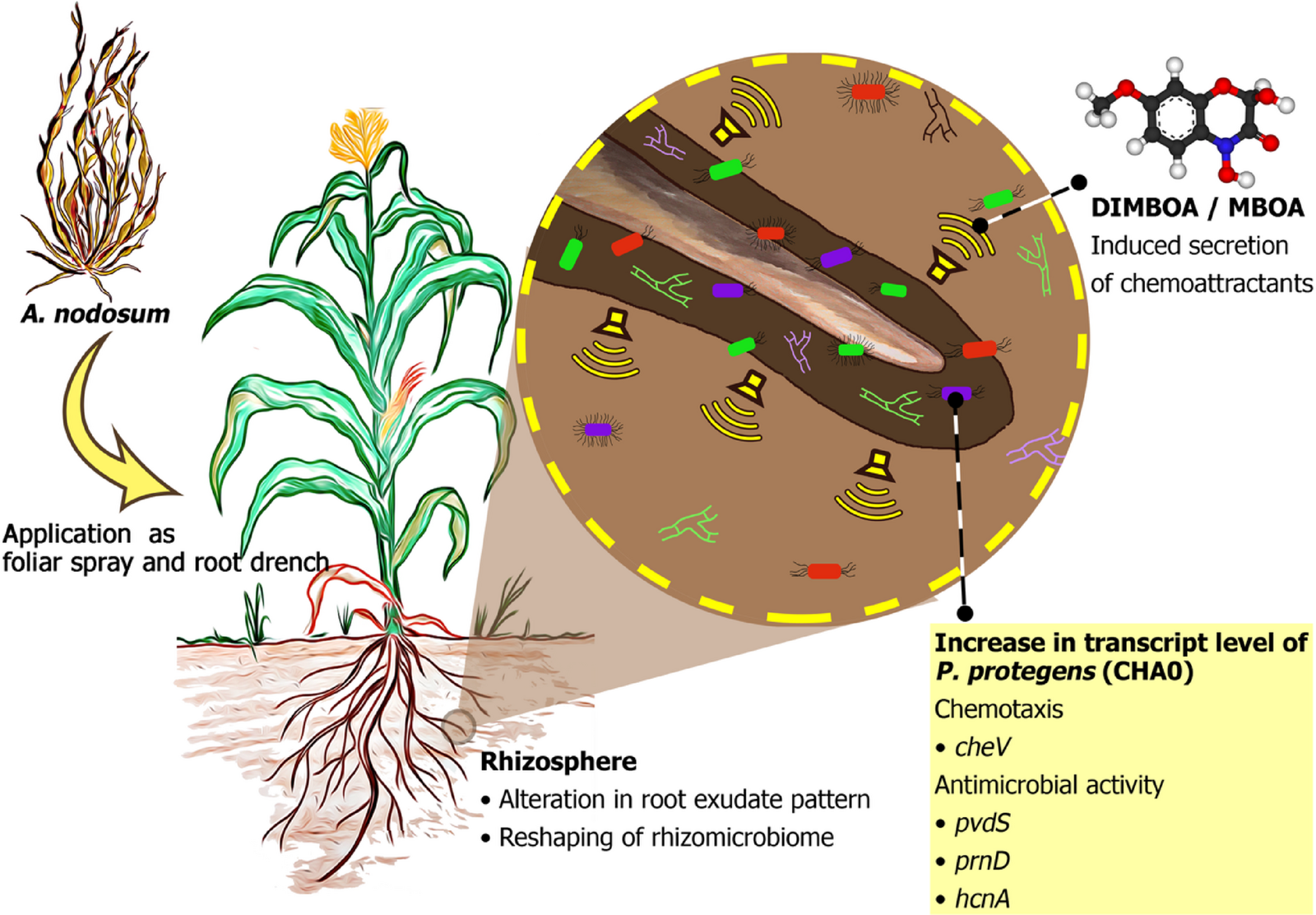
Biostimulants Derived from Ascophyllum nodosum Influence Corn Rhizosphere Bacterial Community

-

Flamengo and PSG have faced each other three times; check out their record
-

Indonesia Open Footgolf Tournament: Comedian Oki Rengga Admits Addiction, Wants to Become a Professional Athlete
-

Shameful Incident in Punjab! Landlord Rolls Tenant’s Daughter
-

Virgil van Dijk Expresses Desire for Mohamed Salah to Stay at Liverpool
Deixe um comentário