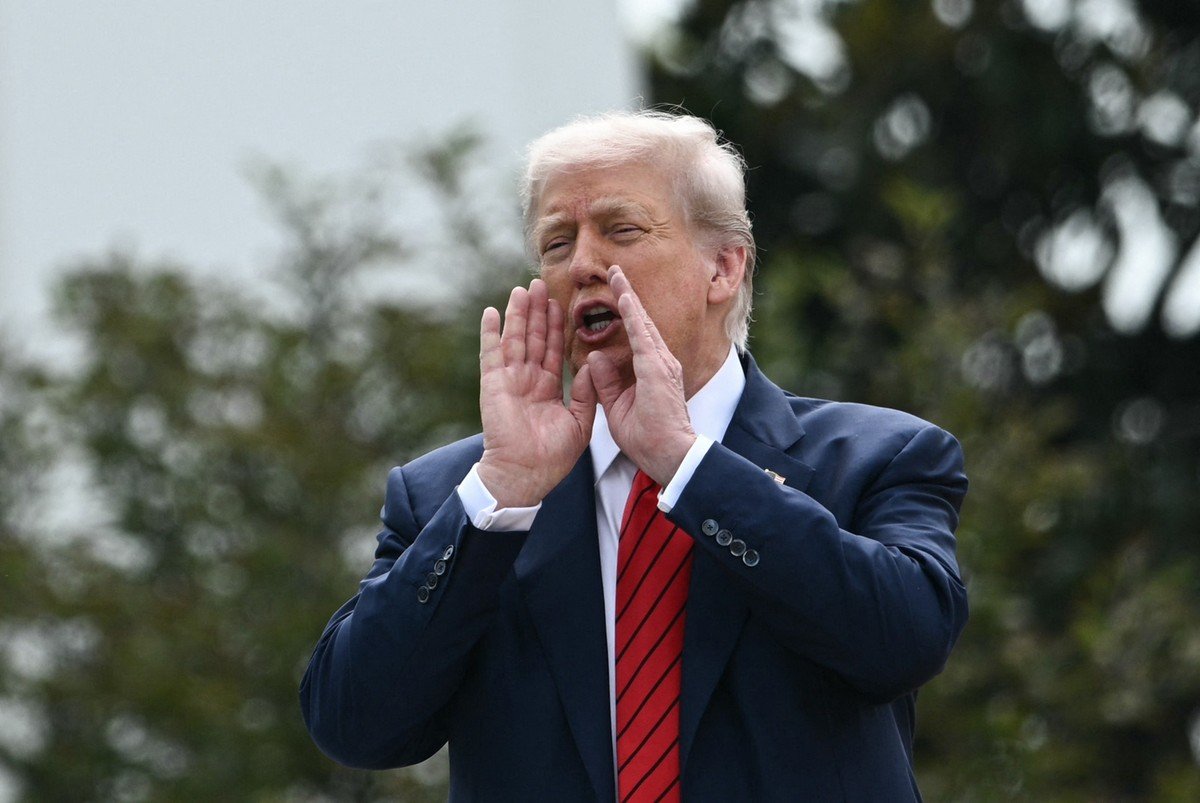
Last Monday, the Chamber of Foreign Trade Council of Ministers (Camex) approved Brazil’s recourse to the WTO against the tariff hikes. If there is no agreement with the US, the Brazilian government will request the establishment of a panel, or arbitration committee, to evaluate the case. On Wednesday, a 50% surcharge on Brazilian exports to the US market came into effect. Brazil argues that the measure is inconsistent with international trade norms. D-Day of the tariff increase: Relief package targets credit for agriculture and government purchases of fish, fruit, and honey.
The Ministry of Foreign Affairs stated that the date and location of the consultations should be agreed upon by both parties in the following weeks, indicating that the measures affect a wide range of Brazilian products. ‘By imposing the mentioned measures, the US flagrantly violate central commitments made by that country in the WTO, such as the most favored nation principle and the tariff ceilings negotiated within that organization,’ the Ministry’s note says. The text stresses that bilateral consultations represent the first step towards opening a panel.
‘Bilateral consultations, designed for parties to seek a negotiated solution to the dispute before the potential establishment of a panel, are the first formal step within the WTO’s dispute settlement system,’ it adds. Ana Caetano, a partner in the foreign trade area at Veirano Advogados office, fears that Brazil’s WTO consultation might be perceived by the US government as a retaliation against the additional 40% surcharge announced last week. President Donald Trump’s decree establishing the surcharge explicitly mentioned that the tariff could be even higher in cases of retaliation. ‘We must be careful to ensure that the US does not interpret the move as retaliatory,’ said Ana.
Paralyzed WTO In addition, the outcome of the case could take years. This is because the WTO’s Appellate Body, which serves as the final instance in an appeal filed by the country feeling aggrieved by the arbitrators’ decision, is stalled. This paralysis of the body was caused by a US boycott. During his first term, Trump refused to appoint judges to this instance, a procedure maintained by his successor, former President Joe Biden of the Democratic Party. ‘The appellate body no longer exists today, meaning that a WTO decision cannot be implemented,’ Ana explained.
Seeking Alternatives Despite the WTO’s weakening, the Veirano partner emphasized that other countries have been trying to circumvent the US’s actions. One solution adopted in 2020 was the creation of the Multi-Party Interim Appeal Arbitration Agreement (MPIA) within the WTO. With it, signatory countries resolve trade disputes through arbitration processes. According to Ana, countries like Brazil, China, Chile, the European Union (EU), Australia, Singapore, and Japan have joined the MPIA. ‘The idea is to attract more and more members to be part of this agreement. We know that the United States doesn’t, but if we can get the others to join (the agreement), it’s as if we have the system working again, except for the Americans,’ Ana said. According to the lawyer, who is an arbitrator of the MPIA, the agreement has already shown practical results.


Deixe um comentário