Ambipar filed for judicial recovery around midnight, seeking protection from creditors for debts totaling more than R$ 10.7 billion amid a confidence crisis that has engulfed the company in recent weeks. The petition was filed in the 3rd Commercial Court of Rio de Janeiro. In the U.S., Ambipar Emergency Response, a subsidiary of the Brazilian company listed on the New York Stock Exchange and based in the Cayman Islands, filed for Chapter 11 with the Bankruptcy Court for the Southern District of Texas. Most of Ambipar’s debt is with bondholders, but the emergency response and environmental management company also has debentures, bank debts, and debts with suppliers. Ambipar’s bonds currently amount to US$ 1.065 billion, approximately R$ 5.6 billion at today’s exchange rate. The debentures amount to another R$ 3 billion, while debts with banks total R$ 2 billion. The debt with suppliers is R$ 230 million. Among the banks, the largest creditor is Santander, with R$ 663 million, followed by Banco do Brasil (R$ 352 million), Banco do Nordeste (R$ 207 million), Deutsche Bank (R$ 188 million), Bradesco (R$ 165 million), Daycoval (R$ 109 million), Scania (R$ 77 million), and ABC Brasil (R$ 56 million). The crisis at Ambipar began when Deutsche Bank made a margin call against the company related to a derivative, leading creditors to examine the company’s cash situation, uncovering inconsistencies. Concerns about Ambipar’s cash position arose following the release of its second-quarter results on August 14. In the balance sheet, Deloitte, the company’s new auditor this year after Ernst & Young had audited for four years, included an explanatory note about the cash, indicating that out of the company’s R$ 4.7 billion cash balance, R$ 2 billion was allocated in a FIDC. The market’s suspicion is centered on the FIDC cash potentially invested in Master’s CDBs, thus inaccessible. Sources familiar with the matter told the Brazil Journal that when questioned by banks about the company’s cash, controller Tércio Borlenghi Junior couldn’t show where the funds were, only presenting a chart with the breakdown of assets. The main creditor banks also cross-referenced information and concluded that the company had no funds invested in any of them. The increased scrutiny into Ambipar’s liquidity was triggered by Deutsche’s margin call. The company had two swaps with the German bank related to its green bond issuances with maturities in 2031 and 2033. These swaps required margin calls in case of a negative dollar variation compared to the contract price at the time of signing. The 2031 swap was executed when the dollar was below R$ 5, resulting in a gain for the company. The 2033 bond swap was structured when the dollar was near R$ 6, causing losses. However, in net terms, the company didn’t have to deposit margins. In April, Deutsche proposed an addendum to the contracts, offering to reduce swap costs and release a US$ 35 million credit in exchange for including a PIK (payment in kind) clause. In September, the bank began sending high margin calls, claiming they were related to the PIK’s mark-to-market, not specified in the addendum contract, according to sources. Ambipar’s CFO, João Arruda, initially made deposits but halted payments when Tércio and other executives questioned the billing. To meet the initial margin calls, Ambipar withdrew funds invested in Santander, raising concerns at the bank, which then scrutinized the company further. ‘Banks started to communicate and realize that something was wrong with the cash,’ a banking source said. ‘The company claims that the problem arose due to Deutsche’s margin call, but if you have R$ 4.7 billion in cash, as reported on the balance sheet, and Deutsche asks for R$ 100-200 million, why would that be concerning? That would be less than 5% of the cash balance.’ Another red flag was that minority shareholders of Ambipar’s operational companies, where the company typically holds 51% ownership, began warning that the company was draining cash from these entities to the holding. Another source noted that Ambipar’s corporate debt was always unpayable. ‘They took these debts to finance acquisitions that needed to mature. Until that happens, the solution was always to roll over these debts,’ the source said. ‘But when you face a liquidity crisis and a crisis of confidence and can no longer roll over, things collapse.’ In recent months, Ambipar’s stock has plummeted. The company lost 96% of its market value, with shares trading at R$ 0.58 today. The company, once valued at over R$ 40 billion, now trades around R$ 960 million. Ambipar is working with Alvarez & Marsal and BR Partners. Legal advisers include Galdino, Pimenta, Takemi, Ayoub, Salgueiro, Rezende de Almeida Advogados; Salomão Advogados and Basílio Advogados. Ambipar’s bondholders are represented by Houlihan Lokey and Padis Mattar Advogados. Deutsche Bank is represented by Pinheiro Neto. Bradesco is advised by Warde Advogados and Machado Meyer. Itaú is working with Sacramone, Orleans e Bragança Advogados. Santander is represented by Demarest.
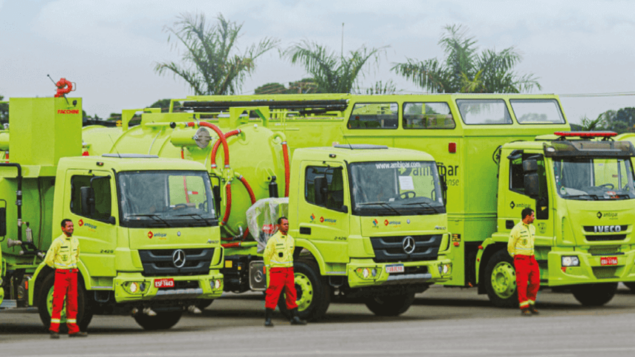
BREAKING NEWS: Ambipar files for judicial recovery with debts of R$ 10.7 billion

-
Flamengo and PSG have faced each other three times; check out their record
-

Indonesia Open Footgolf Tournament: Comedian Oki Rengga Admits Addiction, Wants to Become a Professional Athlete
-

Shameful Incident in Punjab! Landlord Rolls Tenant’s Daughter
-

Virgil van Dijk Expresses Desire for Mohamed Salah to Stay at Liverpool
Deixe um comentário