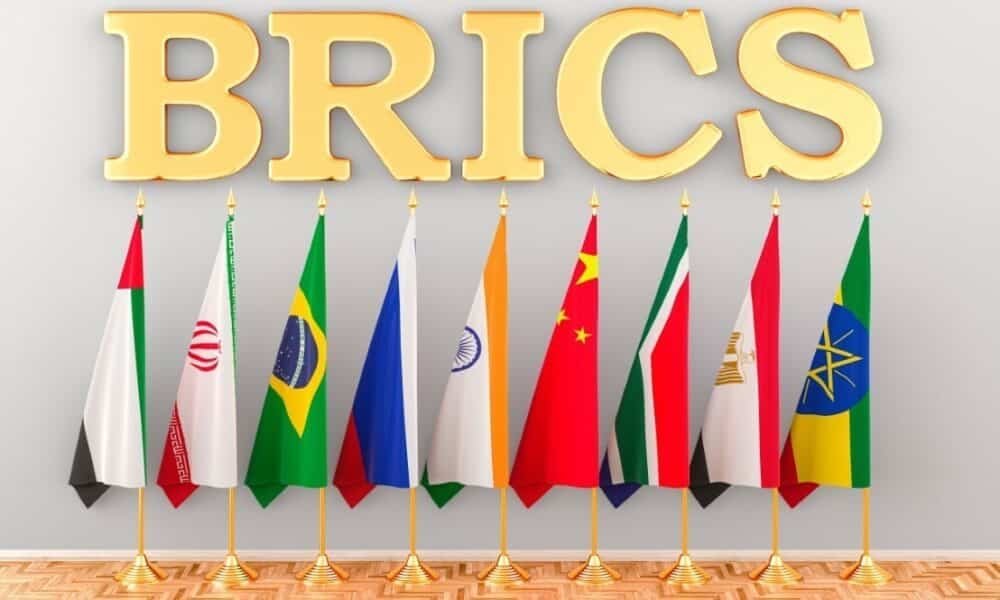
The BRICS, a group of emerging nations, intensifies discussions on creating a reference currency for internal trade. The proposal aims to reduce the strong dependency on the US dollar in transactions between founding members such as Russia, China, India, and South Africa, and new partners. The movement gains traction amidst growing global geopolitical tensions. Discussions on the topic saw significant progress during the summit held in Rio de Janeiro in July. The main goal is to establish a settlement mechanism that guarantees greater financial autonomy and economic resilience to the bloc countries. The complete implementation target for the new system is set for the end of 2026, according to financial leaders.
Currently, the bloc represents a considerable share of the global economy, accounting for 46% of the world’s GDP in Purchasing Power Parity. The search for currency alternatives strengthens especially given the dollar’s high exchange rate, as it reached R$ 5.38 in August. The initiative for de-dollarization is a direct response to the US’s historical dominance in the international financial system, often used as a tool for pressure and imposing sanctions. The use of the dollar as a financial weapon, exemplified by measures applied to Russia since 2022, has motivated BRICS central banks and governments to accelerate the search for instruments to protect their economies from external vulnerabilities.
Different formats are being evaluated for the new settlement unit, with three main models under detailed analysis by central banks and finance ministries. One leading option is the development of a digital system based on Central Bank Digital Currencies (CBDCs), allowing for quick and secure value transactions. China, for instance, is well-advanced in testing with the digital yuan, giving the country technological leadership in this specific format discussion. Other models under debate include tying to a basket of commodities like gold and oil, creating a physical backing for the new currency, and the concept of an accounting unit. The latter would resemble the International Monetary Fund’s Special Drawing Rights (SDRs), solely serving to settle debts and record values, without direct physical or digital circulation.
The BRICS Pay payment platform gained immediate centrality in the project, functioning as a mechanism enabling direct transactions in local currencies like the Real, Rupee, and Ruble. This infrastructure allows trade between countries to occur without the mandatory conversion step to the dollar. 2025 data shows a notable advancement: 90% of intra-bloc trade already uses national currencies, contrasting with the 65% registered just two years prior. The country has played an active role in developing this platform, focusing on creating a digital system inspired by Pix’s success and Central Bank Digital Currencies technologies. Initial interoperability and security pilot tests, involving the bloc’s largest economies, are set to begin in 2026.
Despite technical negotiation progress and political consensus on the need for de-dollarization, the bloc faces significant barriers in the financial integration process. Deep differences in economic structures and levels of macroeconomic stability among member countries raise concrete concerns about possible future imbalances. A major point of caution is the increasing Chinese dominance in trade volume within BRICS itself, fueling fears that a dollar dependency may be replaced by a Yuan one. Overcoming these tensions demands focused diplomatic efforts, especially in establishing an acceptable power balance for countries like India, which often has disagreements with Beijing.
Monetary policy harmonization is also a complex challenge, requiring alignment among the group’s central banks on issues like inflation and interest rates. Additionally, instability in specific economies can complicate the implementation and trust in a new payment system. The private sector and global market operators express resistance to change mainly due to: loss of operational flexibility provided by dollar liquidity and security, higher exposure to exchange rate risk and emerging market currency volatility, and the need to restructure all international contracts and compliance systems.
President Luiz Inácio Lula da Silva has been a leading public advocate of the project, emphasizing on multiple occasions the importance of the bloc creating its own trade mechanisms. In August, the Brazilian leader highlighted that eliminating dollar conversion in commercial exchange is a vital step for the sovereign development of nations. Brazil’s position seeks financial autonomy and is persistently detached from any anti-American aspect, focusing on defending multilateralism and commercial democracy. China actively supports the initiative, with the Yuan being involved in about 50% of current transactions between BRICS members. The New Development Bank (NDB), the so-called BRICS Bank, has been a catalyst for concrete actions, funding projects in local currencies. In 2024 alone, the NDB provided an amount for projects, reinforcing the diversification strategy and the use of alternatives to the dollar.
Under President Dilma Rousseff’s leadership, the NDB plays a crucial role in financing infrastructure and development projects in national currencies. This action strengthens the countries’ positions while reducing the need for dollar-denominated debt issuance, decreasing exposure to US monetary policy. This financing line has already benefited the country with the approval of a portfolio of 29 projects, totaling around US$ 7 billion, focused on strategic areas. These movements, along with bilateral agreements for payment in local currencies, serve as the basis for consolidating a robust internal financial system. The need for alternatives is supported by IMF data showing a 5% decrease in global dollar reserves since 2020. This USD volatility, combined with diversification movements, paves the way for currencies like the Yuan to progressively gain more space in international transactions and reserves.




Deixe um comentário