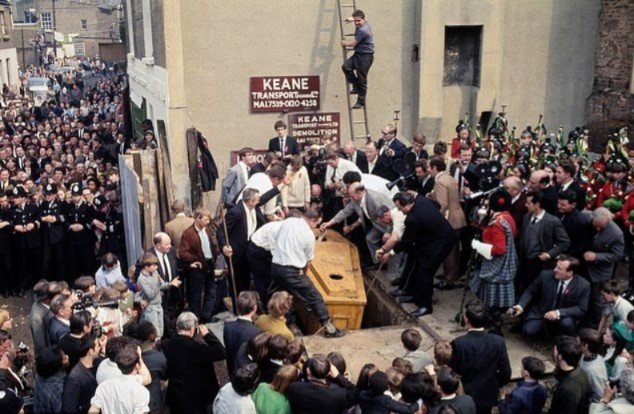
How many days could you go without seeing sunlight? In 1968, Irish laborer Mick Meaney took that question to the extreme, burying himself alive for 61 days in Kilburn, London, hoping to gain fame and fortune. This daring act, which became an international sensation at the time, is the subject of the new documentary Beo Faoin bhFód (Buried Alive), premiering on November 26 on the Irish television channel TG4, recalling the bold feat and its consequences.
Left with nothing, Meaney pledged to surpass the record set by Texan Bill White, also known as ‘the walking corpse.’ The coffin, measuring only 1.90m by 0.75m, was equipped with foam, an air tube, and a food chute before being lowered into a construction site, with supporters and TV crews anxiously watching.
Preparation and routine
During the underground stay, a trapdoor served as a toilet, and a phone line allowed contact with the outside world, charged for each call, even from celebrities like boxer Henry Cooper. Meaney maintained a routine of exercise, reading, and conversations, showcasing discipline and physical endurance.
The initial intense international media attention began to wane with major events of the time, such as the Vietnam War and the assassination of Martin Luther King Jr. On April 22, 1968, after 61 days, the coffin was unearthed, and Meaney emerged to applause, declaring himself ready to continue for another hundred days.
Unfulfilled promise
Despite the feat, fortune never arrived. Promising sponsorships, such as a deal with Gillette, disappeared, and reports surfaced that the show’s organizer, Michael ‘Butty’ Sugrue, may have pocketed the profits. Meaney returned home with nothing but momentary notoriety.
The record also was never officially recognized. A rival disputed the mark, and a former nun, Emma Smith, ended up breaking the record that same year, buried for 101 days in Skegness. The fame Meaney had dreamed of dissipated as quickly as it had come.
Determined to leave behind the fleeting fame, Meaney worked in administrative roles in Cork until his death in 2003. ‘He could have lived a normal life, but he longed for something extraordinary. Breaking the world record made him feel: ‘I am someone’,’ recalls Mary Meaney, the laborer’s daughter.
At this time, there is no information confirming the availability of this documentary on streaming platforms or TV channels in Brazil.




Deixe um comentário