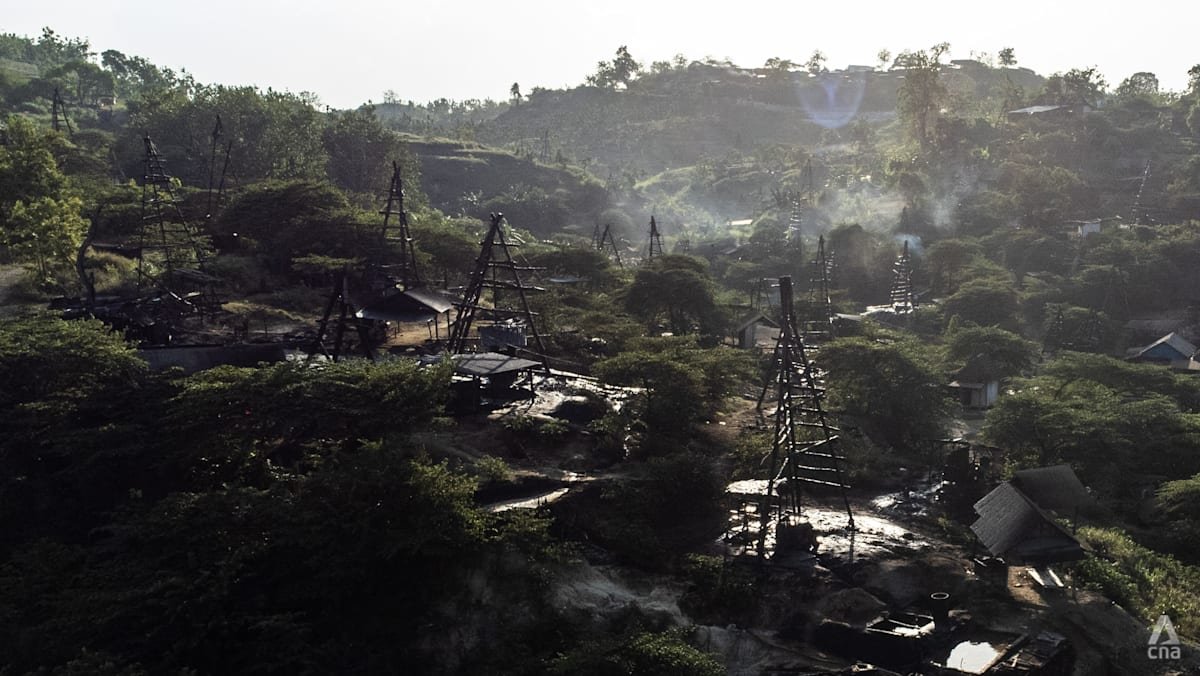
From afar, the hills and valleys of Wonocolo in East Java resemble a scene from a post-apocalyptic movie. As far as the eye can see, the trees that once covered these slopes are now replaced by three-legged towers made of wood. With over 30,000 oil wells in Indonesia operated by untrained locals, the recent regulation issued in June strives to legalize these wells, as long as they adhere to ‘good engineering practices’ within a four-year period.
Despite the picturesque landscapes, the reality of these unregulated wells poses a significant threat. The lack of proper training and oversight at these wells can lead to deadly tragedies. The new regulation aims to address these concerns by setting standards that prioritize safety and compliance. By establishing guidelines for ‘good engineering practices,’ the hope is to reduce the risks associated with operating oil wells without adequate training.
In Wonocolo and other regions with similar setups, the transformation from natural terrain to industrialized oil fields is evident. The sight of inexperienced locals handling complex machinery raises concerns about safety protocols and maintenance practices. With the implementation of the new regulation, there is a push for increased accountability and professionalism in the operation of these oil wells, ultimately aiming to prevent accidents and tragedies.
The transition towards legalizing oil wells in Indonesia comes with challenges, especially in ensuring that all operators comply with the specified engineering standards. Training programs and support systems will be crucial in equipping locals with the necessary skills to operate oil wells safely and efficiently. By emphasizing the importance of adherence to ‘good engineering practices,’ authorities hope to instill a culture of responsibility and risk management in the oil industry.
While the landscapes of Wonocolo may have changed, the focus on safety and regulation remains a top priority. The shift towards formalizing the operation of oil wells reflects a commitment to improving industry standards and protecting both workers and the environment. With careful monitoring and enforcement of the new regulations, Indonesia aims to prevent future tragedies at these oil sites and ensure sustainable practices in the oil sector.





Deixe um comentário