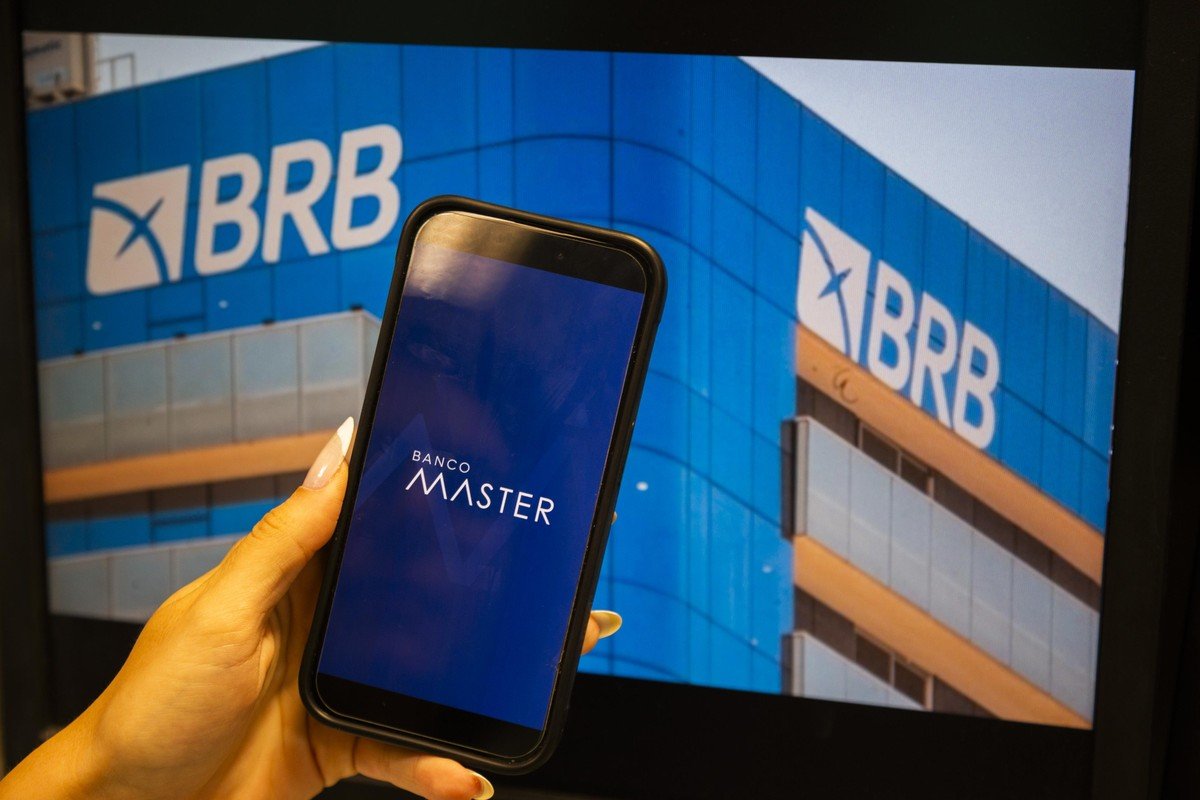
The Central Bank rejected the agreement between Banco de Brasília (BRB) and Master. The two institutions announced the transaction on March 28th, and since then, the scope of the purchase has been reviewed and reduced, amid difficulties in pricing Master’s assets and with the BC showing resistance and requesting new information. BRB confirmed the information through a relevant fact. Both banks have been informed of the decision. Nevertheless, sources say that they probably have not had access to the grounds yet and are deciding on how to proceed. In theory, there would be room for a request for reconsideration, addressing the points raised by the BC in its decision.
In the relevant fact, BRB informed that ‘given the rejection by the Central Bank, the contract will be terminated in accordance with its terms and conditions.’ The bank also stated that it will keep its shareholders and the market duly informed about any relevant developments resulting from the contract termination, in accordance with applicable legislation and regulations. When contacted, Master and BC have not yet commented. As reported by Valor yesterday, amid pressures for the approval of the sale of part of Banco Master to BRB, Centrão party leaders signed a request for urgency in processing a bill that allows the Chamber, by an absolute majority, to dismiss Central Bank directors for ‘actions incompatible with national interests.’ The target would be BC’s organization director, Renato Gomes, who resisted the operation without thorough scrutiny and stringent guarantees.
On Monday, during the second-quarter earnings conference call, BRB’s CEO, Paulo Henrique Costa, said that the Federal Police investigations linking asset managers to organized crime should not affect the acquisition of Banco Master. When questioned, the executive claimed that the bank hired an external team of advisors to review the operation’s scope and that there is no knowledge of actions or investigations regarding the assets and liabilities included in the transaction. ‘So far, we have no knowledge of any investigations regarding assets and liabilities that fall within our operational scope, so unless new facts emerge, the perimeter selected by BRB is small, safe, and strategically capable of enhancing our market positioning,’ he said.
For some sources, there were BC’s resistances regarding Master’s ‘behaviors’ in the past — Daniel Vorcaro’s bank grew supported by funds covered by the Credit Guarantee Fund (FGC), but invested the resources in risky and illiquid assets, making its situation very delicate. After BC’s inquiries and pressures from other market agents, it had been decided that Vorcaro would no longer be part of the controlling group of the portion to be acquired by BRB — unlike what was originally outlined in the agreement. Nonetheless, even if the agreement between the two banks were approved, a solution needed to be found for the portion that would remain with Master, concentrating the least liquid assets.
In May, Master received a kind of ‘bridge loan’ from the FGC, amounting to R$ 4 billion, and rumors circulated in the market that the portion not to be merged with BRB would need an additional R$ 12 billion. Now that the agreement has been rejected, lawyers and banking sector members believe that there is a possibility of the BC decreeing an intervention at Master, even for the FGC to act. ‘Precedents show that liquidation is the way,’ says a former FGC employee.
Amid negotiations of the agreement with BRB and BC, Vorcaro made two contributions, each in the amount of R$ 1 billion, to Master. To do so, he sold R$ 1.5 billion worth of assets to BTG, owned by André Esteves. He was also negotiating new sales in recent weeks, including those of court orders and the Kovr insurer. The announcement of the agreement between Master and BRB caused discomfort among major banks from the outset. Some argued that it would be better to let Master fail, so that punishing Vorcaro would serve as an example and discourage aggressive behaviors like his. However, others understood that an operation with BRB would allow for a less traumatic solution for the entire system. Last month, the National Monetary Council (CMN) approved, in an extraordinary meeting, tougher rules for the use of FGC guarantees. As the Central Bank itself stated in a note, the measures ‘aim to financially discourage institutions associated with the FGC from using guaranteed funds disproportionately.’


Deixe um comentário