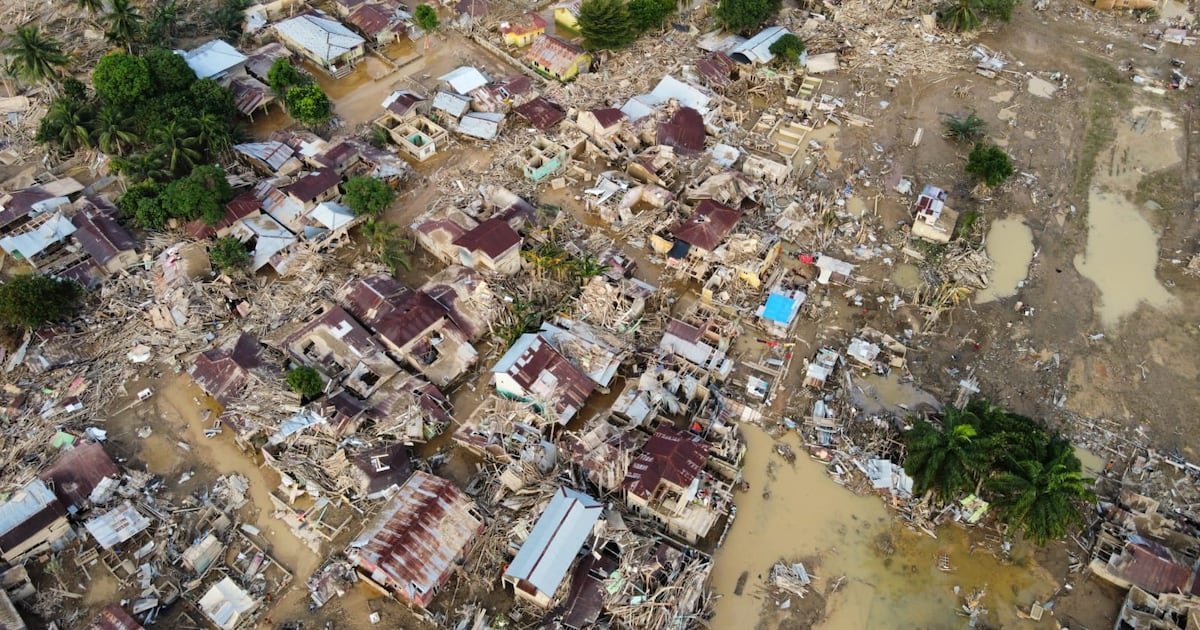
Emergency crews are racing against time after last week’s catastrophic floods and landslides swept through parts of Asia, resulting in the tragic loss of over 1,500 lives. Relief operations are currently in progress, yet the extent of the assistance required surpasses the capabilities of rescuers.
Authorities have confirmed the deaths of 867 individuals in Indonesia, 486 in Sri Lanka, and 185 in Thailand, with three in Malaysia. Numerous villages in Indonesia and Sri Lanka remain entombed under mud and debris, leaving close to 900 people still missing in both countries. However, recovery efforts in Thailand and Malaysia are more advanced.
The receding waters reveal the disaster’s crippling impact on the villages, severing crucial lifelines. Roads that once linked cities and districts to the world are now cut off, making some regions only accessible by helicopters. Communication towers have collapsed due to landslides, plunging communities into darkness and disrupting internet services.
In Aceh Tamiang, the worst-affected region in Aceh province, the infrastructure lies in ruins. Entire villages in the hilly district are submerged beneath the mud. Over 260,000 residents have abandoned their homes on fertile farmland. The floodwaters have contaminated wells and destroyed pipes, turning essentials into luxuries. Food scarcity prevails, and the smell of decay permeates the air.
Helicopters have begun delivering food, medicine, and blankets to isolated pockets in Aceh Tamiang, where clean water, sanitation, and shelter are urgent priorities. Many residents’ survival depends on the speed of aid. Trucks transporting relief goods slowly navigate roads from Medan city to Aceh Tamiang, which reopened nearly a week after the disaster. However, debris impedes distribution, according to the National Disaster Management Agency’s spokesperson Abdul Muhari.
Television broadcasts depict extensive destruction in Aceh Tamiang post-flash floods, with overturned cars and badly damaged homes. Animal carcasses litter the area. Two hospitals and 15 health centers are inactive, prompting medical teams to operate in crowded shelters amidst medicine and staff shortages, as waterborne diseases loom.
On a damaged bridge over the swollen Tamiang River, families struggle to survive under makeshift shelters. Children shiver in damp clothing. A resident named Vira tearfully expressed, “We have lost everything.” Vira shared how they resorted to drinking floodwater and scavenging for sustenance. Another survivor, Angga, recalled desperately holding onto a shattered building’s roof with 13 relatives and neighbors for four nights.
Despite surviving eight days since the village was wiped out by floods, Angga lamented the lack of aid reaching them – no helicopters, no rescue teams. He emphasized the community’s limited options, including consuming water that destroyed their homes.





Deixe um comentário