Talks of partnership, multipolarity, sustainability abound; some even call the current geopolitical landscape ‘political polygamy’. The idea that Europe and Asia are one continent is gaining ground; Putin was one of the first to suggest merging the European and Asian continents conceptually. Geographically united but historically kept separate by world powers, these continents are now facing a historic crossroads. We are indeed witnessing a monumental shift where ancient balances are constantly being dismantled and redrawn. Currency is not exempt from this winds of change.
Technology plays a vital role in this process, especially in the future of dollar hegemony. In the upcoming decades, cash currencies will disappear, a unique phenomenon. Throughout history, reserve currencies such as the Roman sesterce, with broad geographic acceptance, were crucial for superpowers. The British pound once accounted for 59% of global transactions during the British Empire; today, it’s merely 2%. The dollar’s supremacy in the last century was a result of the US superpower role, with 60% global reserves held in dollars by 2024. The popularity of reserve currencies is tied to political power, and as empires rise and fall, their currencies follow suit.
In this digital era, with the growing popularity of cryptocurrencies like Bitcoin, we see a disruption in the intimate relationship between political power and money. Bitcoin, decentralized and beyond political control, is produced by software, its issuance governed by a mathematical formula tied to block mining frequency. The blockchain ledger tracks and secures every transaction and block extraction, making manipulation impossible. This technology poses a real challenge to dollar supremacy as transactions move towards digital forms.
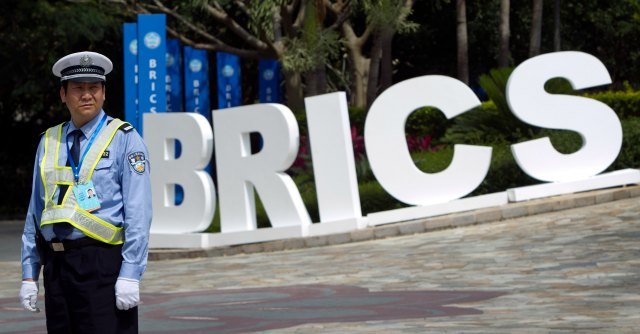
The Brics bloc, embracing this unique historical phase with a technological advantage, has developed Brics Pay, a blockchain-based payment system facilitating cross-border transactions in member countries’ national currencies. Rather than creating a single currency like the euro, Brics opted for a digital payment system allowing exchanges among central bank digital currencies (CBDCs). Interacting with national payment platforms like India’s UPI and China’s Alipay, Brics Pay users access their digital wallets linked to bank accounts, enabling QR code payments.





Deixe um comentário