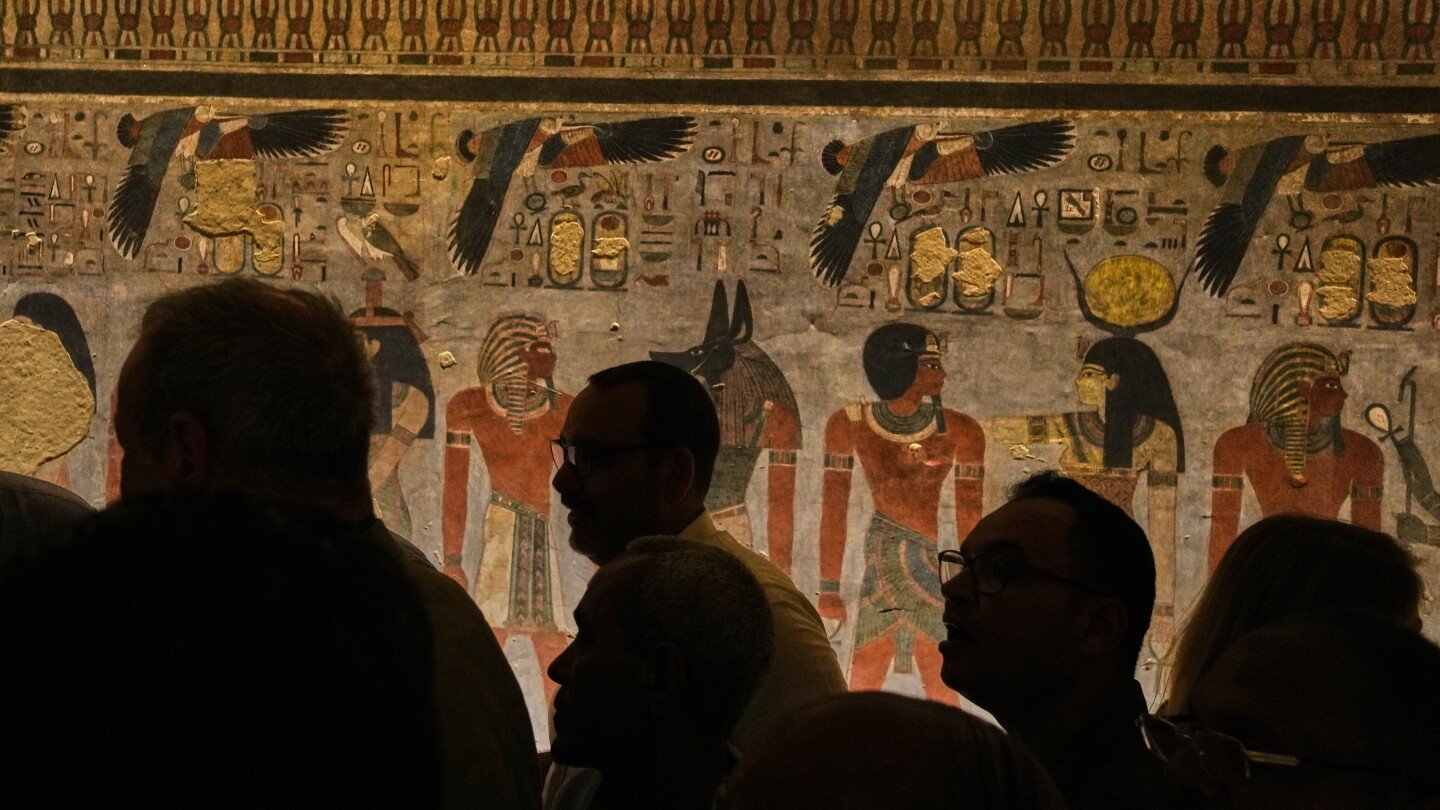
Egypt opened the tomb of Pharaoh Amenhotep III to the public in Luxor after more than 20 years of restoration. The southern city of Luxor witnessed the unveiling of the grand tomb as part of the preparations for the opening of the Grand Egyptian Museum in Cairo.
The tomb, which belongs to Amenhotep III, a pharaoh of the 18th dynasty who ruled ancient Egypt more than three thousand years ago, has undergone extensive restoration to ensure its preservation and readiness for visitors. This monumental project involved meticulous work by archaeologists and conservation experts to showcase the grandeur of the tomb’s intricate hieroglyphics and architectural features.
Visitors can now marvel at the vast tomb complex with its elaborate decorations and symbolic designs, offering a glimpse into the rich history and cultural heritage of ancient Egypt. The reopening of the pharaoh’s tomb in Luxor provides a unique opportunity for tourists and history enthusiasts to explore the fascinating world of Egyptian royalty and civilization.
As Egypt continues to promote its rich archaeological sites and cultural treasures, the restoration of Pharaoh Amenhotep III’s tomb signifies a significant milestone in preserving the country’s ancient heritage. The meticulous renovation process underscores Egypt’s commitment to safeguarding its historical legacy and promoting tourism through the discovery of remarkable archaeological wonders.
The reopening of the pharaoh’s tomb in Luxor after two decades serves as a testament to Egypt’s dedication to conserving its priceless historical relics and offering visitors an immersive experience into the ancient world of the pharaohs. With the unveiling of this iconic archaeological site, Egypt invites the world to witness the grandeur of its past and embark on a journey through time to unravel the secrets of one of its most illustrious rulers.
Enthusiasts and curious travelers can now explore the fascinating tomb of Amenhotep III, admiring the intricate details and timeless beauty of the ancient Egyptian craftsmanship. The restoration and reopening of the pharaoh’s tomb in Luxor symbolize a celebration of Egypt’s rich history and a tribute to the enduring legacy of its ancient civilization.





Deixe um comentário