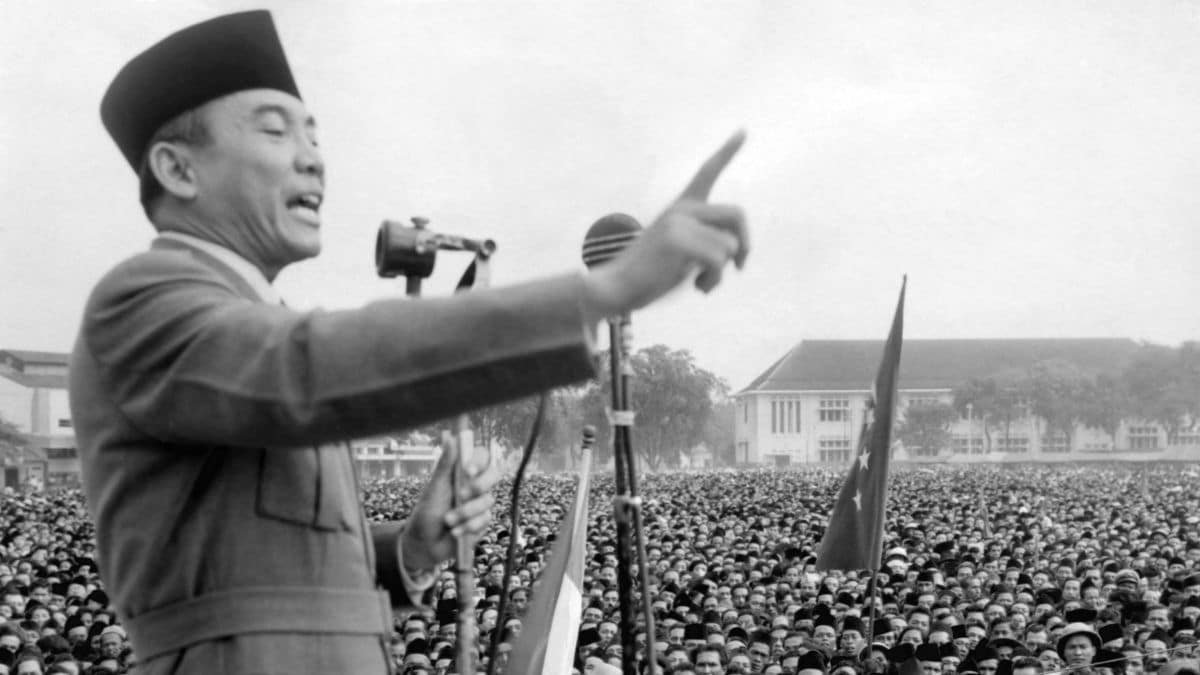
On August 17, 1945, Indonesia declared its independence from the Netherlands. However, the fight for freedom continued. Sukarno, the leader of the independence movement and president of the fragile new republic, led resistance against the Dutch. Four years later, the Netherlands officially transferred sovereignty to the Asian nation.
The declaration of Indonesia’s independence in 1945 marked a significant moment in history. It signified the end of Dutch colonial rule and the beginning of a new era for the Indonesian people. Despite challenges and resistance from the Dutch, the country’s leaders were determined to secure their independence and establish a sovereign nation.
Sukarno, a pivotal figure in Indonesia’s fight for freedom, played a crucial role in leading the nation towards independence. His dedication and strong leadership inspired many Indonesians to continue their struggle against Dutch rule and work towards a future where they could govern themselves.
Through perseverance and unity, Indonesia was able to defy Dutch attempts to reclaim control and assert its sovereignty. The years following the declaration of independence were filled with challenges, but the Indonesian people remained resilient and committed to securing their freedom and building a prosperous nation.
By 1949, after years of resistance and negotiations, the Netherlands officially recognized Indonesia’s sovereignty, marking the end of Dutch colonial rule. The journey towards independence was long and arduous, but the Indonesian people’s unwavering determination ultimately led to the establishment of a free and independent nation.
Today, Indonesia commemorates the anniversary of its independence declaration as a reminder of the resilience and strength of its people in the face of adversity. The events of 1945 serve as a testimony to the courage and determination that shaped Indonesia’s path towards freedom and liberation from colonial rule.





Deixe um comentário