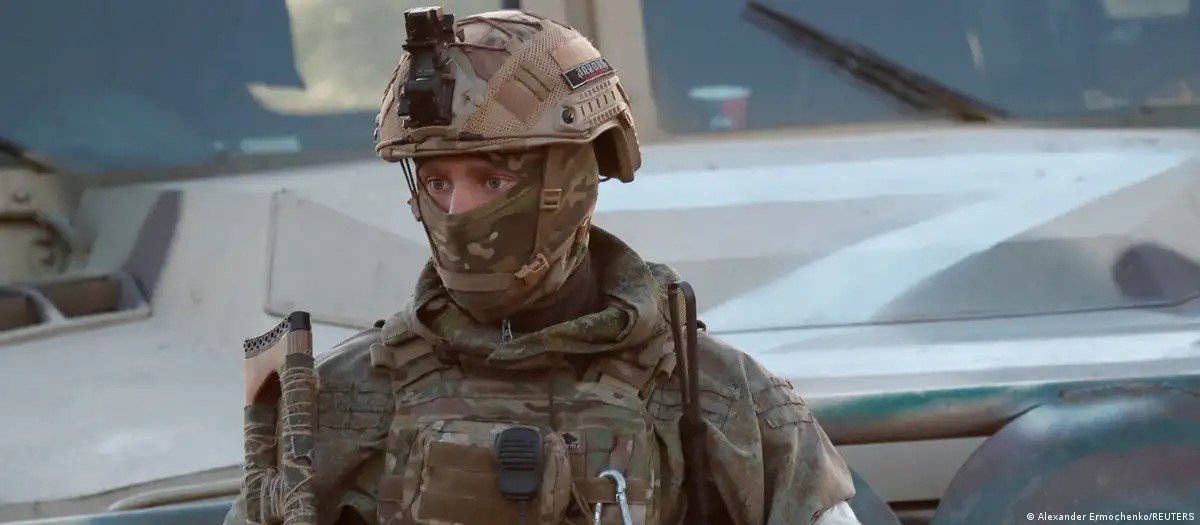
Humiliation and violence are not uncommon within Russian troops – Photo: Alexander Ermochenko/Reuters
‘They nullified my son,’ laments Tatiana Bykova in a video message. Her son, Andrei, was killed by his own commanders. She names them and says she hates them. First, they extorted money from him, demanding half of the compensation he received for an injury. When he refused to give the money and bought a car, they started demanding the vehicle. As he refused to hand over the car, he was killed.
Bykova filed a complaint with the Investigative Committee of the Russian Federation and the Prosecutor’s Office, but nothing happened. Andrei Bykov was simply declared missing. ‘As I was told, he was beaten to death. He is in a wooded area near Galitsynivka,’ said Bykova, referring to a village in the Donetsk region, Ukraine, in an interview with the independent Russian news portal Verstka, which operates in exile.
In October 2025, the portal launched a project to draw attention to the widespread practice of torture and the so-called ‘nullification’ – a colloquial term for the murder of soldiers in the Russian Army. Verstka also published the names of dozens of involved commanders.
The following day, Aleksandr Pashchenko, a member of parliament from the ruling party United Russia in the republic of Khakassia, responded to criticism from an outraged citizen, stating: ‘On the front line, you would be nullified for statements like that.’ He thus confirmed that ‘nullifications’ do occur.
How do torture and murder happen?
‘The killing of their own soldiers is just one aspect of the deplorable state of the Russian Army. Torture is also widespread,’ said military expert Yuri Fyodorov to DW. Torture videos can be found on Telegram channels dedicated to the war. For example, the expert reported that soldiers are thrown into a pit and fed garbage for one or two weeks, depending on the commander’s whim. Or they are forced to ‘hug a tree.’ They are tied to tree trunks and left there for one or two days without food or water.
A soldier can be shot and declared missing or killed in combat. In addition, it is up to the officers to send a soldier to an attack where the risk of death is particularly high.
According to military expert Jan Matveyev, some Russian officers considered their subordinates disposable – Photo: Privat/DW
The reasons for ‘nullification’ can vary greatly: insubordination, disciplinary violations, alcohol consumption, arguments with officers, or refusal to hand over part of the salary.
‘When you consider people disposable and are capable of killing someone by sending them into a hopeless fight, then you will also kill on the ground because someone committed an offense, didn’t hand over money, or there was a misunderstanding,’ said military expert Jan Matveyev to DW.
Psychoanalyst Alina Putilovskaya speaks of a ‘transfer’ and ‘externalization’ of aggressive emotions. ‘Superiors who commit these cruel acts of violence have superiors who ridicule them – for example, through unrealistic orders and withholding vital supplies from their units. These high-ranking officers project an image of superiority, invincibility, and prosperity externally. This leads to very difficult feelings among field commanders, who then take it out on their subordinates.’
According to Putilovskaya, the latter feel fear because they can become targets of aggression from their superiors. They also feel pity and guilt towards the comrades affected for not being able to help them.
Mercenaries from the Wagner Group with their founder, Yevgeny Prigozhin, in Ukraine, May 2023 – Photo: CONCORD / Reuters / DW
‘Nullification’ replaces discipline
Yuri Fyodorov attributes ‘nullifications’ in the Army to corrupt officers, as well as to criminal and undisciplined military personnel.
He claims that the officer corps in Russia became more problematic since the 1990s, as many stayed in the Army simply because they couldn’t find a purpose in civilian life. They supplemented their meager salaries through corrupt practices, such as forcing soldiers to perform unpaid work. It is precisely these types of officers currently serving in the war in Ukraine.
Experts agree that the Russian Army has also changed in this war due to the recruitment of mercenaries fighting for money and convicted criminals, who bring their own values.
‘To keep this whole gang under control, the most brutal methods had to be used,’ says Fyodorov. One of the first notorious examples of this was a video that circulated on social media in November 2022. It showed Wagner Group mercenaries killing a comrade with a sledgehammer.
Why are ‘nullifications’ not punished?
According to Jan Matveyev, the main reason for ‘nullifications’ is the lack of discipline and the absence of a properly structured military system. ‘All of this fosters impunity, making leadership impossible. No one in the Russian Army has been punished for serious war crimes, such as the murders in Bucha and Mariupol. This immediately signaled that one could simply kill people without being punished,’ Matveyev states.
He is convinced that ‘nullifications’ have eroded discipline in the Army. Since the Army is not doing anything about it, this trend only intensifies.
Both experts believe that the Russian Army would no longer be able to fight if torture, mistreatment, extortion, ‘nullifications,’ and war crimes ceased. ‘In reality, its entire functioning is based on impunity and the exploitation of soldiers as a resource, as slaves,’ emphasizes Fyodorov.
From the perspective of psychoanalyst Alina Putilovskaya, ‘nullifications’ are a method of exerting coercion, control, and intimidation.
Putilovskaya says: ‘The Army leadership is not interested in building long-term relationships with people because they know new relationships will form soon. Two things keep a community together, even in war: emotional bonds and coercion. If one is lost, as in this case with emotional bonds, then coercion takes over, which in this case intensifies into extreme cruelty.’
Matveyev also points out that the Russians do not understand what they are fighting for. ‘The Ukrainian Army knows, even facing very difficult circumstances and suffering from major problems, what they are fighting for. They are defending their country. The majority in the Russian Army is well aware that this is a grave and heinous war crime, which encompasses a myriad of lesser crimes, and they need to get used to it,’ said the expert.
How Russians Kill and Torture Their Own Soldiers in Ukraine

-

Flamengo and PSG have faced each other three times; check out their record
-

Indonesia Open Footgolf Tournament: Comedian Oki Rengga Admits Addiction, Wants to Become a Professional Athlete
-

Shameful Incident in Punjab! Landlord Rolls Tenant’s Daughter
-

Virgil van Dijk Expresses Desire for Mohamed Salah to Stay at Liverpool
Deixe um comentário