In the last week of November, when Cyclone Senyari turned towards Malacca Strait, no one knew it would cause such a catastrophic disaster. Continuous rain for three days on the island of Sumatra led to villages disappearing overnight. 836 people lost their lives, 518 are still missing, and 2700 are injured. The most terrifying aspect was the flood of logs that washed away homes, resembling a massive wooden hammer. Rescue efforts in North Sumatra’s Tukka district revealed a landscape filled with fallen trees, causing widespread devastation. Scientists attribute the calamity to the unbridled deforestation. Forests act as our protective shield by absorbing water, with a large tree capable of drawing 500-1000 liters per day. If the forests were intact, the disaster could have been reduced by up to 70%. This time’s catastrophe was not just due to the rain and the cyclone – it was retribution for 30 years of relentless deforestation. Sumatra, once home to the world’s densest tropical forests, now showcases only barren hills and palm oil plantations. In the last 20 years, over 35% of the forests in Sumatra have been destroyed, mainly for palm oil plantations and paper industries. The felled trees lay on the hills, becoming flooding hazards during heavy rains. The drastic climate changes have caused the Indian Ocean to warm, resulting in excessive moisture leading to devastating floods. Due to the La Nina effect, this year’s rainfall was 20-30% higher. The absence of forests caused water to flow directly into the rivers like flash floods, triggering severe landslides. The regions of Aceh and Batang Toru in North Sumatra suffered immense damages, with hundreds of houses destroyed. It is essential to immediately halt deforestation and replant trees on the hills. Buffer zones must be created along riverbanks, and villages should be relocated to higher and safer grounds. The Indonesian government has declared a national emergency in response to the disaster. The cutting down of forests has reduced the soil’s water absorption capacity by up to 70%, increasing the risk of landslides by 12 times. Over 300-400 landslides occur in Sumatra each year now, a significant jump from the 20-30 incidents in the past. If this trend continues, all of Sumatra’s forests are predicted to vanish by 2030.
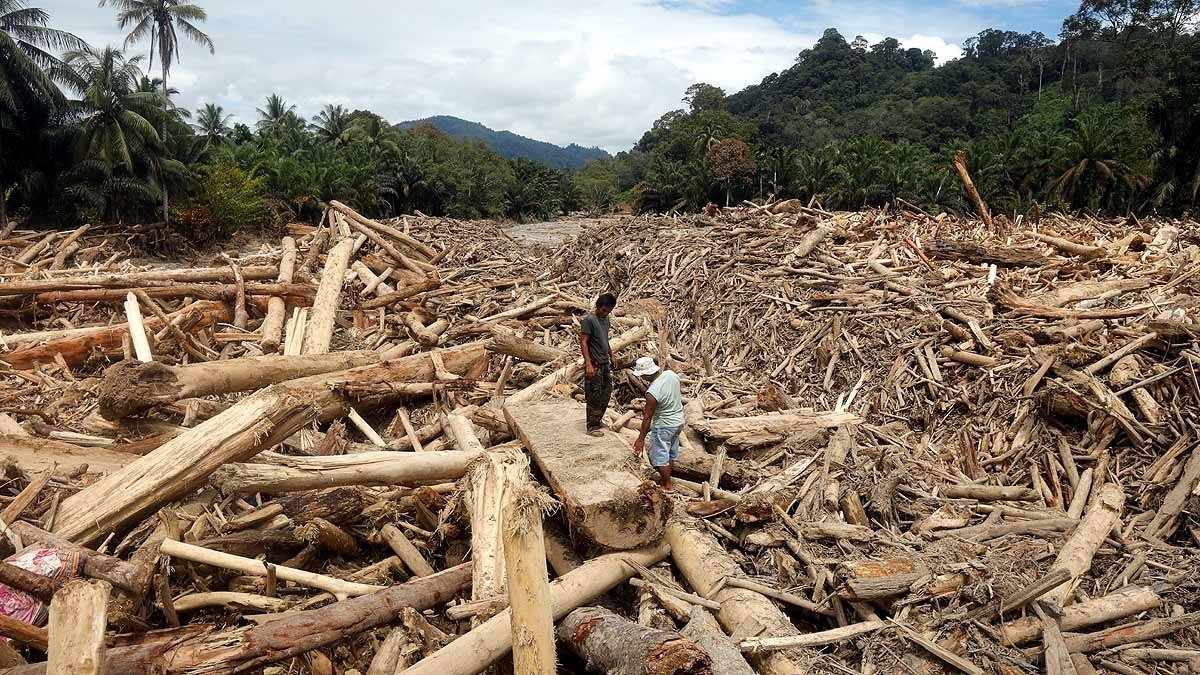
Indonesia: Devastation of Forest Cutting! Nature Takes Revenge, Many Villages Cleansed in This Country, 836 Dead

-

Flamengo and PSG have faced each other three times; check out their record
-

Indonesia Open Footgolf Tournament: Comedian Oki Rengga Admits Addiction, Wants to Become a Professional Athlete
-

Shameful Incident in Punjab! Landlord Rolls Tenant’s Daughter
-

Virgil van Dijk Expresses Desire for Mohamed Salah to Stay at Liverpool
Deixe um comentário