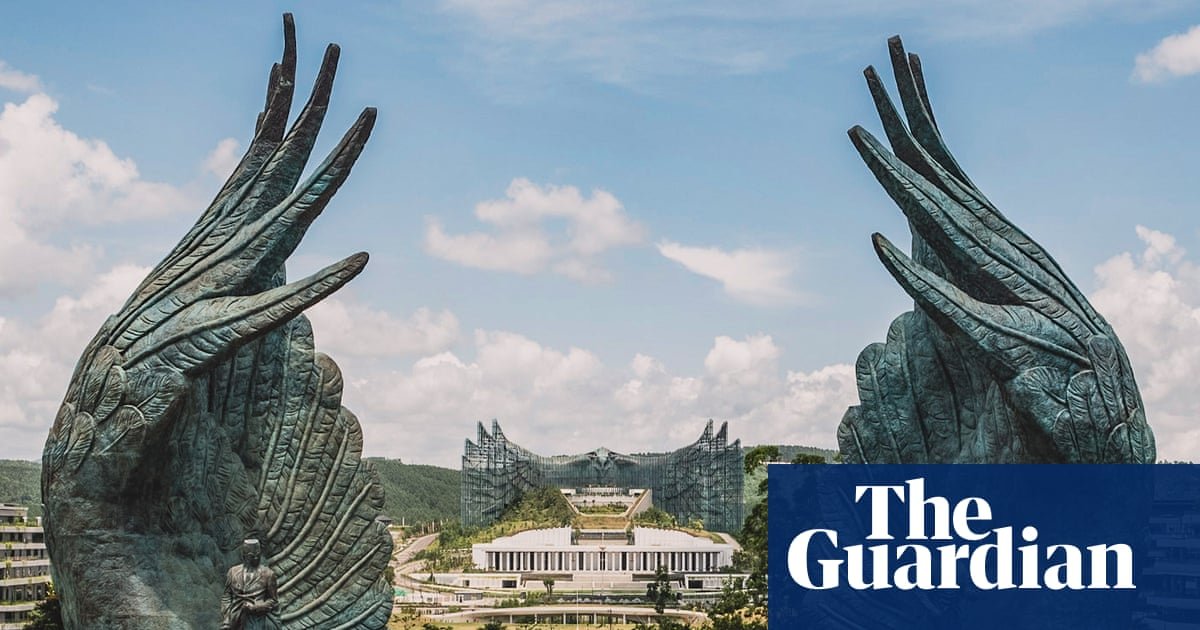
Indonesia’s futuristic new capital, Nusantara, has faced setbacks since its inception. Despite being envisioned as a utopian city to replace Jakarta, the current situation paints a different picture. State funding for the project has plummeted, leading to significant delays in construction. The ambitions of President Prabowo Subianto, who took office last October, seem to have shifted focus away from Nusantara, as funding has been cut drastically. The project, initially planned to accommodate 1.2 million people by 2030, currently only houses around 2,000 civil servants and 8,000 construction workers. Although some progress has been made, much of the city remains unfinished and under construction. The future of Nusantara as a bustling metropolis is uncertain.
The downgrading of Nusantara to a ‘political capital’ by President Prabowo in May has added to the confusion surrounding the project. This change in designation raises questions about the government’s commitment to the new capital. Amid reports of a slowdown in construction and lack of support, concerns about Nusantara becoming a ‘ghost city’ are growing. Small businesses around the area have experienced a decline in trade, indicating a lack of economic activity in the region. Local communities, such as the Indigenous Balik people, have expressed concerns about environmental damage and disruptions caused by the new capital.
Despite the challenges, there are still hopes for Nusantara’s success. Government officials remain optimistic about the project’s future, highlighting ongoing commitment and funding. However, environmental groups and local communities continue to raise alarms about the ecological impact and potential displacement of Indigenous groups. The debate surrounding Nusantara’s development reflects a complex interplay of economic, environmental, and social factors. It remains to be seen whether the new capital will flourish as envisioned or struggle to overcome the obstacles it currently faces.
In the midst of uncertainties, Nusantara stands as a symbol of Indonesia’s aspirations for progress and development. The vision of a modern, sustainable city in the heart of the forest represents a bold experiment in urban planning. However, the reality on the ground highlights the challenges and dilemmas inherent in such ambitious projects. Balancing economic growth, environmental protection, and social welfare will be crucial in determining the fate of Nusantara. As discussions continue and developments unfold, the future of Indonesia’s new capital remains a topic of intense interest and scrutiny.





Deixe um comentário