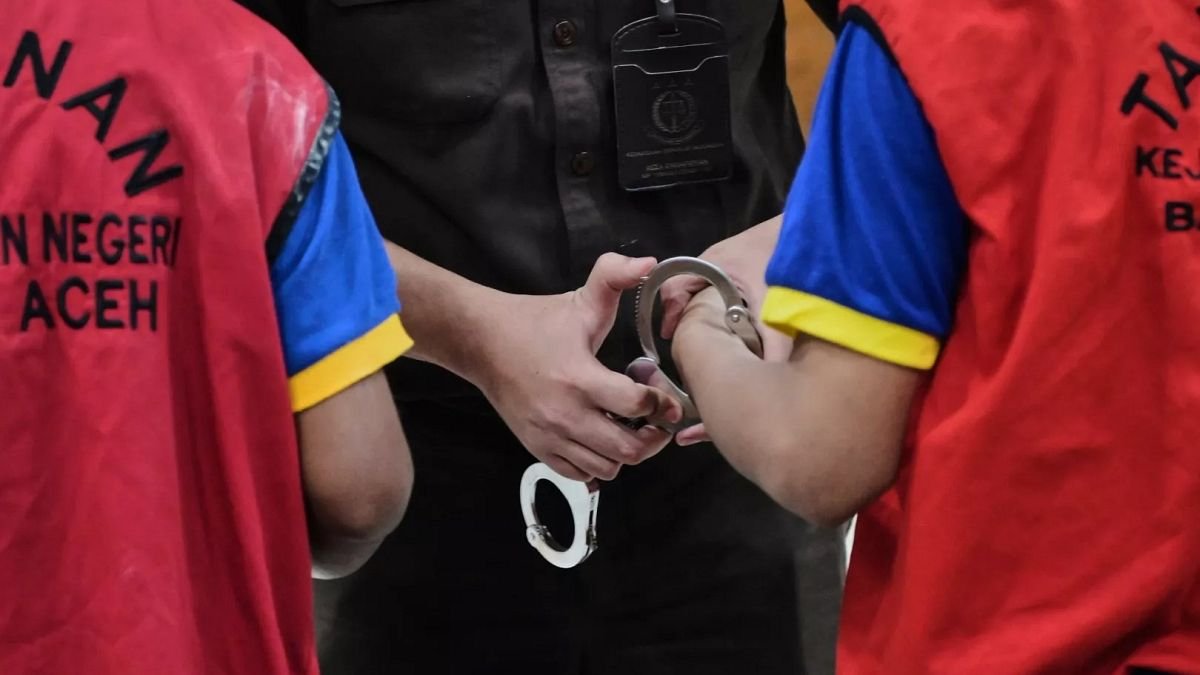
An Islamic court in Indonesia’s western Aceh province handed down a public caning sentence to two men on Monday. The punishment was a result of Islamic religious police apprehending them engaging in what the court deemed as sexual acts. This verdict marked the fifth time that individuals have been sentenced to public caning for homosexuality in Aceh since the enforcement of stringent Islamic law in the province.
The trial, held at the Islamic Shariah District Court in the city of Jantho, saw the two men receiving 77 lashes each in public. This form of punishment is in accordance with the strict Islamic legal code known as Sharia. Aceh is the only province in Indonesia where Sharia law is implemented, and public caning is a common form of punishment for various offenses that are considered violations of Islamic teachings.
The public caning of these two men drew a crowd of hundreds of spectators who gathered to witness the punishment. The sentences were carried out on a stage in front of a mosque, and the men were lashed by a hooded man using a rattan cane. The public nature of the punishment serves as a deterrent to others in the region, reinforcing the strict enforcement of Islamic law in Aceh.
Authorities in Aceh defend the practice of public caning as a necessary measure to uphold Islamic morality and deter behavior that is considered sinful under Sharia law. While human rights organizations have condemned the practice as a violation of basic human rights, supporters argue that it is essential to preserve the religious and cultural values of the region. The continued implementation of public caning for offenses such as homosexuality reflects the deep-seated influence of Islam in Aceh society.
As news of the public caning spread, it sparked debates and discussions both within Indonesia and internationally regarding the intersection of religion, law, and human rights. The case highlights the ongoing challenges faced by countries where Islamic law coexists with secular legal systems. The verdict serves as a reminder of the complex considerations involved in balancing religious beliefs with universal principles of human rights.





Deixe um comentário