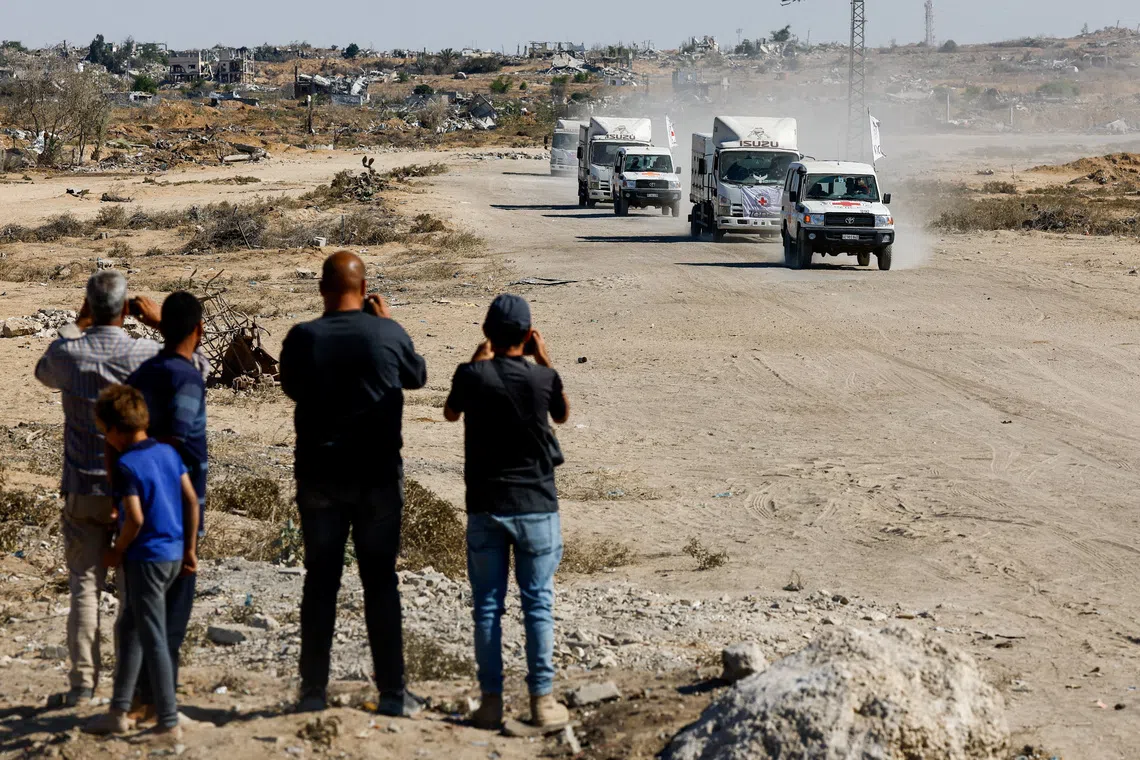
Israel announced on Thursday its plans to reopen Gaza’s Rafah crossing with Egypt to allow Palestinians to travel in and out. However, a specific date has not been set as tensions rise between Israel and Hamas, each accusing the other of violating the ceasefire mediated by the United States.
The dispute began over issues related to the reconstruction of Gaza following recent conflicts. Hamas blamed Israel for not lifting restrictions on imports and exports, hindering the region’s recovery. In response, Israel accused Hamas of launching incendiary balloons into Israeli territory, violating the ceasefire agreement.
As the blame game continues, concerns grow over the Rafah border reopening. The crossing serves as a vital lifeline for Palestinians in Gaza, providing access to essential goods, medical supplies, and travel opportunities. Delays in reopening the border could exacerbate existing humanitarian crises in the region.
Efforts to resolve the situation have been complicated by political tensions and differing interpretations of the ceasefire terms. Israel insists on strict adherence to the agreement, highlighting security concerns, while Hamas calls for more flexibility to address the urgent needs of the Gazan population.
The international community closely monitors the developments, urging both parties to prioritize peace and cooperation. The United States, as the mediator of the ceasefire, has expressed concerns over the escalating tensions and called for immediate de-escalation to prevent further violence and instability.
Despite the challenges and disagreements, diplomatic channels remain open for dialogue and negotiation. Both Israel and Hamas face pressure to find a resolution that allows for the reopening of the Rafah border while addressing the underlying issues that have strained their fragile relationship in the past.
The future of Gaza’s Rafah crossing and the overall stability of the region hang in the balance as Israel and Hamas navigate complex political dynamics and conflicting interests. Reaching a consensus on ceasefire implementation and border operations is crucial to preventing further escalation and promoting long-term peace in the region.





Deixe um comentário