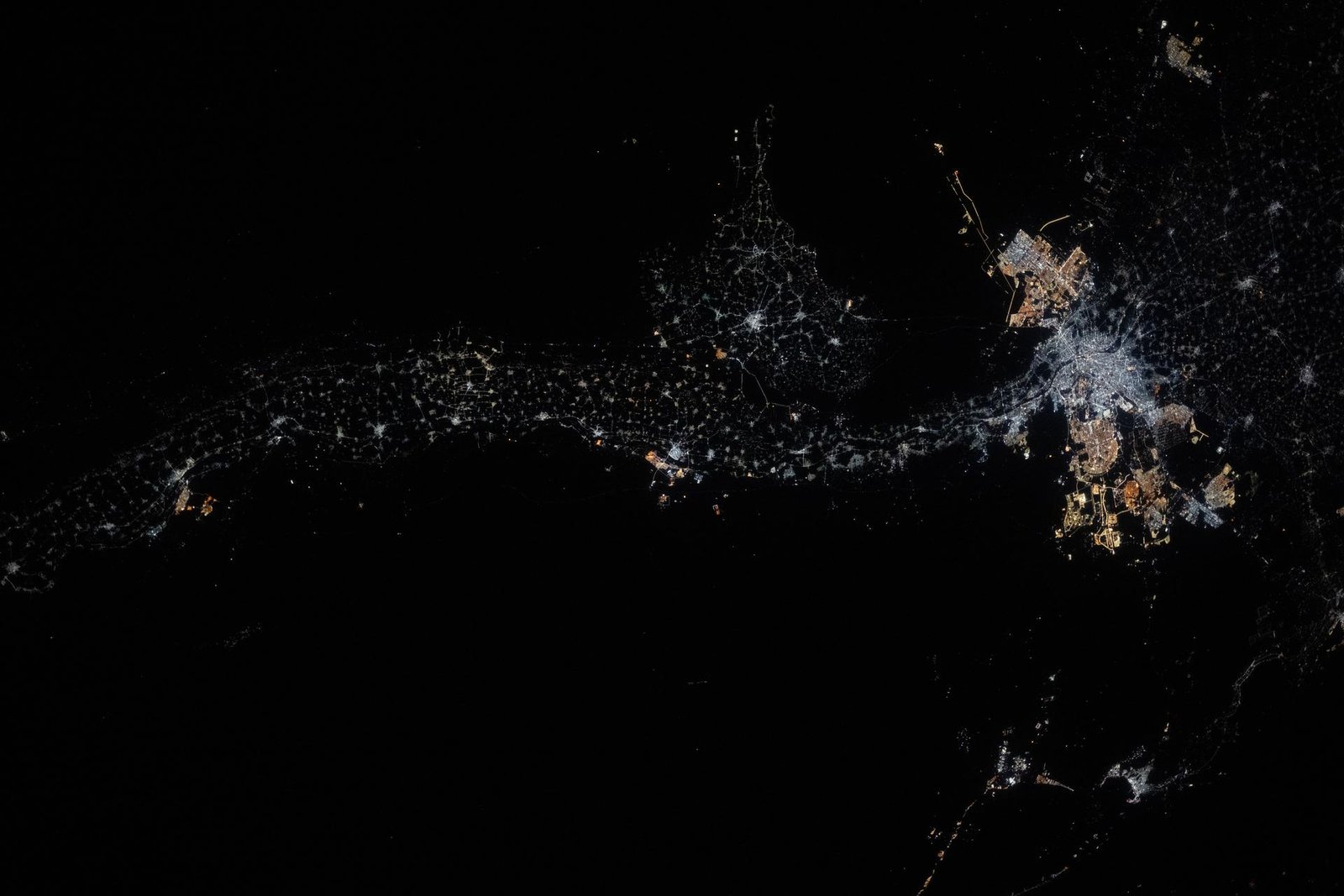
At 1:32 am local time, an astronaut on board the International Space Station (ISS) took a mesmerizing photograph of the Nile River shimmering across Egypt. The Nile, often referred to as the ‘lifeblood of Egypt,’ is the longest river globally, playing a vital role in the country’s existence. This image showcases the striking contrast of the radiant Nile cutting through the darkness of the surrounding desert, emphasizing its crucial importance to the region.
The glimmering lights along the Nile’s path depict human settlements and urban areas flourishing along its banks. The photo captures the intricate network of life sustained by the river, highlighting the significance of this water source in an otherwise arid landscape. Seen from space, the Nile River appears as a glowing ribbon snaking through the vast expanse of Egypt, demonstrating the transformative power of water in sustaining civilizations.
The spectacular nighttime view provides a unique perspective on the Nile’s role as a source of life and prosperity in an otherwise challenging environment. The astronaut’s photograph offers viewers a glimpse of the Nile’s enduring impact on the surrounding landscape, serving as a beacon of sustenance and vitality in the desert. This remarkable image captures the essence of the Nile River as a lifeline for Egypt, illuminating the landscape and showcasing the intricate relationship between water and civilization.
The beauty of the night-time photo underscores the Nile’s central role in shaping the geography and culture of Egypt, symbolizing the resilience and adaptability of human societies in the face of harsh conditions. The astronaut’s capture of this awe-inspiring scene from space highlights the unique perspective that space exploration offers in understanding the interconnectedness of nature and human civilization. The glittering lights along the Nile River serve as a poignant reminder of the enduring legacy of this iconic waterway, reflecting Egypt’s historical and cultural significance.





Deixe um comentário