Carolina Arruda, the 28-year-old woman who lives with trigeminal neuralgia, a condition known as ‘the worst pain in the world’, will undergo deep sedation for the administration of ketamine—an anesthetic used in conjunction with other drugs for sedation and pain relief in surgical and diagnostic procedures for adults and children. This measure was taken after the young woman underwent six surgeries with no success, trying to get her brain to respond to medications. She will be sedated and maintained for up to five days on mechanical ventilation for ketamine administration. ‘I can’t wait for August 13th to come. I can’t take it anymore. Hurry up, August 13th. I can’t wait to rest, to be in deep sedation for five days, passed out, anesthetized, not needing to breathe on my own, just the machines keeping me alive, completely knocked out. I can’t take it anymore being in my body. Enough, my God, enough,’ Carol said in a video posted on her social media. In 2019, ketamine was approved by the FDA (Federal Drug Administration), the US regulatory agency. Ketamine is also included in the World Health Organization’s (WHO) List of Essential Medicines. The medication is also indicated for some cases of chronic pain that are difficult to control and severe depression resistant to other treatments. Ketamine in psychiatry can also be used in patients with suicidal ideation, yielding good results, and in the treatment of patients with chronic pain conditions. Additionally, ketamine continues to be widely used in surgical centers as an anesthetic drug. It works by blocking receptors in the nervous system that amplify pain signals and, in the case of depression, it helps restore connections between neurons. ‘I will be admitted on Wednesday, and on Thursday, I will undergo the five surgeries and more deep sedation. At first, I will be in the ICU for five days, on the ventilator, with medications. Completely unconscious. …good luck for the next few days,’ Arruda said. Carol’s doctor, Carlos Marcelo de Barros, mentioned in an interview with G1 that the administration will be done by intravenous infusion in a hospital setting to avoid side effects. ‘For patient safety, depending on the dose used, the infusion should be done under monitoring in the ICU. It may cause changes in blood pressure, heart rate, breathing, and perception, such as dizziness, nausea, hallucinations, or a feeling of ‘being out of body’,’ he stated. What is trigeminal neuralgia? Trigeminal neuralgia (TN) is a disorder characterized by debilitating and chronic pain along the trigeminal nerve, which is responsible for tactile, thermal, and painful sensitivity in the face. The patient experiences sharp, intense pains, shock-like or stabbing, considered ‘the worst in the world’. The diagnosis is rare, affecting approximately 4.3 people per 100,000. The pains can last from seconds to minutes and occur several times a day. In some cases, they only affect one side of the face. In Carol’s case, it is bilateral, meaning the complaints are on both sides. What are the causes of trigeminal neuralgia? There are three main causes related to the disease. One is when there is compression of the nerve by vessels and arteries around it, causing it to ‘fire’ as if it were a short circuit.
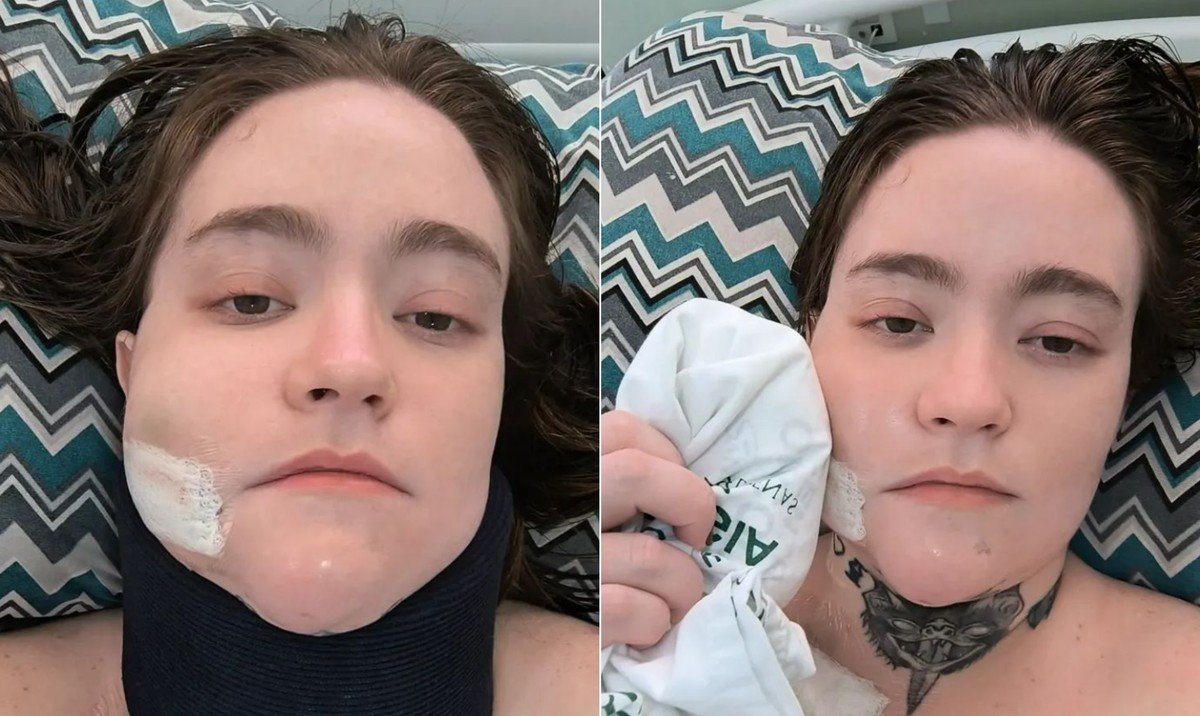
Ketamine: How does the medication work for the young woman with the ‘worst pain in the world’ to be sedated?

-

Flamengo and PSG have faced each other three times; check out their record
-

Indonesia Open Footgolf Tournament: Comedian Oki Rengga Admits Addiction, Wants to Become a Professional Athlete
-

Shameful Incident in Punjab! Landlord Rolls Tenant’s Daughter
-

Virgil van Dijk Expresses Desire for Mohamed Salah to Stay at Liverpool
Deixe um comentário