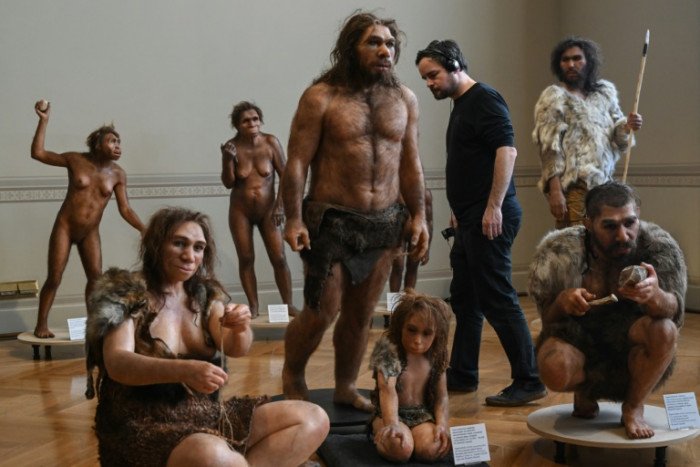
The 3.18-million-year-old bone fragments of the iconic human ancestor Lucy, which are rarely permitted to leave Ethiopia, are set to make their European debut in Prague at the Czech National Museum. This historic occasion marks the first time Lucy’s remains will be displayed in Europe, offering visitors a unique opportunity to see this significant archaeological find up close.
The National Museum of Prague is already home to hyperrealistic artistic reconstructions of human ancestors, providing a fitting backdrop for Lucy’s bone fragments to be showcased to the public. As one of the most well-known early human ancestors, Lucy’s presence in Prague is expected to attract a wide audience eager to learn about our evolutionary history.
This exciting exhibition allows researchers and enthusiasts alike to explore the story of Lucy, a crucial figure in the field of paleoanthropology. By bringing Lucy’s remains out of Ethiopia for the first time in their long history, the Czech National Museum is offering a unique and educational experience for those interested in human evolution and the scientific discoveries that shaped our understanding of early hominids.
Visitors to the museum in Prague will have the opportunity to witness Lucy’s bone fragments firsthand, providing a tangible connection to our ancient past. The significance of Lucy’s European debut cannot be understated, as it represents a rare chance for individuals outside of Ethiopia to engage with this vital piece of human evolutionary history.
The presence of Lucy’s bone fragments in Europe serves as a reminder of our shared ancestry and the journey that has led to the existence of modern humans. As visitors explore the exhibit in Prague, they will be confronted by the physical remnants of a distant ancestor, prompting reflection on the interconnectedness of all life on Earth.
By hosting Lucy’s bone fragments, the Czech National Museum is fostering a deeper understanding of our collective past and the evolutionary processes that have shaped the human species. This landmark exhibition represents a significant moment in the study of human origins, providing a platform for dialogue and reflection on our place in the vast timeline of evolutionary history.





Deixe um comentário