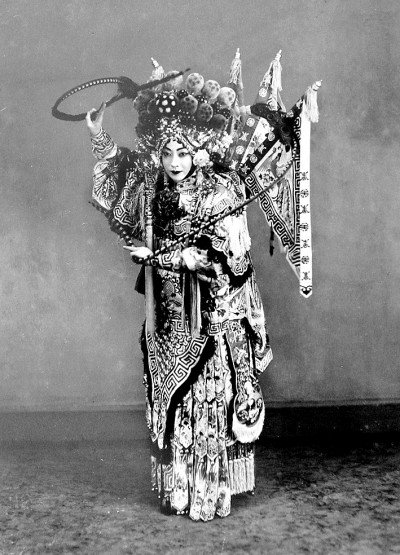
Looking back at history, when the gunfire of the ‘September 18 Incident’ shattered the land, the smoke of battle obscured the once splendid stage, Mei Lanfang, a master of Peking Opera, ‘stopped performing, demonstrating a strong and resolute attitude, issuing a declaration of iron will, showcasing the unwavering courage of an artist in a time of national crisis, greatly inspiring the determination of people from all walks of life.
In ‘Resisting the Jin Troops,’ Mei Lanfang played Liang Hongyu. In May 31, 1933, the Kuomintang government signed the Tanggu Agreement with the Japanese imperialist aggressors, sparking outrage across China. Mei Lanfang’s fiery works, ‘Resisting the Jin Troops’ and ‘Life and Death Hatred,’ were born out of this turbulent period, embodying the spirit of resistance against foreign invaders.
Amidst the chaos of war, Mei Lanfang’s unwavering spirit and dedication to preserving traditional Chinese culture stood as a beacon of hope for the nation. His decision to prioritize the interests of the country over personal fame and fortune resonated with the hearts of millions, inspiring a wave of patriotism and unity among the Chinese people.
Despite the challenges and dangers of the time, Mei Lanfang’s artistic genius continued to shine through. His innovative approach to Peking Opera brought the traditional art form to new heights, earning him global recognition and praise. By blending tradition with modernity, Mei Lanfang paved the way for future generations of artists to carry on the legacy of Chinese opera.
As we commemorate the 80th anniversary of the victory in the War of Resistance, Mei Lanfang’s legacy reminds us of the power of art to unite and inspire, even in the darkest of times. His unwavering commitment to his craft and his country serves as a timeless example of the enduring spirit of the Chinese people.

Deixe um comentário