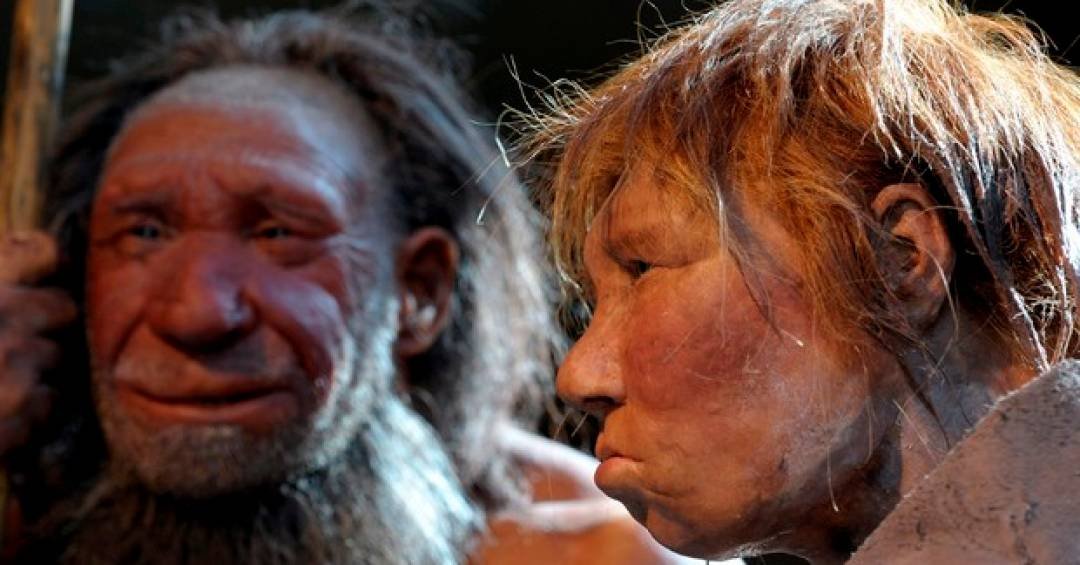
Kissing may seem like an exclusively human behavior, but new evidence suggests that the gesture has much deeper roots in evolution and that Neanderthals and early modern humans likely engaged in it as well. This conclusion comes from a study by the University of Oxford published in the journal Evolution and Human Behavior, which analyzed records of living primates, fossils, and patterns of species relationships. The researchers defined a kiss as a friendly mouth-to-mouth interaction between individuals of the same species, without food transfer, and with characteristic movements, allowing for comparisons across different animals.
The researchers started by redefining what constitutes a kiss, as many previous definitions focused solely on human behavior, excluding other species. The new study focused on mouth-to-mouth contact between individuals of the same species as a friendly interaction without food transfer, allowing for comparisons across different animals. Detailed records of African and Asian primates, such as bonobos, chimpanzees, and orangutans, known for exhibiting behaviors similar to human kissing, were used to confirm that these mouth-to-mouth encounters often had a social motivation, whether for bonding or reconciliation.
Using this dataset, the scientists combined the information with evolutionary relationships between living and extinct species. Estimates suggest that kissing emerged between 21.5 million and 16.9 million years ago, long before the first humans appeared. Based on the evolutionary tree, the researchers suggest that Neanderthals, close relatives of modern humans, likely engaged in kissing as well. This hypothesis gains support from previous studies showing that humans and Neanderthals shared the same oral microbiome for hundreds of thousands of years, indicating frequent contact and physical proximity.
Furthermore, people of non-African descent carry fragments of Neanderthal DNA, confirming intimate relationships between the two species. The study emphasizes that kissing, even among modern humans, is not universal, as some cultures do not adopt the gesture. Therefore, kissing likely served various adaptive functions, from reinforcing social bonds to selecting partners.





Deixe um comentário