Of the 88.5 million workers in Brazil, 1.7 million were working in the gig economy through digital platforms in 2024, representing 1.9% of the employed population in the private sector. This number increased compared to 2022 when these workers totaled 1.3 million, equivalent to 1.5% of the total workforce. These figures are from the Continuous National Household Sample Survey (PnadC) of the Brazilian Institute of Geography and Statistics (IBGE), which released a report on digital platform work this Friday.
The IBGE study covers professionals working not only with transportation and delivery apps but also with various services offered through platforms, from doctors to cleaners and electricians, as long as they were connected to clients through platforms. According to the data, most gig workers are men (83.9%), aged 25 to 39 (47.3%), and have intermediate levels of education. Over half (59.3%) completed high school or have some college education, while almost 54% are Black or mixed-race.
The gig economy workforce doesn’t just consist of independent workers setting their rates. Delivery drivers and other service providers are at the mercy of platforms, which dictate the amounts they earn, their clients, and deadlines. Although the general services sector saw significant growth in 2024, comprising 17.8% of the gig workforce – almost double the 2022 numbers, the majority still works in private transportation like Uber and delivery apps (29.3%). The remaining 13.8% is made up of taxi apps.
The food delivery category includes both the delivery person and the restaurant owner using the app to sell meals. The same person can work as a driver and delivery person simultaneously, thus appearing in more than one category in the IBGE survey. Online tasks like freelance legal work, translations, IT services, medical teleconsultations, content moderation, transcription, etc., also fall under general services if facilitated through a platform.
In terms of earnings, the average monthly income in 2024 for gig workers ($2,996) was higher than for non-gig workers ($2,875). While the difference decreased from $255 in 2022 to $121, gig workers ended up working more hours per week (44.8h) than others (39.3h), resulting in lower earnings per hour ($15.4/h versus $16.8/h). Most gig workers are informal (71.1%) and only 35.9% contribute to social security.
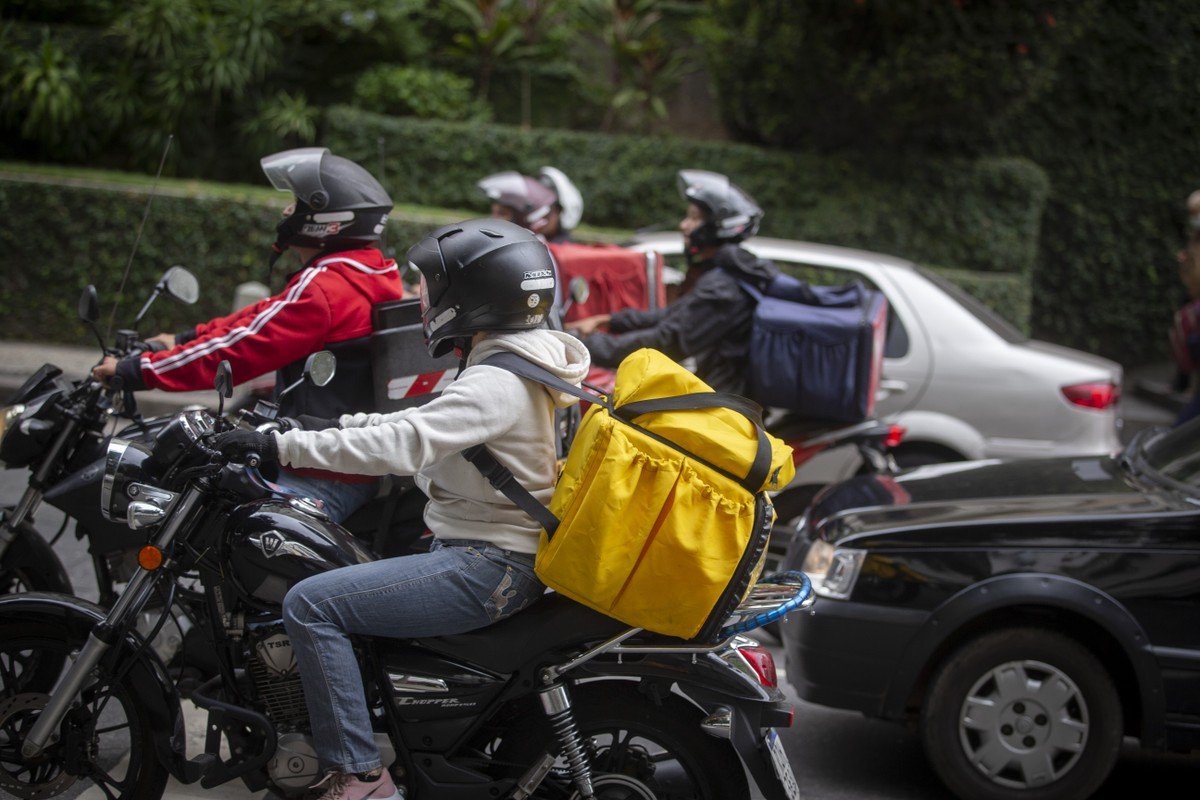
Number of gig workers in Brazil grows to 1.7 million, with most earning less per hour

-

Flamengo and PSG have faced each other three times; check out their record
-

Indonesia Open Footgolf Tournament: Comedian Oki Rengga Admits Addiction, Wants to Become a Professional Athlete
-

Shameful Incident in Punjab! Landlord Rolls Tenant’s Daughter
-

Virgil van Dijk Expresses Desire for Mohamed Salah to Stay at Liverpool
Deixe um comentário